Summary
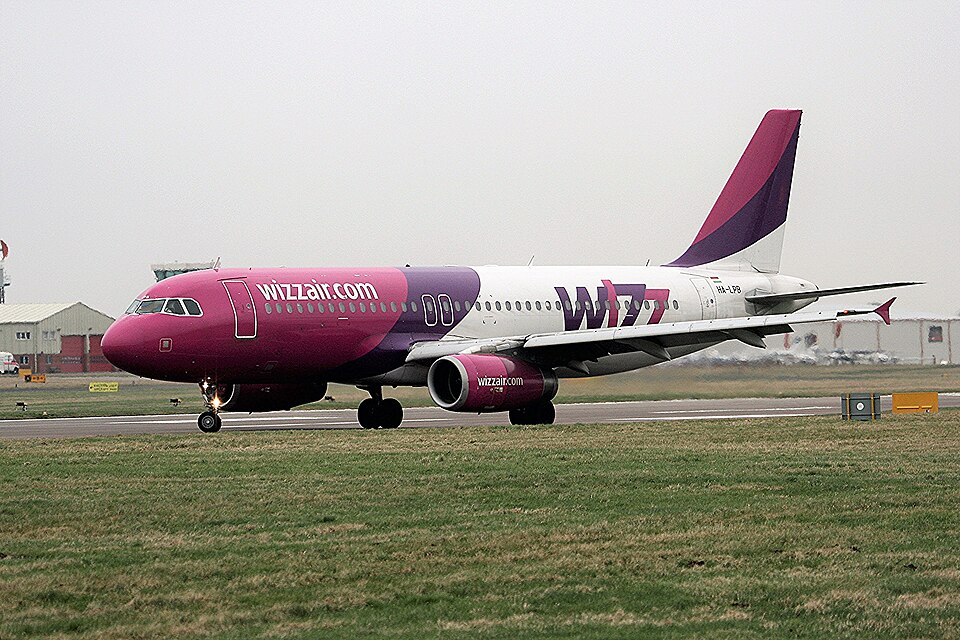
On 1 October 2006, an Airbus A320-232, registration HA-LPB, sustained abrasion marks on its lower fuselage after the tail struck the runway during landing at London Luton Airport. The aircraft was operating a public transport passenger flight with 6 crew and 159 passengers on board; no injuries were reported. The approach was flown manually without autopilot, flight directors, or autothrust.
History of the Flight
The crew operated a flight from Warsaw Airport to London Luton Airport. The commander was the handling pilot. Prior to descent, the commander briefed for a manual approach due to reasonable weather and an upcoming simulator check. ATIS information indicated Runway 26 in use, surface wind 210°/16 kt, visibility >10 km, few clouds at 800 ft, scattered at 2,100 ft. The aircraft was held in a hold for about 15 minutes before radar vectors for the ILS approach. At 1,000 ft agl, the crew noted wind approximately 40 kt from the south-west with turbulence. The aircraft was fully configured by 750 ft agl. Around 500 ft, the commander became aware the aircraft was above the required glide path, with four white PAPIs and the first officer calling high. The commander retarded thrust and applied forward sidestick. At 50 ft agl, the commander flared and applied aft sidestick. Touchdown was firm, the aircraft bounced slightly, and touched down again within about two seconds. After landing, the aircraft monitoring system activated an exceedance report.
Recorded Information
Flight Data Recorder (FDR) and Cockpit Voice Recorder (CVR) data were recovered and time-aligned. The Data Management Unit generated an exceedance report indicating a vertical load factor of 2.29g and a descent rate at touchdown of 672 ft/min. At 1,200 ft amsl, the aircraft deviated above the glideslope. At 530 ft agl, deviation reached 3.1 dots above the glideslope. The commander pitched up at 400 ft agl, reducing speed to 140 kt. At 150 ft agl, airspeed decayed to 130 kt at 50 ft. The commander flared at 50 ft with full aft sidestick at 30 ft agl. The aircraft touched down with +2° roll attitude (right main gear first), vertical load factor +2.3g, and indicated airspeed 125 kt. Maximum pitch attitude reached 12.3° nose-up. Spoilers deployed as the aircraft bounced. After the bounce, the commander made nose-down input then full aft sidestick again; the first officer also applied aft sidestick. The second touchdown occurred with +2.3g and 12° pitch attitude.
Engineering Information
The damage consisted of abrasion marks approximately 70 inches long on the lower fuselage skin in the area of frames 65 to 68. At frames 65 and 66, the skin was marked. The aircraft manufacturer's information states that the A320 fleet tailstrike rate is 2.7 occurrences per million flight cycles. The latest Airbus Flight Crew Operating Manual Bulletin 806/1 provided advice on avoiding tailstrikes.
Runway Inspections
ATC was not informed of the incident; the runway was inspected 44 minutes later during the next routine inspection. Twenty-five aircraft movements occurred in that period. Investigation confirmed no debris from HA-LPB had been deposited on the runway. The PAPIs had been flight-checked on 10 July 2006 and ground-checked on 29 September and 10 October 2006, showing alignment with the ILS glideslope. No windshear warnings were recorded during the approach and landing.