Background
The towbar involved in the incident had a wheeled undercarriage that was adjusted hydraulically. Approximately eight months prior, two bricks had been attached to one side of the towbar to level the undercarriage when raised. Subsequent investigation revealed that the level imbalance was due to one tyre being pneumatic and the other solid, and that the hydraulic pump's 'up, down and hold' valve was leaking in the hold position, allowing the undercarriage to creep down slowly.
History of the flight
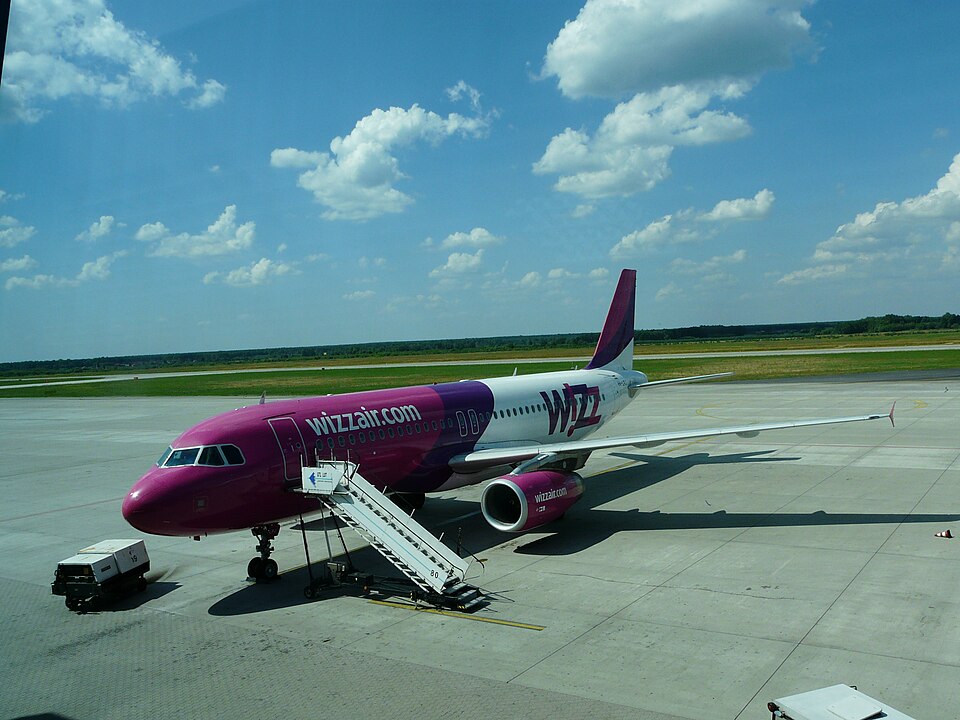
On 12 March 2009, at 0902 hrs, Airbus A320-233, registration HA-LPJ, was cleared for pushback from Stand 40 at London Luton Airport. The pushback was to face east, initially north then west up a slope. The tug driver and a headset operator were in attendance. After the commander released the brakes and cleared engine start, the pushback commenced. The manoeuvre was halted when the towbar's undercarriage lowered unintentionally. The undercarriage was raised and pushback resumed. Believing the aircraft would not align with the taxiway centreline, the tug driver decided to reposition the aircraft by towing it forward. During this forward movement, both the shear pin and axial pin on the towbar failed, detaching the aircraft from the tug. The tug driver stopped the tug and signalled the commander to set the parking brake. The aircraft, with both engines at idle, began rolling towards the tug. The tug driver vacated the tug two seconds before the aircraft's right engine collided with the tug cabin. The flight crew could not see the developing situation due to the aircraft's structure obscuring their view.
Findings
CCTV footage showed that just before the forward tow, the towbar and tug were at a large acute angle. The aircraft's nosewheel was later found turned nearly 90° to the right. The towbar head remained attached to the nosewheel. The handling agent noted that the maximum allowable nosewheel angle for an A320 during pushback is 90°, but pushes were normally made at angles between 45° and 60° at Luton. No markings indicating the maximum angle were present on this aircraft, nor was it stated in the operator's ground operations manual. The towbar manufacturer, after inspecting the towbar head, observed that the outer turn bush was sitting approximately 4 mm proud of the shear face due to apparent pre-incident damage. He commented that the pushback angle was near the 90° limit and that the misplaced bush could have acted as a shear pin, potentially explaining the acute angle without pin failure. Both pins had been replaced three weeks prior.
Safety actions
Although not a requirement at London Luton Airport, the handling agent amended its pushback procedure on the north apron, prohibiting engine starts until aircraft are positioned on the taxiway centreline. Additionally, the handling agent issued a notice to all its UK bases requiring that work equipment be inspected before use, that defects be reported, and that temporary repairs and modifications be authorised only by Fleet Maintenance or a relevant Service Engineer.