History of the Flight
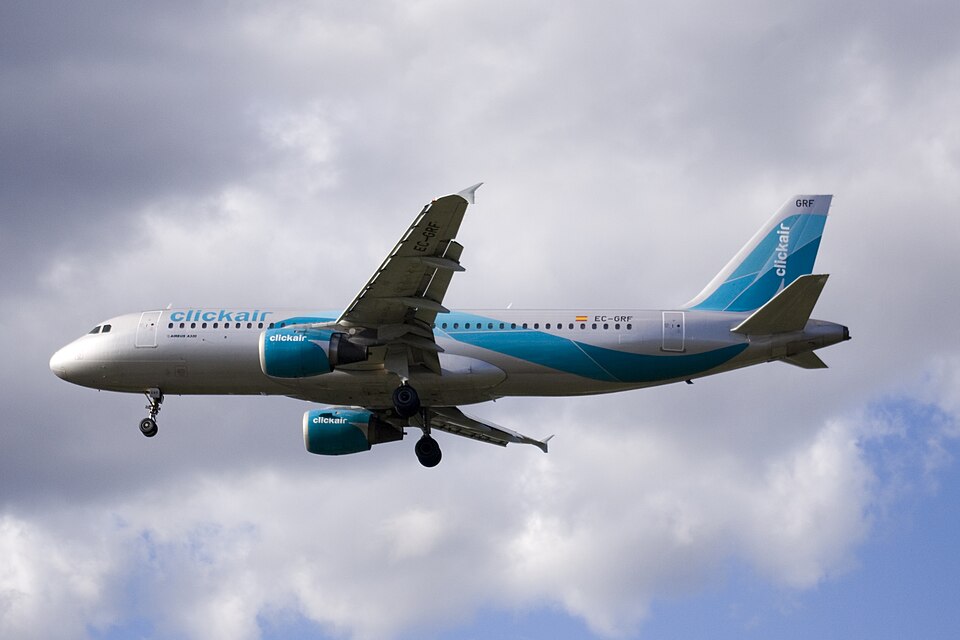
The aircraft, an Airbus A320-A1 registered EC-GRF, was pushed back from Stand 209R at London Heathrow Terminal 2 for a scheduled passenger flight to Madrid. Shortly after beginning to taxi, the crew received a Yellow hydraulic system low fluid level warning on the ECAM. The co-pilot observed a large pool of fluid on the taxiway. The crew performed the ECAM checklist and the procedure in the Flight Crew Operating Manual (FCOM). The departure was cancelled, and the aircraft returned to Terminal 2, parking on Stand 203.
During the taxi back, the aircraft stopped several times without braking issues. Upon reaching the stand, the aircraft stopped, and the commander applied the parking brake. However, the aircraft began moving forward. Both pilots attempted to stop it using the brake pedals, but the braking systems were deactivated when the parking brake was selected on. The engines were shut down, but the aircraft continued until the left engine inlet cowl struck the airbridge, causing damage to the cowl and the airbridge's protective railings. The airbridge was unoccupied. The aircraft had moved approximately four metres from the stop mark before the collision.
Examination and Findings
Inspection revealed a fractured hydraulic reducer union on the brake dual distribution valve (BDDV), which caused a leak in the Yellow hydraulic system. The A320 has three independent hydraulic systems (Blue, Green, Yellow), with the Yellow system also providing pressure for the parking brake via an accumulator. The parking brake is applied by lifting and rotating a handle in the cockpit, which directs Yellow hydraulic pressure to the alternate brake pistons. When the parking brake is selected on, the normal and alternate braking systems are deactivated.
Quick Access Recorder (QAR) data showed that full Yellow system pressure was available after engine start, but shortly after taxi began, pressure dropped to just below 2,000 psi, then further to below 500 psi about 40 seconds later. This triggered a low pressure warning. Later, while stationary, the pressure fell to zero and did not recover. The Green system pressure also dropped coincidentally but to a lesser degree.
Aircraft Systems Description
The BDDV supplies Yellow hydraulic pressure to the alternate braking system. It is pressurised by the Yellow system except during normal braking and parking brake application. During normal braking, an automatic selector valve cuts off Yellow supply to the BDDV and supplies Green pressure to the normal brakes. When the parking brake is applied, Yellow pressure goes to the parking brake circuit, bypassing the BDDV. The ECAM displays a "PARKING BRAKE ON" memo when the valve is in the ON position, regardless of actual pressure availability.
Service Bulletin
A previous incident led to the issuance of Service Bulletin 32-1201 in May 2001, which modifies the parking brake system to automatically restore normal braking in case of low Yellow hydraulic pressure. This configuration became the production standard for new aircraft. The European Aviation Safety Agency (EASA) mandated the bulletin on all affected aircraft by 31 March 2009. The incident aircraft was of a pre-SB configuration.
The ECAM abnormal procedure for a low Yellow hydraulic fluid level includes switching off the Power Transfer Unit (PTU) and the Yellow engine and electric pumps, and monitoring the brake accumulator pressure. The procedure does not indicate whether the parking brake is operative; pilots must check the triple pressure gauge for accumulator pressure and verify brake application after setting the parking brake.