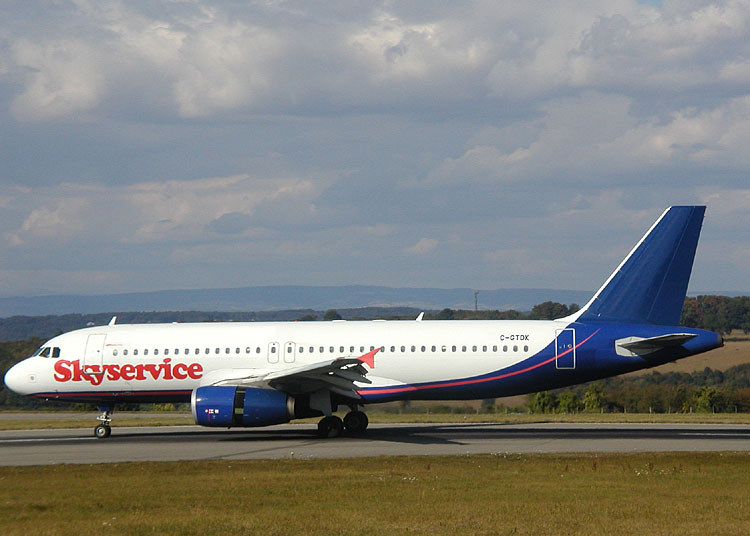
Synopsis
The aircraft and its pilots, normally based in Canada, were operating from Bristol Airport under a wet-lease agreement. The co-pilot, undergoing an extended line training program, was rostered to fly with the same line-training captain on four consecutive days. During the third day, the co-pilot practiced flying without autopilot, autothrust, or flight directors. On an ILS approach to Runway 09, the aircraft bounced on touchdown, and during the second touchdown, the tail contacted the runway.
History of Flight
The flight crew reported for duty at 0530 hrs UTC for a return flight from Bristol to Corfu. The commander flew the first sector to Corfu with the autopilot and other systems disengaged to demonstrate the landing technique. The return sector was flown by the co-pilot. Approaching London, the crew received the ATIS indicating Runway 09 in use with a light crosswind. They requested and were initially cleared for Runway 27, but were later vectored to Runway 09 due to traffic. The co-pilot flew the ILS approach manually. At 100 feet above decision altitude, the commander instructed him to look up from instruments. The aircraft was slightly right of centerline, then corrected. The flare began at 50 feet with a rate of descent of 900 ft/min. The aircraft touched down firmly, bounced, and tail strike occurred.
Engineering Investigation
A 20-foot scrape was found on the fuselage underside, with skin penetration near the pressure bulkhead and damage to frames 68, 69, and 70. The APU inlet duct was abraded, and two drain masts were damaged. A 40-foot scrape mark was observed on the runway, mainly blue with brownish areas. A temporary repair was completed, and a pitot static leak check was within limits. The aircraft was cleared for a non-revenue unpressurised ferry flight to Toulouse for permanent repairs.
Flight Recorder Analysis
The approach was stable until a slight right offset developed. Corrections led to oscillations and a decrease in airspeed from 134 kt to 119 kt at touchdown. The rate of descent increased, and the commander applied full back stick at 15 feet above airport level. Main gear touchdown occurred at +2.3g with a pitch of 9°, followed by spoiler deployment and pitch increase to 13.4°. A second touchdown at +1.5g occurred before pitch decreased.
Weather and Runway Topography
The ATIS reported wind from 160° at 7 kt, varying between 130° and 210°, visibility over 10 km, and cloud at 5,000 feet. FDR data indicated a tailwind component of 4 to 6 kt at touchdown. The airfield chart warned of possible windshear or turbulence with southeasterly or westerly winds. Runway 09 has a threshold elevation of 614 feet, slopes upward for the first quarter, and ground rises rapidly before the threshold, potentially affecting visual cues.
Training and Experience
The co-pilot had completed 327 hours of line training, exceeding the operator's typical minimum of 50 hours, due to the need for further training. He had been flying the A319 and A320 for approximately five months. His previous commercial flying experience is not detailed in the investigation.