Incident Details
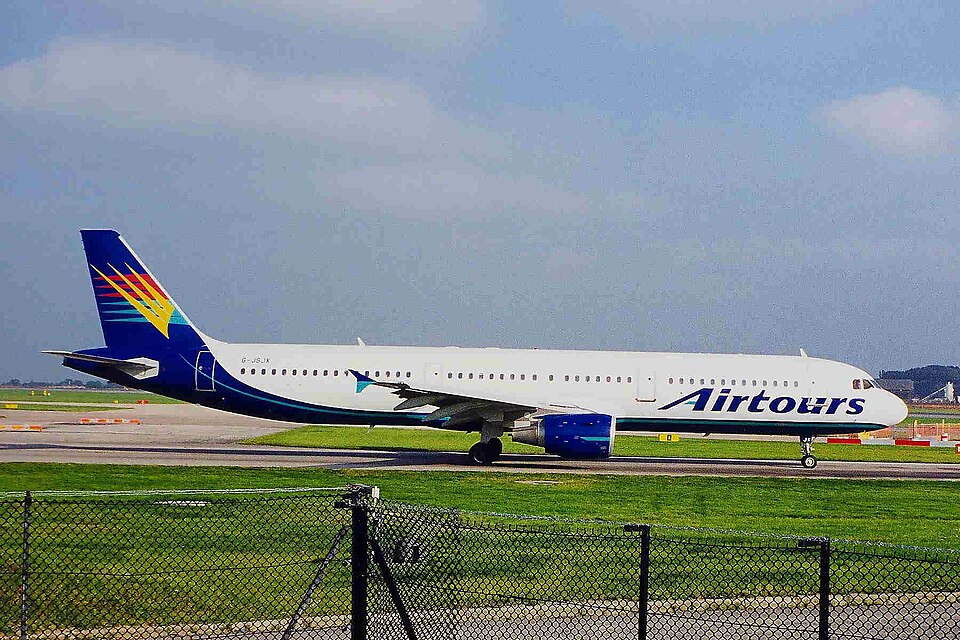
On 19 April 2001 at 0604 UTC, an Airbus A321-211, registration G-JSJX, was involved in a ground incident during pushback at Birmingham International Airport. The aircraft was being towed forward and to the left after a normal pushback when it came to a halt with a 'judder'. The ground handler informed the commander that the right forward edge of the tug was wedged under the aircraft. The tug driver believed the nose of the aircraft had descended onto the top of the cab. An engineer confirmed the tug was stuck and that the fuselage had been punctured. To free the tug, some passengers were moved from the front to the rear of the cabin.
Aircraft and Tug Information
The aircraft was an Airbus A321-211 powered by two CFM56-5B3/P turbofan engines, manufactured in 1997. The tug used was a Mercury Standard, a four-wheel cabbed vehicle with the driver cab at the front, extending approximately 2 metres above ground. During pushback, the tow bar is normally attached to the cab end of the tug, placing the cab closer to the aircraft. The tow bar was a Universal Tow-Bar Assembly designed for A320/321 aircraft. Measurements with the same configuration showed the distance from nose gear attachment to tug attachment was about 2.5 metres, with the cab approximately 0.36 metres behind the attachment point. The nose gear to nose distance was 5 metres, placing the cab under the aircraft during manoeuvre. The damage occurred about 2 metres above ground; the fuselage height varies with weight and centre of gravity. With this combination, a straight push ensures clearance, but any relative angle reduces it. In this incident, the tow bar was angled right and the tug turned left.
Investigation Findings
The pushback crew consisted of trained and qualified personnel. The ground-handling organisation had conducted initial and periodic risk assessments of pushback procedures, which were audited by the airline and airport authority. However, the potential collision risk between the tug cab and the fuselage had not been identified. Photographs showed a small area of deformation on the nose gear oleo and fluid spots on both nose tyres. The engineer who inspected the nose assembly shortly after the incident found no apparent faults, and no rectification to the nose gear was recorded. No reason for the fluid spots could be determined.
Aftermath
Subsequent to the incident, the ground-handling organisation implemented short-term measures, including guidance to personnel on the issues and increased awareness. They also pursued physical means to extend the distance between the tug and the aircraft to prevent recurrence.