History of the Flight
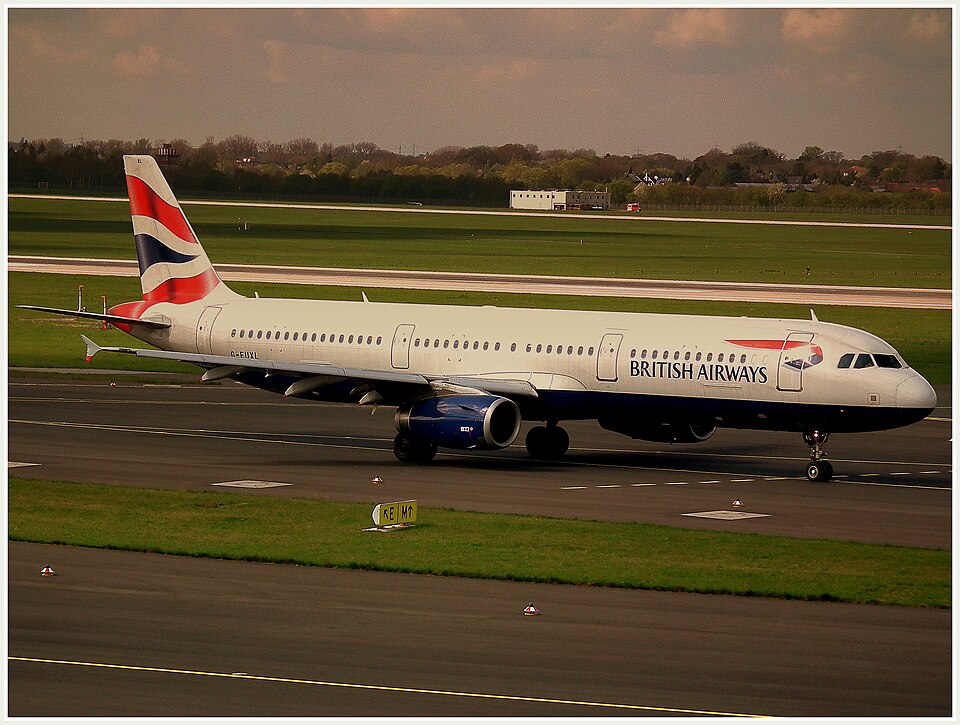
The aircraft, an Airbus A321-231 (registration G-EUXL), was operating a scheduled commercial passenger flight from London Heathrow to Glasgow. The pilots were on their first sector of the day, well rested, and had not flown the previous day. They met 15 minutes before check-in and purchased snack meals from a food outlet, but did not eat them prior to the incident.
Pre-flight preparation was routine with no aircraft or operational issues. Start-up and taxi out were normal. The aircraft took off from Runway 27R at 1520 hrs. The commander stated that on passing approximately FL120, she started feeling light-headed and slightly dizzy. The onset coincided with looking down at the centre console to change a radio frequency while the aircraft was rolling out of a 25° angle of bank turn and the pitch attitude was increasing by 4°. The dizziness did not abate. At FL210, she asked the co-pilot if she felt well. The co-pilot initially said she felt “OK”, but shortly afterwards said she was feeling light-headed. Both pilots immediately donned their oxygen masks. The co-pilot levelled the aircraft.
The crew decided to return to Heathrow, declared an emergency, and informed ATC. At approximately 10,000 ft, they were asked if they could accept Runway 27R for landing, to which they agreed. They requested a longer-than-normal straight-in approach. The aircraft landed safely at 1616 hrs. After vacating the runway, the pilots removed their oxygen masks but, because some light-headedness returned, donned them again. As they approached their allocated parking stand, they removed the masks again with no ill effects.
Throughout the incident, there was no indication of an aircraft malfunction. The pressurisation system appeared to operate normally; the maximum cabin altitude indicated was 3,200 ft. The pilots reported no abnormal smells, smoke, or fumes on the flight deck. None of the cabin crew or passengers experienced any ill effects.
Medical Aspects
The commander stated she started to feel better shortly after fitting the mask but only felt fully recovered at approximately 7,000 ft in the descent. She had recently suffered from a cold but felt fit to fly and had not taken any medication in the 48 hours prior. The co-pilot felt better approximately 5 seconds after donning her oxygen mask and stated this was the first time she could recall experiencing such symptoms in her 12-year career with the operator.
The following day, the company flight operations department consulted a company doctor by telephone. The doctor said that since the pilots were no longer experiencing symptoms or after-effects, there was no need for further examination. Both pilots subsequently flew without a recurrence of these symptoms.
The investigation considered possible medical causes including alternobaric vertigo, oculogyric disorientation, and hyperventilation, but no definitive cause was determined.
Aircraft Examination
After arrival on stand, the Airport Fire and Rescue Service boarded the aircraft and examined the cockpit for smoke or fumes; none were detected. Paramedics examined the pilots but found no abnormal symptoms.
The aircraft was inspected by the operator’s maintenance personnel under AAIB supervision. There had been no engine oil or hydraulic fluid uplifts prior to the flight, and the aircraft had not been de-iced. Initial visual inspection of the cockpit area revealed no anomalies. Analysis of flight data showed the bleed air, air conditioning, and pressurisation systems appeared to work normally. An extensive ground run test with various system configurations also showed normal operation. No adverse effects were felt by personnel in the cockpit during tests. The bleed air and air conditioning ducting were thoroughly inspected; no anomalies or contamination were found. The aircraft subsequently flew without similar incidents.
CVR Fault
The aircraft was equipped with a 25-hour Flight Data Recorder (FDR), a Digital AIDS Recorder (DAR), and a 120-minute Cockpit Voice Recorder (CVR) recording to solid state memory. FDR and DAR data were available for the entire flight. The CVR provided a combined record of the commander’s, co-pilot’s, and PA communications, but due to a fault within the CVR, the Cockpit Area Microphone (CAM) recording was not available. The CVR fault was discussed in detail in the bulletin. One Safety Recommendation was made regarding this fault.