History of the First Incident
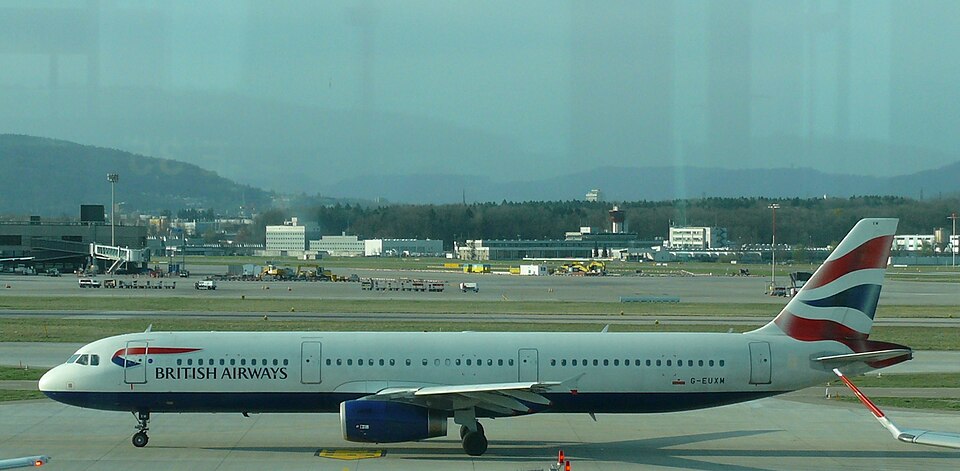
On 20 April 2012, an Airbus A321-231 (registration G-EUXM) was operating a passenger service from Stockholm Arlanda to London Heathrow. The flight was uneventful until joining the Lambourne hold at around 1230 hrs, with the co-pilot as Pilot Flying (PF). The aircraft descended in light turbulence to FL140, with an indicated total air temperature of +3°C. The pilots did not observe any airframe icing, but St. Elmo's fire was visible. Shortly after entering cloud tops, a white flash of lightning occurred without associated noise. About one second later, the airspeed indications on both Primary Flying Displays (PFDs) fluctuated, showing alternately high and low speeds. The standby airspeed indicator also fluctuated, though to a lesser extent. The commander noted that one PFD speed indication briefly appeared blank. The disruption lasted between 10 seconds and 2 minutes. The pilots did not recall fluctuations in vertical speed or altitude.
Coincident with the airspeed fluctuations, the master warning sounded repeatedly, an Electronic Centralised Aircraft Monitor (ECAM) message appeared, the autopilot disconnected without its audio caution, and flight controls changed to Alternate Law. The pilots began the 'Unreliable Speed Indication' procedure, turning off flight directors. PF left the autothrottle engaged while monitoring engine N1 indications. A TCAS Resolution Advisory (RA) appeared on the PFDs, depicted as a green area below 500 ft/min climb and red above, indicating a climb less than 500 ft/min or a descent was appropriate. No audio accompanied the RA, causing uncertainty. The navigation display showed conflicting traffic 2,500 ft above and level. The aircraft was in a gentle descent, already complying with the RA. The commander informed ATC, which could not identify conflicting traffic on radar. The audio callout "clear of conflict" sounded, and the crew leveled at FL140. With ATC agreement, the aircraft turned away from a storm cell towards better conditions in the Bovingdon hold. The instruments stopped fluctuating. The pilots crosschecked pitch and power tables in the Quick Reference Handbook (QRH) and confirmed speed indications appeared correct at 240 KIAS. PF re-engaged the autopilot.
The ECAM message 'nav-adr disagree' appeared, and the pilots carried out associated actions, following the optional 'if no spd disagree' branch. The ECAM then displayed 'aoa discrepancy', suggesting a mismatch between the three Angle of Attack (AOA) probes. No further procedures were required. The commander checked the aircraft electronic maintenance pages for AOA probe status and noted all three outputs were within 0.5° of each other. The aircraft entered the Bovingdon hold in VMC. The commander referred to the company Abnormal Procedures manual and noted an AOA fault might cause spurious stall warnings. Using the company's T-DODAR decision-making tool, the crew decided to divert to London Stansted, which was clear of adverse weather. A PAN was declared, and at ATC request, squawk 7700 was set.
The flight controls remained in Alternate Law. The commander sought supplemental information on Direct Law landings due to their rarity. With additional storm cells developing near Stansted, he prioritized landing. The autopilot was disengaged, and an uneventful landing was accomplished in Direct Law using autothrust.
Subsequent Incident
On 16 June 2012, G-EUXM experienced a second unreliable airspeed event while operating from Edinburgh to London Heathrow. While climbing through FL265 in VMC, the aircraft flew through the top of a cloud 'dome'. The commander's airspeed indication reduced towards zero, returned to normal, then reduced again. The co-pilot's indications were similarly affected, with a red 'spd' caption visible. The autopilot disconnected, and the pilots performed unreliable airspeed actions, disconnecting autothrust and turning off flight directors. When initial actions were completed, airspeed indications appeared normal. The aircraft was in Alternate Law, and the pilots knew it would revert to Direct Law for landing. Considering destination weather (wind 230° at 24 kt gusting 39 kt), they diverted to London Stansted, where wind was 210° at 22 kt. Neither pilot saw St. Elmo's fire or airframe icing during this event.
Meteorological Information
For the first incident, the UK Met Office provided an aftercast showing conditions conducive to thunderstorms with electrical activity and lightning strikes near the Lambourne hold. London airports reported thunderstorms, hail, and strong wind gusts. For the second incident, satellite cloud top temperatures were approximately -50°C.
Other Aircraft
No other aircraft in the Lambourne hold at the time of the first incident reported unusual occurrences or TCAS RAs. Several aircraft had been struck by lightning during descent and approach to London area airports that day without reported adverse effects.
System Information
The Electronic Instrument System (EIS) includes PFD, ND, and ECAM functions. ECAM uses data processed by SDAC, FWC, and DMC, presented on Engine/Warning Display and System Display. The Centralised Fault Display System (CFDS) allows maintenance information extraction. The aircraft has three Air Data Inertial Reference Units (ADIRUs), each comprising an ADR and IR. ADR supplies barometric altitude, airspeed, mach, angle of attack, temperature, and overspeed warnings. The ADIRS panel allows mode selection. In normal operation, ADIRU 1 feeds left instruments, ADIRU 2 right, and ADIRU 3 is standby. Air data comes from three pitot probes, six static probes, three AOA sensors, and two TAT probes. Data from AOA and TAT is electrical; pitot and static pressures are converted by Air Data Modules.
The pilots commented that company training on unreliable airspeed made the incident straightforward, but noted the QRH procedure spanned four pages, with pitch and power settings on the fourth page, causing delay. The operator planned to discuss with the manufacturer, which noted that memory items could be actioned immediately.