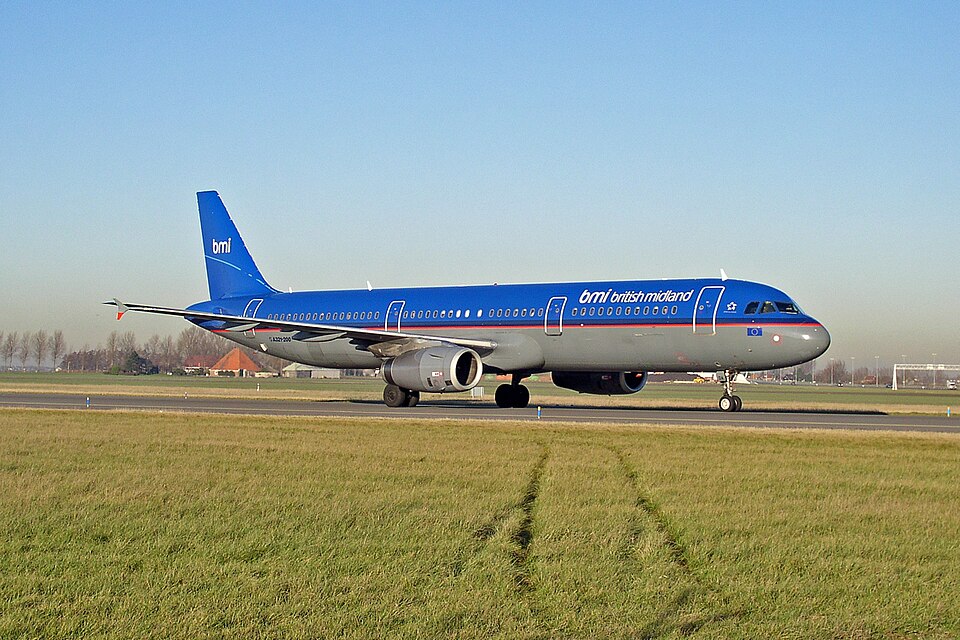
History of the Flight
The crew was rostered for a double rotation between Heathrow and Dublin. The accident occurred on the second landing at Dublin, with the first officer as the handling pilot. The aircraft was radar vectored onto the ILS for Runway 28. The weather was wind 250° at 14 kt, visibility 10 km, scattered cloud at 1,300 feet and broken at 2,300 feet, temperature 18°C, QNH 1007.
The approach was generally stable, flown initially on autopilot to about 900 feet, then manually with autothrust engaged. At 120 feet radio altitude, the aircraft was slightly above the glidepath, and the pilot pitched down slightly. At 80 feet, power was reduced; at 50 feet, progressive back stick was applied. The rate of descent decreased, but a hard touchdown resulted, causing the aircraft to bounce. The right main landing gear lifted slightly, while the left remained in contact. The pilot flying kept back stick applied to cushion the landing, and the aircraft continued to pitch up.
Almost coincident with the second touchdown, the commander pressed his sidestick takeover button and applied forward stick. The aircraft pitched down for a normal landing rollout. The pilots were aware of the hard initial landing but unaware that the second touchdown had caused a tailstrike. They discussed the landing and decided a formal heavy landing check was not warranted. The aircraft taxied to the stand, and passengers disembarked.
The aircraft was late, and the crew began turn‑round checks for the return flight to Heathrow. The cabin crew reported a "clanking" noise in the rear galley. The commander investigated and concluded it was likely galley equipment moving during the firm landing. At the time, the operator's procedures did not require the flight deck crew to perform an external inspection during turn‑round; that was the responsibility of a sub‑contractor's engineer.
The aircraft departed for Heathrow slightly behind schedule. During the climb, passing FL 150, the crew noticed a high cabin altitude climb rate, and rear cabin crew reported a loud "whooshing" sound. The commander levelled at FL 170 but, as cabin altitude continued to climb, requested a descent to FL 90. ATC cleared the aircraft to FL 110 due to traffic, and the cabin altitude stabilised at 4,200 feet, so the commander maintained FL 110. The aircraft landed uneventfully at Heathrow. An after‑flight inspection revealed damage consistent with a tailstrike, including an area of ruptured fuselage skin.
Flight Recorder Analysis
The Cockpit Voice Recorder (CVR), an Allied Signal A200S, had a two‑hour recording duration covering the return flight but not the landing at Dublin. The Flight Data Recorder (FDR), an Allied Signal Solid State Recorder, identified the tailstrike during the previous landing.
During the approach, the autopilot was disengaged at about 600 feet AGL. Engine power increased, rate of descent decreased to about 600 ft/min, and the aircraft drifted slightly above the glidepath (max 0.5 dots). At 400 feet, power reduced, rate of descent increased to 900 ft/min, and the aircraft regained the glidepath. At 200 feet, power increased to 1.15 EPR, rate of descent decreased to 500 ft/min, and the aircraft again deviated above the glidepath; airspeed was 146‑150 kt.
At about 80 feet, power was reduced. Four seconds before touchdown, at 52 feet radio altitude, the first officer's sidestick began to demand nose‑up elevator. The aircraft touched down at a pitch attitude of 5.3° with a normal acceleration of 2.16g. The sidestick position was 13.4° nose‑up, elevator angle 11.5°. The sidestick then moved nose‑down, and the elevator followed. Ground spoilers deployed automatically. The right main landing gear oleo discrete indicated a slight rebound.
After the initial touchdown, pitch attitude increased to a maximum of 10.5°. The first officer's sidestick was moving nose‑down but was still about 5° nose‑up. About 0.25 seconds after maximum pitch, the commander input a nose‑down demand of 3°. He then overrode the first officer's sidestick with a nose‑up demand of 11° as the nose landing gear lowered onto the runway.
Damage to Aircraft
Fuselage underside abrasion was consistent with a tailstrike. The damage extended laterally to stringer 40 on the right and halfway between stringers 40 and 39 on the left, indicating a slight left bank at the time. The FDR confirmed that the right main gear oleo decompressed after initial touchdown while the left remained compressed. The most severe damage occurred over frames 64, 65, and 66, where skin was completely ground away, abrading frames and stringers. A section of skin detached from the aft edge of frame 65, accounting for the pressurisation difficulties on the subsequent flight.
Discussion
The aircraft began to flare at 52 feet radio height, about 4 seconds before touchdown. The first officer made an initial 7° nose‑up demand followed by a full 16° nose‑up demand. The elevator reached 14° nose‑up at the tail strike. The aircraft was descending at 900 ft/min six seconds prior to touchdown; nose‑up demand reduced the rate to about 480 ft/min at touchdown.
After the initial touchdown, the aircraft continued to pitch up, resulting in the tail strike on the second touchdown. This was due to a combination of three effects: the pitch‑up effect of automatic ground spoiler deployment, the nose‑up elevator (which, although the sidestick moved forward, still produced some nose‑up demand), and the pitching inertia developed during the landing flare.
The manufacturer's database indicates 10 tailscrapes involving the A321 since its introduction, almost all during landing. The non‑discovery of damage during the engineer's external inspection is difficult to understand; however, many ground equipment items were present, and the engineer may have been distracted. Had the damage been discovered, the aircraft would not have departed and would not have suffered pressurisation problems. The commander's actions after encountering the pressurisation problem were entirely correct.