History
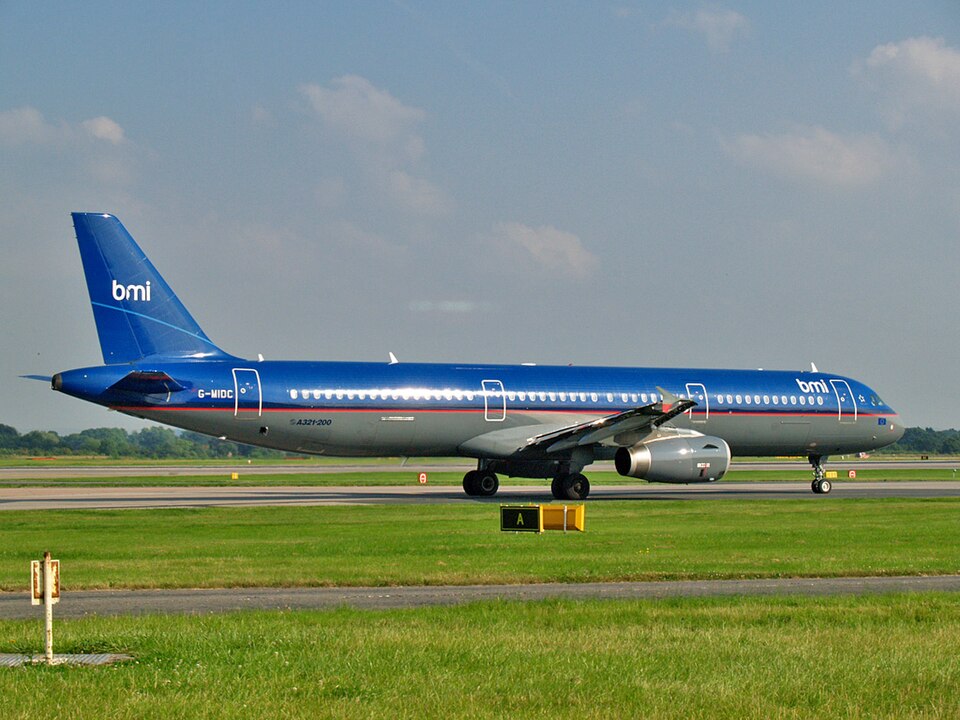
On 13 November 2006, an Airbus A321-231, registration G-MIDC, operated a passenger flight from Dublin Airport to London Heathrow Airport (LHR). During the post-flight walk-around inspection at LHR, the flight crew observed that a thrust reverser blocker door was missing from the left engine by-pass duct. The acoustic panels lining the interior of the duct had also been damaged. No defects had been noted during the pre-flight inspection at Dublin, no unusual vibrations or noises were experienced during the flight, and the aircraft's fault monitoring systems recorded no anomalies. The remains of the blocker door were later found near taxiway E7 at Dublin Airport.
Investigation
The Irish Accident Investigation Unit requested the UK AAIB to conduct an investigation. The blocker door and its mounting hardware were examined. The door consists of an aluminium alloy plate secured to the thrust reverser translating sleeve by two hinges, each comprising a stainless steel spherical plain bearing pressed into a lug in the door structure. A hinged arm at the rear of the door connects to the inner fixed section of the thrust reverser.
Findings
Examination of the recovered door showed that the actuation arm had failed due to overload. Both lugs on the forward edge of the door, which housed the bearings, had failed. The bearings remained in their mounting brackets on the translating sleeve. Laboratory analysis of the fracture surfaces revealed areas of inter-laminar and inter-granular corrosion cracks at the lug holes, indicative of stress corrosion. Overload failure areas were also present towards the rear of each lug. The lower lug had additionally been distorted by torsional load before failure.
Maintenance History
The door had been inspected and repaired by a Maintenance Repair Organisation (MRO) in December 2002 and fitted to G-MIDC in February 2005 during a C check. No cracks were detected in the lugs at that time. The maintenance program did not require routine lubrication of the blocker door bearings.
Analysis
The deformation of the lower lug indicated that the upper lug failed first, leading to failure of the lower lug and actuation arm, releasing the door. The use of a stainless steel bearing in the aluminium lug created a galvanic corrosion cell, initiating corrosion cracking. Primer residue was found in the lug holes, but corrosion cracking occurred nonetheless, possibly due to insufficient primer thickness or damage during installation. The seized upper bearing introduced additional torsional loads, accelerating crack propagation.
Safety Action
The manufacturer is investigating several similar events and, based on the results, will take action to minimise the possibility of additional failures. No Safety Recommendations were considered necessary at the time.