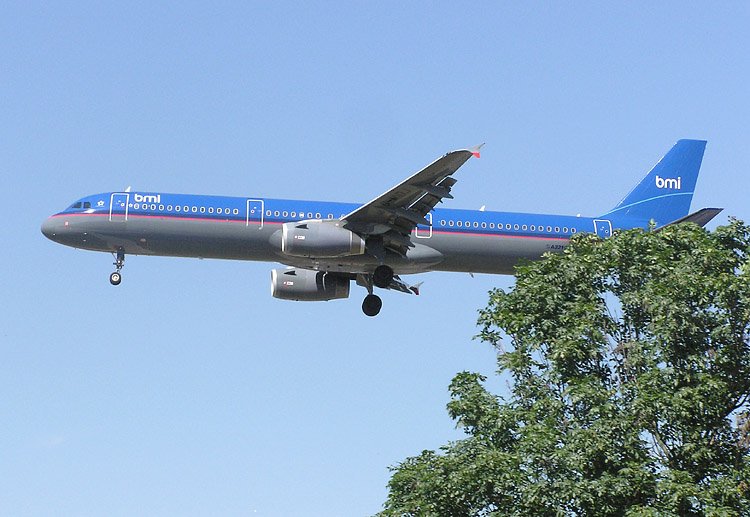
History of the Flight
During the turnaround at Glasgow Airport after a flight from London Heathrow, the crew and a ground engineer noted unusual noises coming from the auxiliary power unit (APU). The commander selected the APU off and used an external air source to start the engines. The subsequent takeoff and climb were uneventful.
Incident During Descent
Shortly after commencing descent from FL310 in preparation for approach to Heathrow, the 'APU BLEED LEAK' caution illuminated, followed closely by the 'ENG 1 BLEED LEAK' caution. The flight crew completed the Electronic Centralised Aircraft Monitoring (ECAM) actions. The commander advised air traffic control that the aircraft had a pressurisation problem and continued the cleared descent to FL200. He also briefed the Senior Cabin Attendant (SCA) about the situation and warned of a possible rapid descent.
Loss of Pressurisation
The co-pilot, as handling pilot, continued flying while the commander reviewed the Quick Reference Handbook (QRH) and ECAM. Both air conditioning packs were indicating off, and the cabin altitude showed a vertical speed increase of approximately 1,000 ft/min. As the cabin altitude reached 10,000 ft, both pilots donned their oxygen masks. The 'CAB PR EXCESS CAB ALT' warning illuminated; the co-pilot declared a PAN, and the commander initiated ECAM actions. As the cabin altitude continued to climb, the commander deployed the passenger oxygen masks.
ATC cleared the aircraft to descend to FL100, and the pilots completed the relevant ECAM actions. After a further descent to FL80, the pilots reviewed the situation and removed their oxygen masks. The commander briefed the SCA that it was now safe for passengers to remove their masks and that he planned a gentle descent toward Heathrow. The co-pilot continued as handling pilot for a normal approach and landing, maintaining a descent of about 700 ft/min. ATC provided radar vectors suitable for the desired descent rate. A normal landing was achieved on Runway 27 Left.
Post-Landing and Company Actions
After clearing the runway, the aircraft stopped and communication was established with the Airfield Fire and Rescue Service (AFRS) on 121.6 MHz. With no other problems indicated, the aircraft taxied to a stand where passengers disembarked normally. Throughout the incident, the commander and SCA made regular public address announcements to update passengers.
Following the incident, checks were carried out on the aircraft pressurisation system. The aircraft had experienced intermittent bleed problems since 28 June 2006. After the incident, air leaks were found associated with both air conditioning packs. Other defects noted during ground checks were rectified by replacing the No 2 engine bleed shut-off valves and the engine transducer. Additionally, appropriate seals on both engines were replaced, and leak checks were completed. Engine ground runs confirmed proper functioning of the pressurisation system. The APU defect was attributed to a faulty oil pressure switch, which was replaced. The aircraft was released back to service and monitored closely for one month with no recurrence of pressurisation problems.