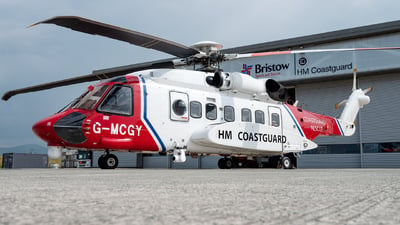
Aircraft and Location
The accident involved a Sikorsky S-92A helicopter, registration G-MCGY, at Derriford Hospital in Plymouth, Devon, on 4 March 2022. The aircraft was operated by a UK search and rescue service.
Injuries
The source explicitly states that there was one fatally injured person and one seriously injured person. The fatally injured person and her relative are mentioned in the report, as well as a seriously injured person.
History of the Flight
The report includes a section on the history of the flight, but the provided text does not contain the specific details. The investigation examined the helicopter's downwash and the design of the hospital helicopter landing site (HLS).
Previous Incidents
The report notes previous downwash-related incidents at the Derriford Hospital HLS, including complaints in 2015, a pedestrian injury in 2016, and an unreported incident in July 2021. These are referred to as downwash incidents prior to March 2022.
Risk Assessments
The hospital trust conducted risk assessments for the HLS and car parks. The report reviews the trust's risk management policy and the identification of hazards, evaluation of risks, and checking that risks were adequately managed. It also notes the competence of those involved.
Guidance and Standards
The report references various guidance documents, including ICAO Annex 14, ICAO Heliport Manual, HBN 15-03 (Hospital helipads), CAP 1264 (Standards for helicopter landing areas at hospitals), and CAP 738 (Safeguarding Aerodromes). The helicopter operator's manuals are also cited, including the UKSAR Flight OM and Part C Route Guide.
Investigation Context
The Air Accidents Investigation Branch (AAIB) conducted the investigation under Annex 13 to the ICAO Convention and UK regulations. The report was published on 2 November 2023.