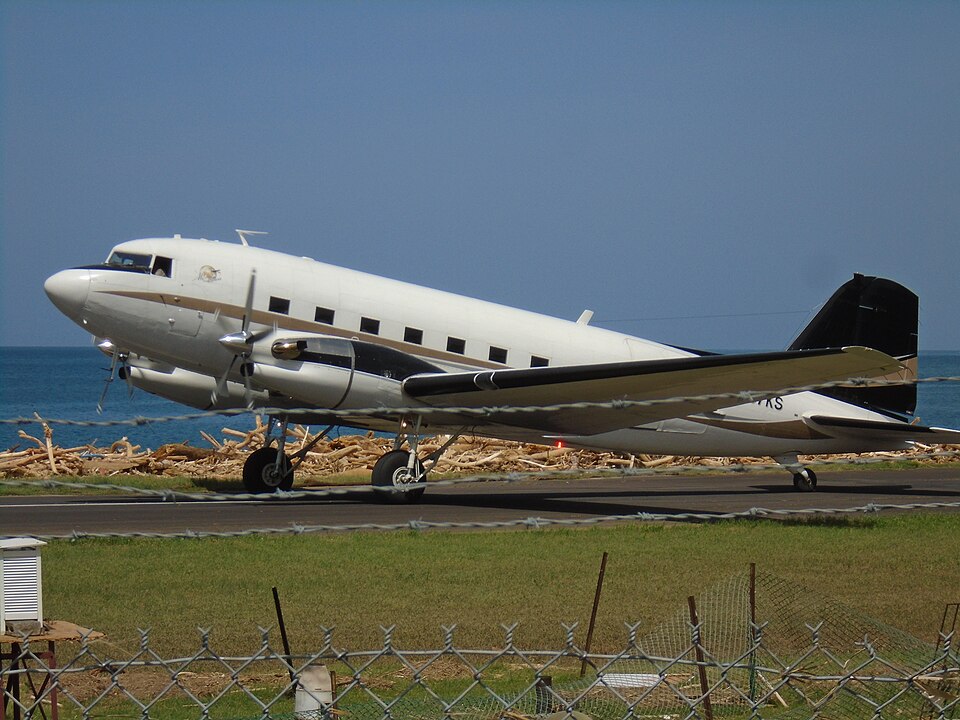
Accident Overview
A turbine-powered Douglas DC-3C, operating at maximum gross weight on a repositioning flight, experienced a complete loss of power from the left engine shortly after liftoff. The event occurred approximately three seconds after the airplane reached decision speed (V1). The airplane was part of a test program evaluating a new, higher horsepower engine installation.
Sequence of Events
Following the power loss, the left engine's propeller began to auto-feather. However, the feathering process stopped about three seconds after the power loss. The airplane yawed and banked to the left, descended, and subsequently impacted terrain. Recorded engine data indicated that the power loss resulted from an engine flameout. Despite examination, investigators could not determine a definitive reason for either the flameout or the interruption of the auto-feather system.
Possible Factors
It is plausible that an air pocket developed in the fuel system during refueling conducted just before the flight. However, this scenario could not be tested or confirmed. The auto-feather system interruption may have occurred if the left power lever was manually retarded during the auto-feather sequence.
Operational Context
The power loss and auto-feather interruption occurred during a critical, time-sensitive phase of flight. The airplane was at low altitude and below its minimum controllable airspeed (Vmc). The acutely transitional nature of the flight phase would have challenged the pilots' ability to manually feather the propeller quickly and accurately. The time available for the crew to respond to the unexpected event was likely less than needed to recognize the problem and take necessary action, even if that action were a memory item on an immediate action checklist.