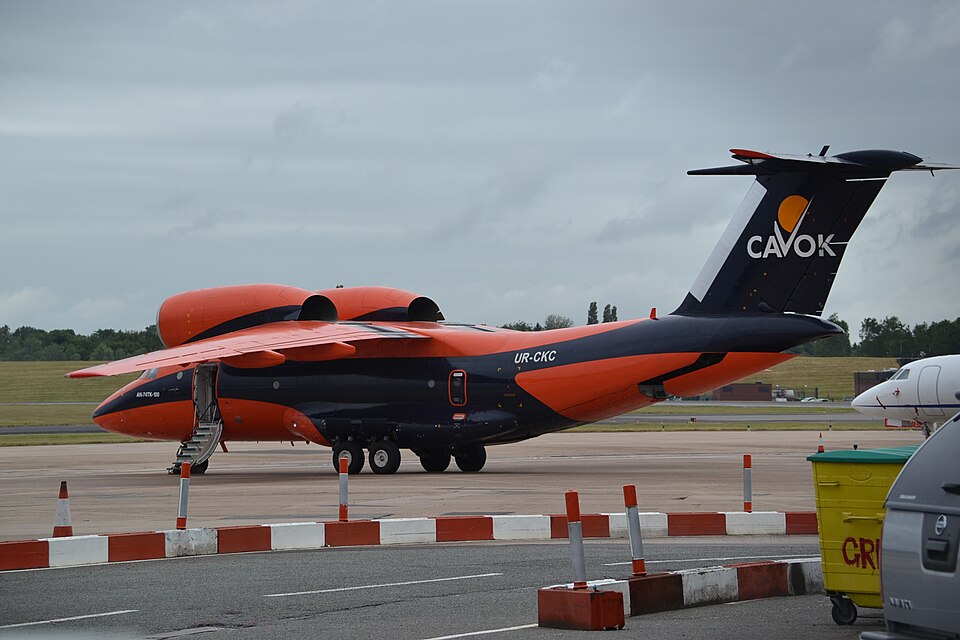
Accident Details
On 29 July 2017 at about 0905 hours local time, an Antonov AN-74TK-100, registration UR-CKC, operated by CAVOK Airlines LLC on a positioning flight from Sao Tome International Airport to Kotoka International Airport, Accra, experienced a rejected takeoff that led to a runway excursion. The aircraft was destroyed, and the Flight Navigator sustained an injury. The flight was conducted under an Instrument Flight Rules (IFR) flight plan in Visual Meteorological Conditions (VMC). The aircraft had arrived in Sao Tome the previous day from Stavanger, Norway, via Luxembourg and Ghardaia, Algeria, as a cargo flight.
Pre-Flight and Departure
The crew, consisting of a Captain, First Officer, Flight Engineer, Flight Navigator, and two Maintenance Engineers, arrived at the airport around 0800 hours. They performed pre-flight inspections, weight and balance calculations, and performance computations. After refueling with 5,700 kg of fuel, the crew requested engine start clearance at 0850 hours. Engine start procedures were completed with normal parameters. Initially cleared to taxi to Runway 11, the crew requested Runway 29 for departure, which was approved. The tower did not provide information about possible bird presence on the aerodrome or runway.
Sequence of the Rejected Takeoff
At 0905 hours, the takeoff roll began with the First Officer as pilot flying and the Captain as pilot monitoring. During the first half of the roll, the Captain observed five to six eagles rising from the runway and flying dangerously close. He asked the Flight Engineer to check the flood lights and monitor engine parameters. As the aircraft accelerated to 180 km/h, the crew saw a flock of eagles ahead that had not been visible before. The Captain took control and decided within four seconds to abort the takeoff. A bang was heard, and aural/visual warnings indicated left engine failure, dangerous vibration, and a takeoff prohibition. The rejected takeoff was initiated at 220 km/h, about five seconds after sighting the birds. The Captain immediately applied full brake pedals, assessed braking as ineffective, and used emergency braking at about 130 km/h. Realizing the aircraft would not stop within the remaining runway length of approximately 272.3 meters and a ravine ahead, he intentionally veered right to extend stopping distance. The aircraft exited the runway at about 76 km/h. At 60 km/h, the Captain instructed the Flight Engineer to close the fuel emergency shutoff cock. The aircraft traveled about 95 meters from the exit point before entering the ravine, where the forward fuselage separated from the bulkhead behind the cockpit. The aircraft came to rest at coordinates N002° 2' 51'' and E006° 42' 07''. The accident occurred in daylight at about 0905 hours.
Probable Cause
The official investigation determined that the cause of the accident was due to the presence of birds on the runway, leading to a rejected takeoff at a speed above decision speed V1, which was inconsistent with CAVOK's Standard Operating Procedures. Contributory factors included failure of the crew to deploy speed brakes/spoilers, inadequate flight crew training on rejected takeoff procedure scenarios, omission of the takeoff briefing in CAVOK's normal operations checklist, and poor Crew Resource Management.