Accident Overview
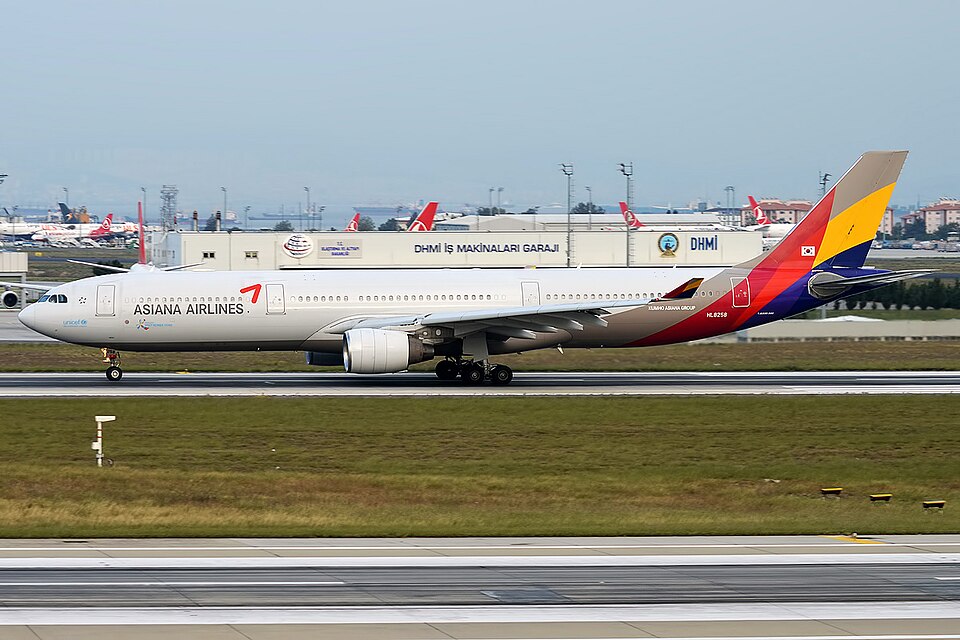
On Tuesday, August 21, 2012, an Airbus A330-300, registered HL8258, operated by Asiana Airlines Inc., departed Honolulu International Airport as scheduled flight 231 bound for Incheon International Airport. While cruising at approximately 40,000 ft over Matsue City, Shimane Prefecture, Japan, around 15:17 Japan Standard Time, the aircraft experienced severe shaking. Two passengers sustained serious injuries, and one passenger suffered minor injuries. The aircraft was not damaged. There were 221 persons on board: the pilot in command (PIC), 14 other crew members, and 206 passengers.
Flight Crew and Duties
The cockpit crew consisted of the PIC, a Route Captain (R Captain), and a First Officer (FO). During the cruise phase over Japan, the PIC acted as pilot monitoring (PM) and the R Captain as pilot flying (PF).
Sequence of Events from Recorded Data
Based on Digital Flight Data Recorder (DFDR) and Cockpit Voice Recorder (CVR) records, the following timeline was established:
- At 15:16:14, a small change in vertical acceleration began.
- At 15:16:24, the FCU speed selector was set to M0.78.
- At 15:16:29, an operation sound of the seat belt selector was heard.
- By 15:16:30, the wind, previously from the right rear at 16 kt, began to rotate counter-clockwise.
- At 15:16:36, the wind direction changed to a direct headwind; the aircraft's angle of attack increased suddenly without a pitch angle change.
- At 15:16:38, wind speed reached 34 kt; aircraft speed temporarily exceeded MMO (M0.86), triggering an overspeed warning. The aircraft began to climb.
- At 15:16:40, static air temperature rose rapidly by 4°C and remained elevated for about 15 seconds. Vertical acceleration peaked at 1.88 G. Wind continued rotating.
- At 15:16:41, the rate of climb reached approximately 3,300 ft/min.
- At 15:16:42, crosswinds from the left at 20 kt; vertical acceleration dropped to 0.04 G.
- At 15:16:44, cabin attendants made a passenger address regarding shaking and seat belt fastening.
- At 15:16:46, wind became a tailwind and increased. The aircraft continued climbing, and an altitude deviation alert sounded.
- At 15:16:48, the autopilot (A/P) was disengaged by a button on the PIC's sidestick; an A/P disengagement tone sounded.
- At 15:16:54, the PIC's sidestick was pushed forward, causing the pitch angle to rapidly change to -6.3° and vertical acceleration to -0.09 G.
- At 15:16:55, tailwind peaked at 52 kt; roll angle varied between 30.2° right and 17.9° left; pitch angle reached a maximum of +14.8°.
Injuries and Passenger Actions
Two passengers were seriously injured: one was walking in the rear aisle when the initial severe shaking occurred, and another removed their seat belt to assist the injured passenger during a subsequent severe shake, sustaining injury. One additional passenger suffered minor injuries.
Operational Factors
According to the investigation, the initial severe shaking resulted from the aircraft passing through or near cumulonimbus clouds. This occurred because the PIC and R Captain did not notice that the weather radar was off, leading to encountering atmospheric disturbances with severe wind changes and strong updrafts. The subsequent shaking may have been influenced by the PIC's control inputs after disengaging the A/P. The failure to detect the weather radar being off was attributed to insufficient monitoring of weather conditions and instruments.