Occurrence
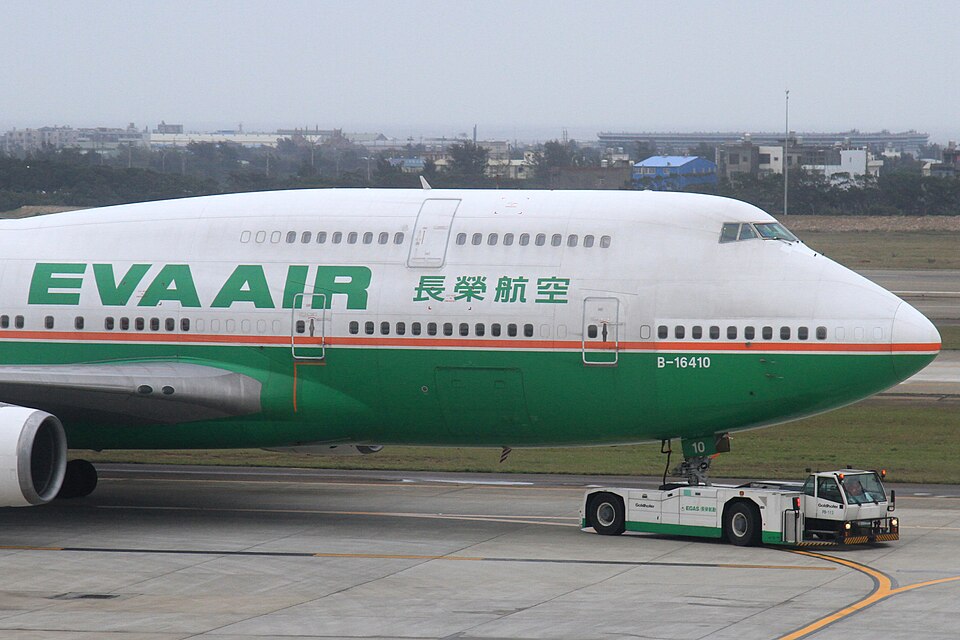
On February 23, 2008, EVA Airways Flight BR67, a Boeing 747-400 with registration B-16410, operated a scheduled flight from Taoyuan International Airport, Taiwan, to Bangkok Suvarnabhumi International Airport, Thailand. The aircraft carried 2 pilots, 3 additional cockpit crewmembers, 14 cabin crewmembers, and 296 passengers. It took off at 0934 and landed at 1301. After parking at the gate at approximately 1307, disembarkation began. At about 1310, passengers in the rear cabin observed smoke emanating from the left DADO panel beneath seats 64A/65A. Cabin crew directed passengers to leave via the aerobridge immediately. Following passenger egress, the EVA Bangkok maintenance representative de-energized electrical power and discharged an onboard fire extinguisher through the meshed DADO panel toward the smoke source, which extinguished the smoke. All occupants were safe. During disembarkation, cabin doors L4 and R5 were opened by passengers.
Investigation Findings
The maintenance representative accessed the waste tank compartment in the aft cargo section and discovered that rivets attaching an aluminum standoff for wiring had broken and fallen. One of the three-phase APU power supply cables from No. 1 APU generator had chafed against the attached bolt of a waste tank tube fixture, causing cable insulation damage. It was presumed that the exposed cable grounded against the aircraft structure, resulting in a short circuit and subsequent cabin smoke. Examination of the surrounding area revealed no other system abnormalities aside from the generator cables and fire-damaged insulation blankets. Soot on nearby surfaces was removable by hand. The representative deactivated the APU and repaired the defective cable with insulation wrappings before the aircraft was cleared for its next scheduled flight to London.
Probable Causes
The investigation identified three findings related to probable causes: 1. Excessive load from improper routing and installation of the APU cables, combined with complex stress during aircraft dynamic motion, contributed to overload and breakage of the STA 2060 standoff. 2. The detached APU power cable, which fell with the failed standoff, contacted and chafed against a fastener tip, wearing through the insulation, causing arcing. Sparks ignited contamination on insulation blankets below. 3. Weaker nylon material selection was not the root cause; the Service Letter 747-SL-24-060 proposing aluminum standoffs was deemed insufficient. Excessive loading from improper cable routing and installation, along with dynamic stress, were the vital causes of the standoff breakage.
Other Findings
- Measurement of the standoff's straight and ear parts met requirements; material was 6061-T6 aluminum alloy.
- Fracture surface showed fatigue striations and ductile dimple fracture, indicating fatigue failure.
- The standoff carried an extra downward load of 18 pounds.
- Contamination on insulation blankets included CIC, fibers, animal hairs, mineral particles, Styrofoam, metal fragments, and insects.
- Boeing test reports confirmed insulation blanket cloth met requirements.
- No. 1 APU circuit protection operated normally, tripping after a current difference exceeded 20±5 amps for more than 0.04 seconds.
- No relevant abnormalities were recorded in maintenance logs.
- Cabin crew notification procedures were compliant with the cabin crew handbook.
- EVA Air's firefighting training met CAA requirements.
- The occurrence happened during disembarkation with aircraft parked; launching evacuation could have caused panic and increased risk.
Recommendations
The investigation issued recommendations to EVA Air, including:
- Assessing fleet-wide APU power cable installation at BS2060 standoff.
- Enhancing evaluation of contamination in cargo compartments.
- Revising job cards to include inspection and corrective procedures.
- Improving dispatch release discipline for outside stations.
- Enhancing crew procedures for fire source identification, firefighting, curtain use, crew reassignment, leadership, and communication.