Accident Overview
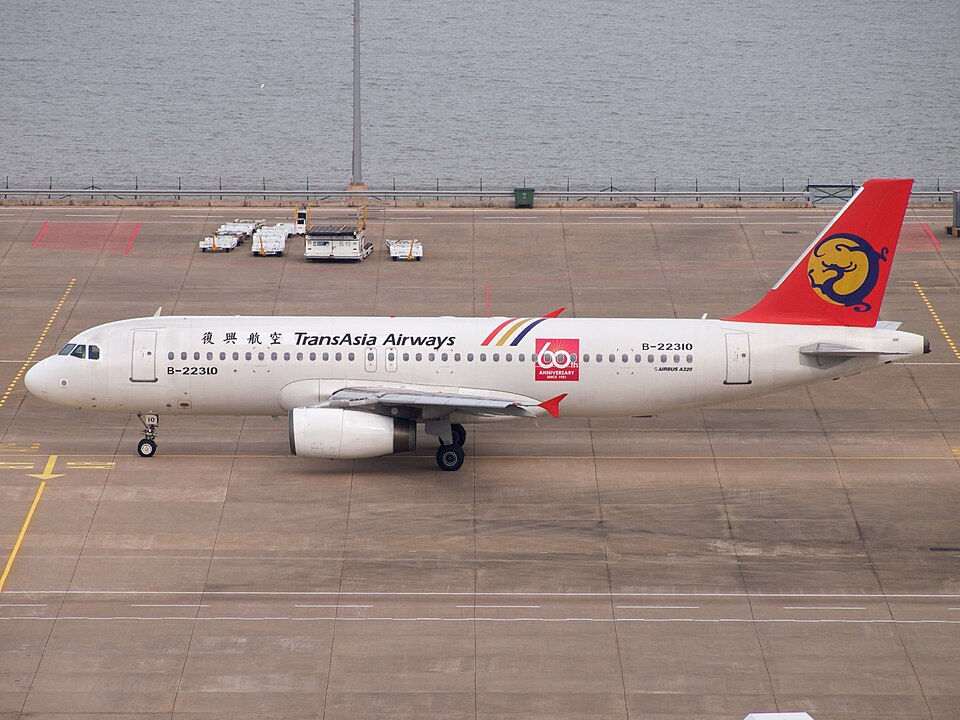
On October 18, 2004, TransAsia Airways Flight 536, operating an Airbus A320-232 (registration B-22310), overran the runway during landing at Taipei Sungshan Airport. The aircraft, which was on a scheduled flight, departed the paved surface and came to rest in a muddy area, with the nose landing gear entering a drainage ditch.
Aircraft and Operator
The aircraft involved was an Airbus A320-232, serial number unknown, registered in Taiwan as B-22310. It was operated by TransAsia Airways (TNA) as Flight 536. The flight crew consisted of a captain and a first officer, both of whom were experienced on the A320.
Flight History
The flight departed from its origin and approached Taipei Sungshan Airport under instrument meteorological conditions associated with a typhoon. The crew conducted an ILS approach to Runway 10. Upon touchdown, the aircraft did not decelerate as expected and overran the runway end, continuing into a grass and mud area beyond the runway safety area.
Damage and Injuries
The aircraft sustained substantial damage, including a broken sliding tube on the nose gear. The fuselage, wings, and landing gear were damaged from the overrun and impact with terrain. According to the official injury table, there were no fatalities, but the number of injuries was not specified in the report summary.
Investigation Findings
The Aviation Safety Council of Taiwan conducted an investigation into the occurrence. The investigation reviewed flight data recorder (FDR) and cockpit voice recorder (CVR) information, weather data, aircraft maintenance records, and airport runway safety area characteristics. The final report identified factors related to the overrun, including the touchdown point, deceleration systems, and runway conditions.
Probable Cause
The report's findings related to probable causes are detailed in Section 3.1 of the investigation report, which is not reproduced here. The Safety Council issued safety recommendations to prevent similar occurrences.
Conclusion
The runway overrun of TransAsia Airways Flight 536 resulted in significant aircraft damage but no loss of life. The investigation highlighted operational and environmental factors that contributed to the accident.