Introduction
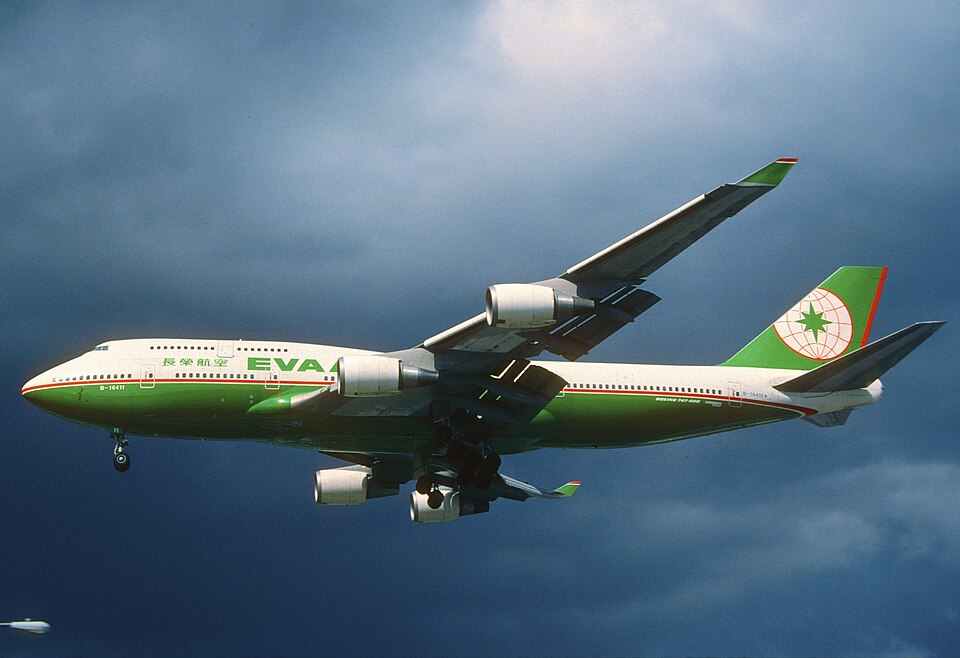
On March 25, 2012, at 1044 Taipei local time, a Boeing B747-400 airplane, registration B-16411, operated by EVA Airways Corporation as scheduled passenger flight BR702, departed from Taoyuan International Airport for Shanghai Pudong Airport. The aircraft carried 2 pilots, 14 cabin crew members, and 367 passengers—383 persons in total. No injuries or damage occurred.
Sequence of Events
During the initial climb, the aircraft encountered a left outflow valve malfunction and abnormal cabin altitude. At 1054, approximately 47 nautical miles northeast of Taoyuan Airport at an altitude of 20,800 feet, the cabin altitude aural warning activated. The pilots donned oxygen masks, performed an emergency descent, and declared a Mayday to air traffic control. The aircraft returned to Taoyuan International Airport at 1128 without further incident.
Flight Data Recorder (FDR) data showed that during the takeoff roll, both left and right outflow valves began closing from near 0% positions. At 1045:14, the left outflow valve closed to 64.9% at an altitude of 698 feet and remained there until the cabin altitude warning. At 1047:57, the right outflow valve closed to 102.1% at 4,603 feet and also remained. At 1054:40, the left outflow valve began closing again, reaching 102.1% by 1054:54 and staying there until landing. The right outflow valve opened from 102.1% at 1054:47 to 82.5% by 1054:51.
Cockpit Voice Recorder (CVR) transcripts indicate that at 1052:44, ATC cleared the flight to climb to FL370. At 1053:59, the flight crew discussed the outflow valve, decided to level off, and requested FL200. After ATC approval and leveling, the captain called for the "outflow valve left checklist" at 1054:30. The cabin altitude warning sounded at 1054:41, and the captain declared an emergency descent and Mayday at 1054:51, requesting descent to 10,000 feet. ATC cleared descent to 8,000 feet.
During post-flight interviews, the flight crew stated that after takeoff, no anomaly was noted until the aircraft reached about 20,000 feet, when the cabin pressure data appeared on the EICAS with cabin altitude displaying white and increasing. The crew observed the right outflow valve fully closed and the left outflow valve at the 9 o'clock position. The cabin altitude display turned amber at 8,600 feet with a rate of about 1,200 feet per minute. An "OUTFLOW VLV L" advisory message appeared without an aural alert. According to the manufacturer, this advisory is designed to appear within seconds of failure, but the 747-400 EICAS does not provide aural alerts for advisory or status messages. Recorded data indicate the left outflow valve failed at approximately 1045 at 698 feet cabin altitude, but the flight crew did not recognize the abnormality until cabin altitude reached 8,600 feet. After recognition, the captain leveled off at 20,000 feet and initiated the QRH procedure. While the first officer manually closed the left outflow valve, the cabin altitude warning sounded, and the captain immediately executed an emergency descent, donned oxygen masks, and manually deployed passenger oxygen masks.
At 1101:06, the aircraft descended and leveled at 8,000 feet. After cabin altitude returned to normal, the crew removed their masks, coordinated with the company, and returned to Taoyuan, landing on Runway 05R at 1127:40.
Investigation Findings
The investigation, led by the Aviation Safety Council (ASC) of the ROC, included members from EVA Airways, the Civil Aeronautics Administration Taiwan, and the U.S. NTSB. EVA Airways found that the AC motor of the left outflow valve had failed. The motor was sent to the manufacturer, whose failure analysis report identified a rotor shaft/brake interface breakdown and brake release air gap growth. The manufacturer noted similar defects in other field returns and speculated that the motor brake not disengaging properly, possibly from incorrect voltage, was the cause. Root cause determination was ongoing at Boeing and the supplier.
The ASC identified three findings related to probable causes: 1. During initial climb, the left outflow valve failed due to AC motor interface breakdown and brake air gap growth, causing the valve to stick at 64.9% in automatic mode. This position, combined with the right outflow valve fully closed, resulted in cabin air leakage beyond expected levels, preventing normal pressurization and leading to high cabin altitude. 2. The flight crew likely did not notice the left outflow valve failure and EICAS message until about 9 minutes after the failure, when the aircraft reached 20,000 feet. This delayed the start and completion of the OUTFLOW VLV L checklist and manual valve closure, allowing cabin pressure to leak and the cabin altitude to reach the warning threshold. 3. While performing the QRH procedure, the first officer closed the left outflow valve manually at about the same time the cabin altitude warning sounded. Although the valve closed and cabin altitude began recovering, the crew did not notice the cabin was becoming controllable. The captain initiated an emergency descent for safety, donned oxygen masks, and released passenger oxygen masks. Had the checklist been completed before the emergency descent, the crew would have recognized that the cabin was controllable.
Findings related to risk included the AC motor defects being similar to other field returns with no determined root cause, and inconsistent QRH procedures for cabin altitude or rapid depressurization between cargo and passenger Boeing 747-400 aircraft: the cargo QRH includes a check of cabin altitude and rate not present in the passenger QRH.
Conclusion
The occurrence involved a left outflow valve malfunction and a cabin altitude warning that prompted an emergency descent and return to Taoyuan. No injuries or damage resulted. The investigation identified probable causes related to the valve failure and delayed crew recognition and action.