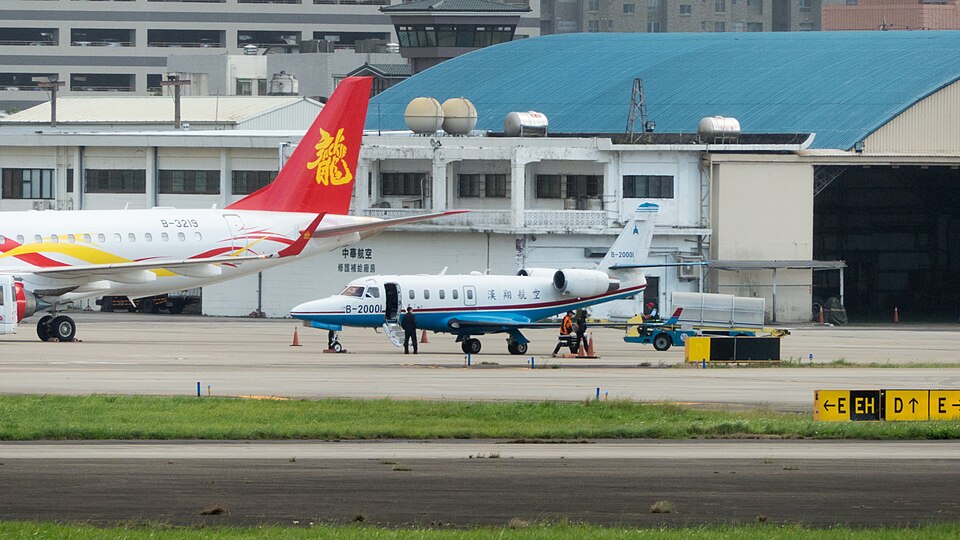
Accident Overview
On 15 March 2018, at 1910 local time, an ASTRA SPX aircraft, registration B-20001, operated by Hanxiang (AIDC), experienced a runway excursion during landing at Taichung Airport. The aircraft was executing an ILS approach to runway 36 after canceling a target-towing mission due to cloud cover. The crew consisted of a captain (handling pilot), a first officer (monitoring pilot), and two target operators, for a total of four occupants. No injuries occurred, and the aircraft sustained minor damage.
Flight History
The aircraft departed Taichung at 1726 for mission H-335. After reaching the target area, the crew observed cloud cover and decided to return. They requested an ILS approach to runway 36. The crew estimated the landing weight near the maximum of 20,700 lbs and selected VREF 133 knots and VAPP 143 knots with flaps 40 and slats down. During the return, the captain noted airspeed discrepancies between the left and right systems. At 1907:56, the captain stated that speeds differed significantly, and the first officer noted 132 and 124 knots. The captain indicated using his (left-side) airspeed as reference.
Approach and Landing
At 1905:58, Taichung Tower cleared the aircraft to land, reporting wind 020° at 6 knots. The captain disengaged the autopilot at 1909:29. During the final approach, the ground proximity warning system (GPWS) issued six "glideslope" warnings between 280 and 170 feet above ground. The first officer called "slightly low." The aircraft landed at 1910:03 with an indicated airspeed of 123 knots and a vertical acceleration of 2.19g. The touchdown point was 780 feet from the threshold and 40 feet left of the runway centerline. After touchdown, the aircraft continued left at a 1.5-degree angle. The left main wheel departed the runway surface at 1910:12, approximately 2,430 feet from the threshold. The maximum lateral deviation was about 2.5 meters. The aircraft returned to the runway at about 3,125 feet, decelerated, and exited via taxiway W5, taxiing to the Hanxiang hangar at 1918.
Weight and Systems
Post-flight fuel calculations indicated an actual landing weight of approximately 21,814 lbs, exceeding the maximum landing weight of 20,700 lbs. Subsequent testing of the pitot-static system revealed about 5 ml of water in the left static system after draining. The aircraft's directional control systems tested normally after the event.
Probable Cause
The investigation determined that the aircraft landed left of the runway centerline, and during the 9-second, 1,650-foot roll after touchdown, the handling pilot did not monitor or correct the aircraft's position and direction, and the monitoring pilot did not alert or correct the deviation, leading to the left main wheel departing the runway.