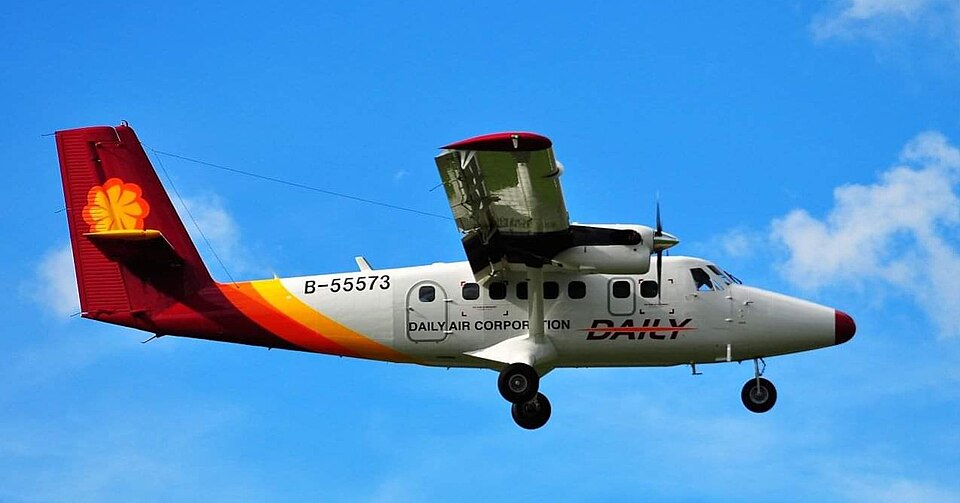
Accident Overview
On 23 April 2018, Daily Air (De An Airlines) flight DA7012, a scheduled passenger flight, operated a Viking Air DHC-6-400 aircraft with registration B-55573. The flight departed Qimei Airport at 1658 local time bound for Kaohsiung International Airport. At 1722, the aircraft landed on runway 09. During the landing roll, the airplane veered off the runway to the left and came to a stop on the grass, with the nose facing opposite the landing direction. No substantial damage occurred to the aircraft, and all 17 occupants—2 pilots and 15 passengers—were uninjured.
Flight Crew
The flight crew consisted of a captain and a first officer, both holding valid pilot licenses and medical certificates issued by the Civil Aeronautics Administration. No evidence of drug or alcohol impairment was found. The captain had completed upgrade and DHC-6-400 type conversion training approximately one month before the accident, accumulating 204 hours and 8 minutes on type. His training records showed no discrepancies related to directional control after landing or nosewheel steering use.
Aircraft and Weather
The Viking Air DHC-6-400 is a twin-engine turboprop. The aircraft's nosewheel steering system and hydraulic systems functioned normally during the landing roll. Before landing, the nosewheel was centered, ruling out a system malfunction as the cause of the veer. Weather at Kaohsiung Airport at the time included a right crosswind of 10 to 19 knots, within the aircraft's landing limitations. The left engine idle speed was measured at 1% below the manual standard during post-accident testing, but this did not affect normal control or contribute to the directional change.
Investigation Findings
The investigation, conducted by the Taiwan Aviation Safety Council (ASC) with participation from the Transportation Safety Board of Canada, Viking Air, the Civil Aeronautics Administration, and Daily Air, identified the probable cause: after touchdown, while attempting to correct for drift in the crosswind, the captain inadvertently used the nosewheel steering handle to steer the nosewheel left. This caused the aircraft to veer off the runway at an angle of approximately 35 degrees, turning left about 180 degrees before stopping on the grass.
Additional Findings
The report noted several risk-related findings, including the absence of a Level D simulator for the DHC-6-400 at the time, non-standardized callouts during landing roll, lack of specific nosewheel steering usage guidelines, and cumulative crew fatigue due to high workload. The captain had flown eight sectors that day, with a duty period exceeding 10 hours, and performed all takeoffs and landings manually. These factors may have contributed to reduced alertness, but the investigation did not establish them as causal.