History of the Flight
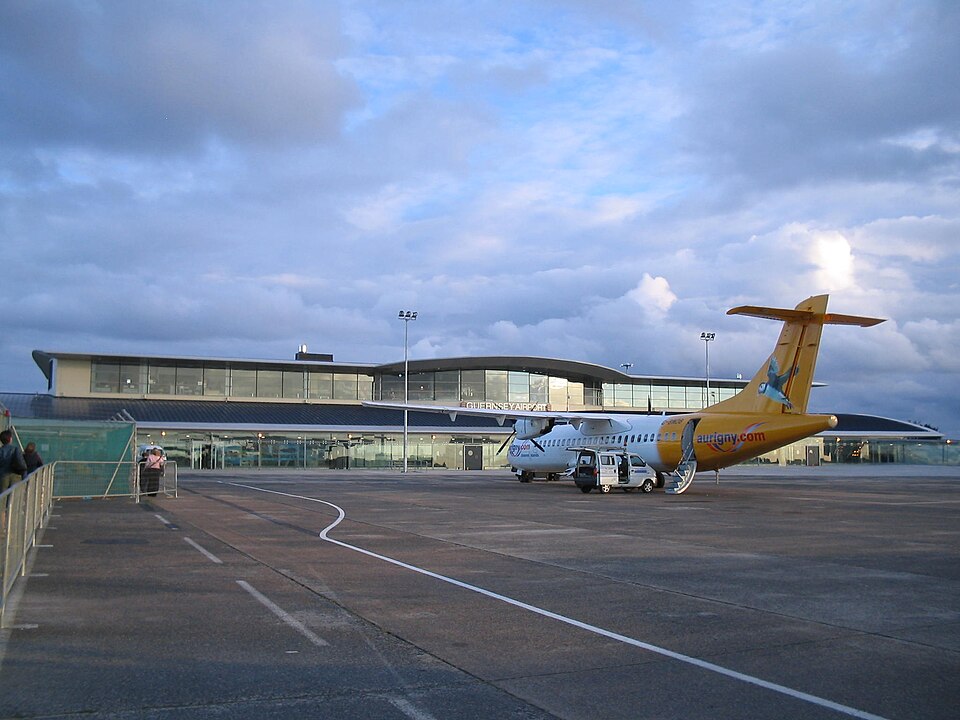
On 25 June 2009, an ATR 72-202, registration G-BWDB, was preparing for a scheduled passenger flight from London Gatwick Airport to Guernsey. Air traffic control cleared the aircraft to push back from Stand 9, with instructions to position it far enough on Taxiway M to permit a right turn into Taxiway Z. The commander relayed this information to the ground crew headset operator, but a misunderstanding occurred, and the tug moved the aircraft tail-first into Taxiway Z as per a standard pushback.
Realising the error, the commander instructed the ground crew to stop the pushback. Once stationary, he directed them to tow the aircraft forward onto Taxiway M, facing south, so that it could be pushed back beyond Taxiway Z to comply with the original ATC instruction. During this repositioning, the towbar came into contact with one of the nose landing gear bay doors, and a shear-pin on the towbar failed. The tow was halted, and the headset operator reported the damage.
Damage and Subsequent Actions
The commander shut down the engines. Passengers and baggage were returned to the terminal while engineering assistance was sought. Damage was limited to the right rear nose landing gear bay door assembly, including the door, actuating linkages, and hinges. The aircraft was flown empty to its base for rectification after the damaged door was removed.
Investigation
An investigation by the aircraft operator and ground handling agent determined that an undocumented modification to the towbar had occurred, likely during the previous evening. The release cable guide bracket, located on top of the towbar, had been bent from vertical through an angle of about 45°. In its correct configuration, this bracket sits between the nose landing gear bay doors regardless of towing angle. The modification caused the bracket to strike the right rear door when the towbar was turned through approximately 40°-50° from the aircraft's centreline. As the tow angle increased, the bracket exerted pressure on the nose bay door, which failed along its hinge line, followed by the towbar's shear-pin.