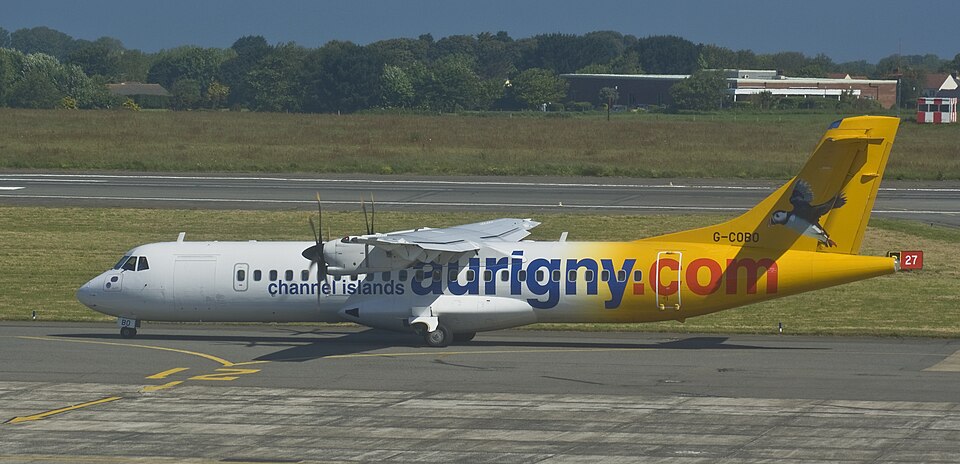
Incident Overview
On 20 October 2013, an ATR 72-212 A, registration G-COBO, experienced a sudden, short-lived bout of severe turbulence while en route from Guernsey Airport to London Gatwick Airport. The aircraft was at flight level 120 (FL120) in the vicinity of a cumulonimbus (CB) cloud when the turbulence occurred. The autopilot disengaged, the aircraft climbed approximately 780 ft, and a brief low oil pressure warning illuminated. The flight crew regained manual control and returned to FL120. Two cabin crew members sustained minor injuries, and superficial damage was noted to cabin furnishings.
Flight Details
The aircraft, manufactured in 2009 with two Pratt & Whitney Canada PW127M turboprop engines, was operating a commercial passenger flight with 4 crew and 59 passengers on board. The commander, aged 51, held an Airline Transport Pilot's Licence with 10,300 total flying hours, including 4,524 hours on type. The flight departed Guernsey at 0500 hrs UTC. Meteorological forecasts indicated showery troughs, scattered showers, localised thunderstorms, and warnings of severe turbulence associated with CB clouds.
Turbulence Encounter
After departing, the aircraft climbed through stratiform clouds to FL150 in smooth conditions. Weather radar showed a significant cell near waypoint AVANT, with a line of lower-intensity cells about 10 nm to the right. The crew saw a gap between the cells and requested a right turn. After turning, turbulence briefly abated, then a pronounced downdraught followed by a strong updraught caused a rapid climb. The autopilot and flight director disengaged; the co-pilot took manual control. A negative g sensation was felt, and a master warning for low oil pressure on the left engine activated momentarily. The aircraft climbed 780 ft above FL120 before descending back. The crew did not report the altitude deviation or turbulence to ATC.
Aftermath
Upon re-engaging the autopilot approximately two minutes later, the commander contacted the cabin crew. The senior cabin crew member had a cut on her leg from an overturned trolley, and the other cabin crew member bumped her head on the ceiling. No passengers were injured. The commander made a passenger address, and the flight continued to Gatwick without further incident. A paramedic attended the injured crew members after landing. An aircraft inspection found no airworthiness faults. The return flight was postponed to allow relief cabin crew.
Manufacturer and Operator Procedures
The aircraft manufacturer's review of flight data recorder information indicated that recorded load factors remained within limits. The autopilot and yaw damper disengaged due to flight control movements consistent with design criteria. The low oil pressure warning (at -0.3g vertical acceleration) was considered normal under such conditions.
The operator's manual recommended reducing speed to 180 KIAS during turbulence and warning cabin crew early. However, the commander did not anticipate the need to suspend cabin service before the upset. The manual did not define turbulence levels or require a technical log entry for turbulence encounters, though a list of occurrences requiring a Mandatory Occurrence Report included those necessitating a 'turbulence check'. No further guidance was provided.
AAIB Observations
The AAIB noted that Pink AIC 56/2010 provides reference material for flight near thunderstorms and that this event illustrates turbulence can be encountered some distance from radar-depicted weather cells. The UK AIP requires special air-reports for moderate or severe turbulence; however, the crew did not report this encounter.