Incident Overview
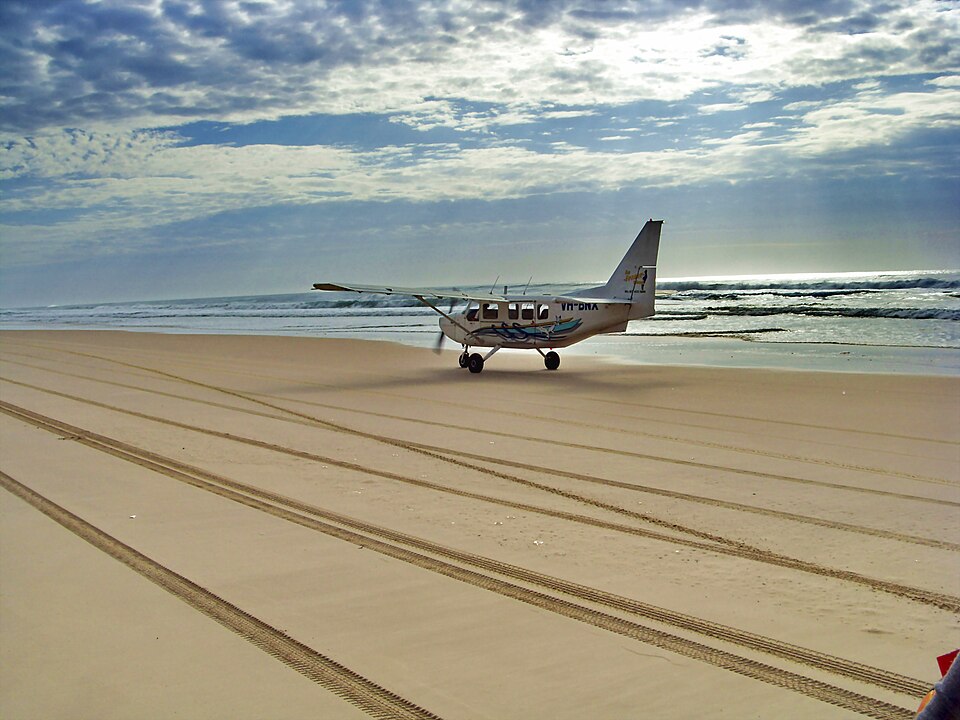
An aircraft operating on Fraser Island beaches experienced a runway overrun during landing. The pilot reported that the left brake felt spongy, affecting stopping ability, and the operator noted a history of brake issues in that environment. However, post-accident inspection by the maintainer could not reproduce a brake fault, aside from damage consistent with the overrun. The Australian Transport Safety Bureau (ATSB) could not determine whether the brakes were functioning correctly at the time.
Operational Context
The operator used runways of minimum safe length for take-off and landing, requiring short-field and soft-field techniques. Hazards included vehicles, people, animals, and changing tides and sand conditions. Mitigation measures included runway markers, ground crew, and emphasis on go-around procedures when a safe landing could not be assured. Going around was considered less risky than encountering unsuitable surfaces beyond the designated landing area, as few high obstacles existed on the beaches.
Pilot Actions
The pilot was proficient at conducting go-arounds, but the reason he did not execute one in this instance could not be determined. During the overrun, the area beyond the runway contained a washout unsuitable for a landing roll. The pilot raised the aircraft nose prior to reaching the washout, which likely prevented a more serious outcome. The pilot also reported that he may have mistaken clearway bollards for runway marker cones, leading to an overestimation of available stopping distance. The bollards were designed to be visually distinct from the marker cones to prevent such misidentification, and the pilot had previously landed on the same runway that day. Whether this misidentification contributed to the accident could not be determined.
Weight and Distance Considerations
The passenger manifest was completed after the accident, though it was required before flight to calculate take-off weight and landing distances. Even if the brakes had been working properly, the ATSB concluded that there was almost certainly insufficient runway remaining to stop given the aircraft weight and conditions.