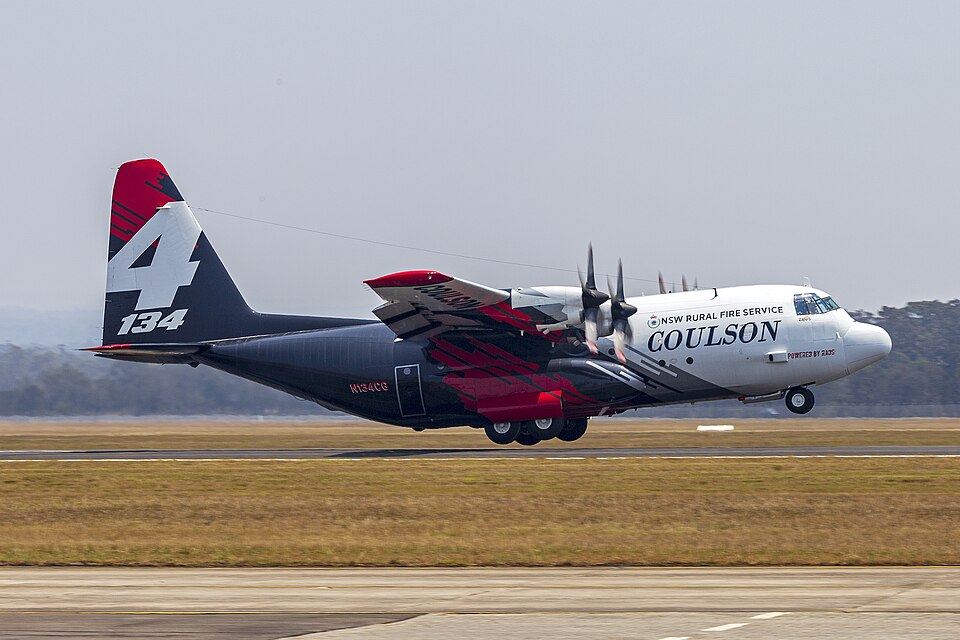
Incident Overview
On the day of the accident, at about 1205, while B137 was overhead the Adaminaby fire-ground, B134 departed Richmond as an initial attack aircraft. The crew comprised the pilot in command (PIC), copilot, and flight engineer.
Tasking and Decision-Making
The Rural Fire Service (RFS) state operations controller (SOC) noted that the birddog aircraft had indicated it was 'not safe to fly' and B137 would not return until conditions eased. However, B134 continued with the PIC to make the 'decision of safety of bombing operations'. The SOC had the authority to cancel B134's tasking but allowed it to proceed to gather additional intelligence. At about 1235, the PIC of B137 contacted B134 via their designated frequency, informing them of actual conditions and that they would not return to Adaminaby. B134's PIC asked several questions. Most of the operator's pilots reported that, despite receiving such information, they would have continued to assess conditions themselves.
At about 1242, B134 contacted air traffic control to advise coordinates, provide an 'ops normal' call time, and confirm no IFR aircraft in the area. About five minutes later, the Richmond ABM attempted to contact B134 but received no response.
Arrival at Adaminaby and Re-tasking
ADS-B data showed B134 arrived at Adaminaby at about 1251 and completed several circuits at about 2,000 ft AGL. At about 1255, the crew advised the Cooma ARO that it was too smoky and windy to complete a retardant drop. The ARO provided coordinates of the Good Good fire, about 58 km east, and suggested looking for targets of opportunity near Peak View. At about 1259, B134 advised air traffic control of the re-tasking.
The Good Good Fire and Final Maneuvers
At about 1307, B134 arrived overhead the drop area east of a ridgeline, with the fire on the western side. The aircraft's track data showed three left circuits at about 1,500 ft, 500 ft, and 1,000 ft AGL before commencing the drop circuit. At about 1312, they advised the ARO of their intention to complete multiple drops. At 1315:15, a partial retardant drop was conducted on a heading of about 190°, at about 190 ft AGL (3,600 ft AMSL), releasing about 1,200 US gallons (4,500 L) over about 2 seconds. Ground speed was 144 kt.
Collision with Terrain
Witness video captured the drop and showed the aircraft immediately after in an initial left turn with a positive rate of climb, before becoming obscured by smoke. The aircraft climbed to about 330 ft AGL (3,770 ft AMSL). At that time, ATSB analysis showed the aircraft rolling from about 18° left bank to about 6° right bank. Subsequently, the aircraft descended, and about 17 seconds after the drop, it was seen at very low height in a slight left bank. No further (emergency) drop occurred. Groundspeed increased to a maximum of 151 kt. Shortly after, there was a significant left roll just prior to impact. At about 1315:37, the aircraft collided with terrain, and a post-impact fuel-fed fire ensued. The three crew members were fatally injured, and the aircraft was destroyed. No distress calls were received.
Probable Cause (Official Findings)
The following contributing factors were identified:
- Hazardous weather conditions forecast and present at the drop site, including strong gusting winds and mountain wave activity producing turbulence, likely exacerbated by the fire and local terrain.
- The Rural Fire Service continued B134's tasking to Adaminaby when other aircraft had ceased operations due to conditions, and relied on the PIC to assess appropriateness without providing all available information.
- The PIC of B134 accepted the Adaminaby tasking in an area of forecast mountain wave activity and severe turbulence; after deeming it unsuitable, accepted the Good Good tasking subject to the same conditions.
- Following the partial retardant drop and left turn, the aircraft was likely subjected to hazardous conditions including low-level windshear and increased tailwind, degrading climb performance.
- At low height and airspeed, the aircraft likely aerodynamically stalled, leading to terrain collision.
- Coulson Aviation's safety risk management processes did not adequately manage risks associated with large air tanker operations; no operational risk assessments or risk register were maintained, and safety reports were mainly maintenance-related, limiting identification and mitigation of operational risks. (Safety issue)
- Coulson Aviation did not provide a pre-flight risk assessment for firefighting large air tanker crews, which would define criteria.