Introduction
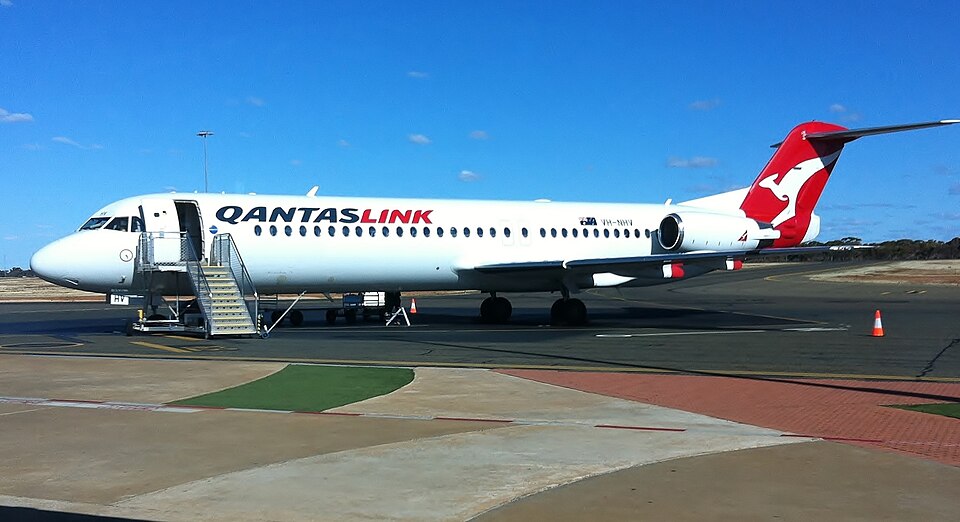
On the morning of 22 November 2021, a Network Aviation Fokker Aircraft F100, registered VH-NHV and operating as flight QF1616, departed Perth Airport on a scheduled passenger service to Paraburdoo Airport, Western Australia. On arrival at Paraburdoo, the flight crew conducted three missed approaches due to unforecast low cloud. On the fourth approach, the flight crew continued the approach below the landing minima without visual reference to the runway due to the aircraft's fuel state.
What Happened
The aircraft encountered unforecast weather on arrival at Paraburdoo. Low cloud had developed below the landing minima, which resulted in three missed approaches. On the fourth approach, the aircraft fuel state was near the minimum fixed reserve, so the flight crew continued the approach below landing minima without visual reference and landed without further incident.
ATSB Findings
The ATSB found that after completing two missed approaches, the flight crew had lost confidence in their flight plan weather forecasts and were reluctant to attempt a diversion without current weather information. Following the third missed approach, the aircraft did not have sufficient fuel to reach a suitable alternate, committing the flight crew to land at Paraburdoo. The flight plan indicated the lowest cloud would be above landing minima, but actual conditions were below minima and deteriorated. This was difficult to forecast by the Bureau of Meteorology as detection of low cloud was obscured by higher level cloud. The development of low cloud at Paraburdoo contrasted with the expectation that surface heating would lift the existing cloud base.
After the second missed approach, the flight crew requested an updated forecast for Newman Airport from air traffic control but did not express urgency. Due to ATC workload, a 15-minute delay occurred, by which time they had insufficient fuel to divert. The aircraft was not fitted with an operational ACARS, and they were beyond range of the nearest AERIS, leaving no other means to obtain updated weather forecasts for potential alternates.
Paraburdoo Airport had an automatic weather station that could measure surface relative humidity but no means to measure atmospheric data above the surface. The nearest weather balloon stations were over 160 NM away, so the Bureau of Meteorology relied on cloud observations at nearby aerodromes. Additionally, the Newman automatic weather station did not record cloud or weather data groups, so it was unknown if a SPECI report should have been issued for Newman.
Other than a procedure limiting missed approaches to two, Network Aviation did not provide flight crew with diversion decision-making procedural guidance when encountering unforecast weather at a destination. The operator had not included the threat of weather below landing minima in their risk assessments for controlled flight into terrain, and thus no risk controls addressed this threat.
Safety Actions Taken
Following this incident, Network Aviation implemented several proactive safety actions, including: amending flight plans to include diversion calculations for two alternate aerodromes for all flights; amending the arrival briefing procedure to require briefing the minimum fuel required to divert; introducing a company procedures manual with pre-populated diversion information for each destination; re-issuing an updated safety advisory notice about limitations of automatic weather information services; updating the Paraburdoo Airport risk assessment; updating risk assessments for controlled flight into terrain to include adverse weather as an environmental threat; amending fuel policy to mandate additional alternate fuel requirements for nominated airports; establishing access for flight crew to obtain expanded briefings from internal company meteorologists; updating the Aerodrome and Route Data Manual with new sections on weather planning tools and limitations of ceilometers and visibility meters; enhancing the training reference library with content on fuel management, threat management, contingency planning, and pilot responsibilities; and updating take-off and landing data cards to include a dedicated section for recording alternate aerodrome details.
Safety Message
Adverse weather conditions may not be experienced in the Australian environment to the same extent as in other countries, but these events have been identified as contributing factors to incidents and accidents throughout aviation history and have been a driver for numerous safety initiatives. Therefore, it is important for all operators to consider how unforecast weather will be managed and ensure it is reflected in their risk management so that safety assurance activities can review how effectively it is managed and provide feedback for management review.