What Happened
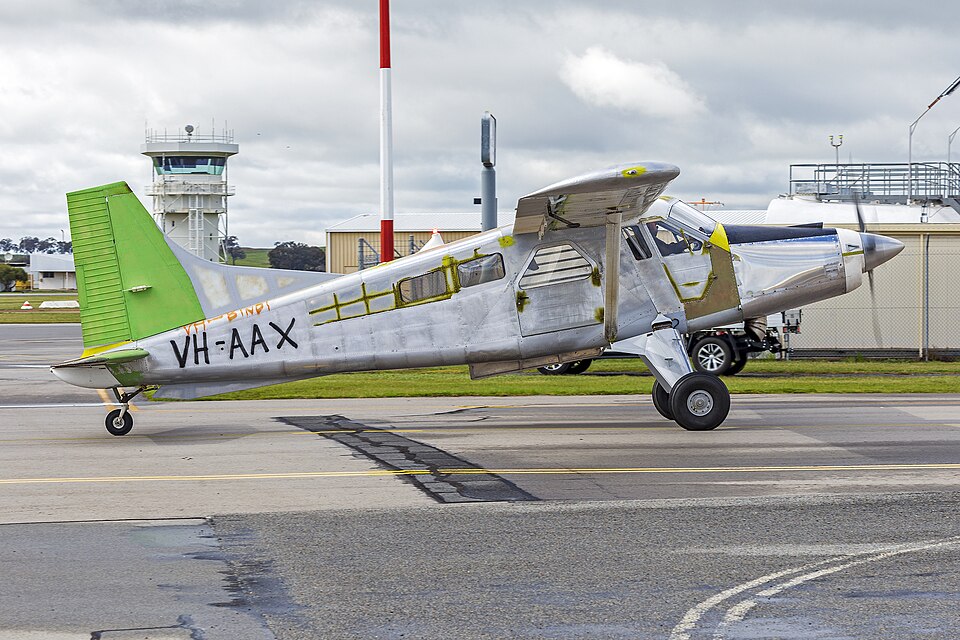
On 4 April 2022, the pilot of a de Havilland Canada DHC-2/A1 Beaver aircraft, registered VH-AAX, was conducting parachute flights overhead Moruya Airport, New South Wales. Shortly after the parachutists had exited the aircraft, the pilot heard a loud bang and experienced vibrations as the engine failed. In response, the pilot conducted a forced landing at Moruya.
A post-flight examination of the aircraft identified holes in the cowling above the engine compartment, perforation of the external wall of the engine combustion chamber, holes through the exhaust assembly, and significant damage to the turbine section.
ATSB Findings
The Australian Transport Safety Bureau (ATSB) found that a low-cycle fatigue crack had initiated in the 3rd-stage turbine wheel of the Honeywell International Inc turbo-propeller engine and grown to failure. Errors made by a previous maintainer when determining the engine operating cycles and total equivalent cycles accrued by engine components resulted in the 3rd-stage turbine wheel remaining in-service beyond the component life-limit.
In addition, the ATSB established that the operator had estimated the number of engine shutdowns conducted each day based on recollection only. This increased the likelihood that the recorded cycles were incorrect. The ATSB was unable to determine if this resulted in any errors.
Cycle Counting Errors
The ATSB’s examination of the engine logbooks and available maintenance releases determined that the aircraft’s first maintainer made a number of traceable errors when calculating and recording engine cycles and engine component equivalent cycles. There was limited opportunity to avoid these errors as the calculations were performed by one individual and no independent checking was incorporated into the process.
The cumulative effect of the errors meant that the 3rd-stage turbine wheel had accrued 477.6 equivalent cycles more than the reported value. Consequently, at the time of the engine failure, the 3rd-stage turbine wheel had exceeded its component life-limit by 357.6 equivalent cycles. The operator had planned to replace the 3rd-stage turbine wheel upon reaching the life-limit (as recorded in the engine logbook). If the equivalent cycles had been correctly recorded, the part would have been replaced before an engine failure occurred.
Operator's Estimation Method
The operator’s method for estimating engine shutdowns on a day of operation also introduced a potential source of error. The estimation of the number of shutdowns at the end of each day, combined with delaying the calculation of total equivalent cycles until a scheduled maintenance event, deviated from the method described in Honeywell service bulletin TPE331–A72–2111.
The maintainers relied on the record of landings and shutdowns in the maintenance release for the calculation of total equivalent cycles. In practice, if the information recorded on the maintenance release accurately reflected operation, there would have been no difference between performing the calculation after each start/shutdown cycle or using the total number of landings and shutdowns for the period of the maintenance release. It was not possible for the ATSB to quantify any errors introduced by the operator’s estimation method without a record to compare.
Actions Taken
The maintainer who inadvertently introduced the errors audited the cycle values for other in-service turbine engines they maintained and introduced new procedures including independent checks of input variables and calculations, and 6-monthly internal audits of cycles monitoring.
The operator introduced a flight log for the pilot to record each flight, including noting whether there was an engine start associated with each flight, to ensure accurate recording of information on the aircraft maintenance release.
Failure Mechanism
When the low-cycle fatigue crack on the 3rd-stage turbine wheel grew to a critical size, a fragment of the wheel was liberated under load, initiating the engine failure. The fragment impacted the combustion case and became lodged. The separation of this wheel fragment resulted in significant rotational imbalance, leading to fracturing of the main and torsion shafts. Detached turbine section components then exited the engine, damaging the exhaust assembly. There was no evidence that any turbine wheel fragments exited through the combustion case with sufficient energy to cause a hazard to the aircraft, and the failure was deemed contained.
Response to the Failure
When the engine failure occurred, the pilot was descending from FL 145 above the airport, so had sufficient time to conduct all engine failure checks and prepare for a forced landing. The decision to land on runway 18, despite the tail wind, reduced the risk the aircraft posed to the parachutists.