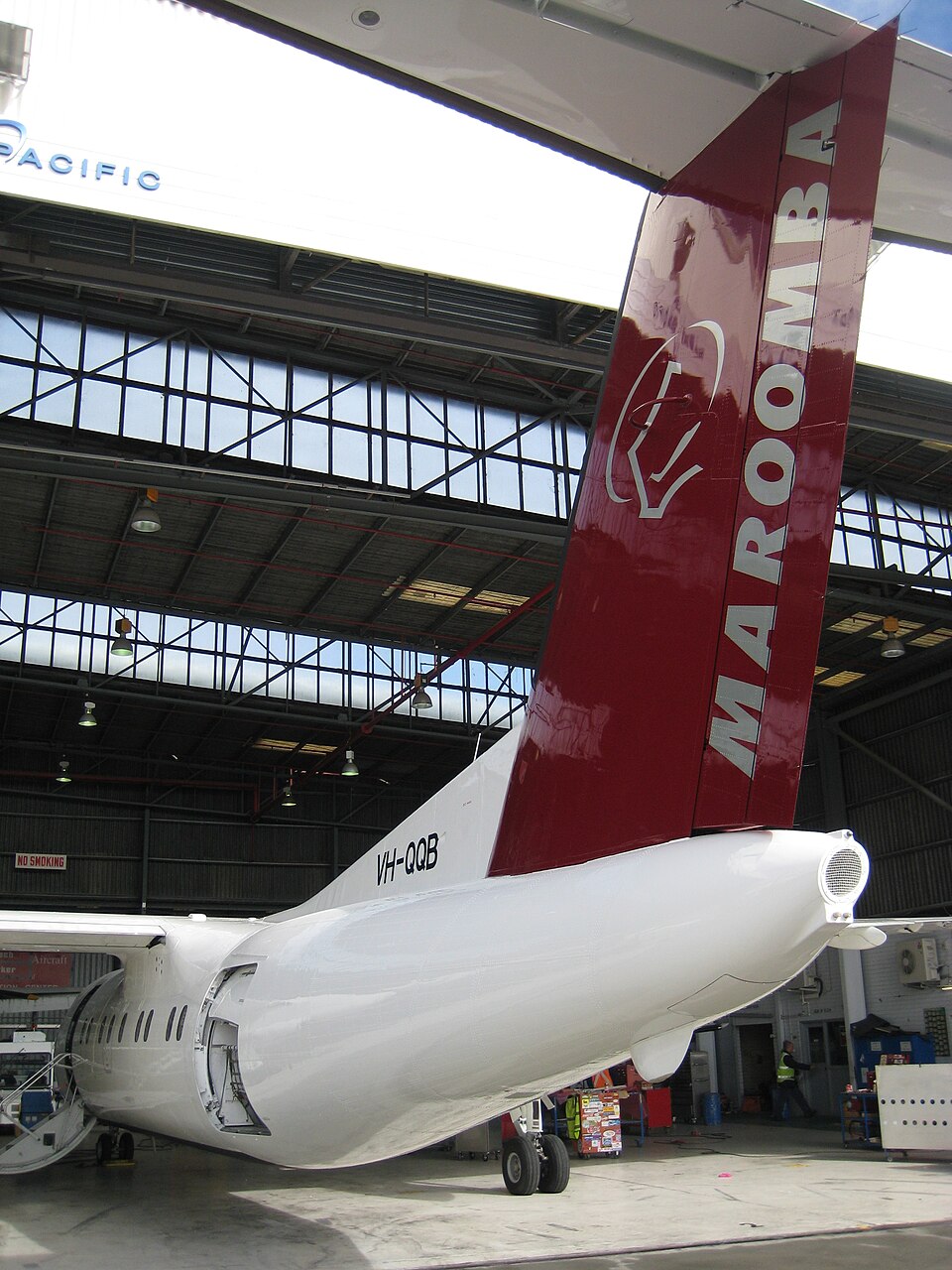
Incident Overview
On 23 May 2022, a De Havilland Canada DHC-8-102, registered VH-QQB and operated by Skytrans, was conducting a scheduled passenger flight from Brisbane to Chinchilla, Queensland. While approaching the top of descent, the flight crew received an alert indicating a failure of the engine control unit (ECU) on the right engine. The ECU failure meant that reverse thrust would not be available on the right engine to assist in decelerating the aircraft upon landing. Despite this, the crew assessed it was safe to continue with the planned approach.
During the landing, the aircraft veered to the left of the runway centreline. Towards the end of the runway, the left main landing gear ran off the sealed runway surface.
ATSB Findings
The Australian Transport Safety Bureau (ATSB) investigation determined that after the ECU failure, the flight crew opted to continue the flight in accordance with the available operator’s procedures. Upon landing with a tailwind and further down the runway than usual, the flight crew experienced reduced braking effectiveness when the anti-skid system activated after the outboard right main wheel locked up after touchdown for unknown reasons. The system released brake pressure on the outboard wheel on both main landing gears, extending the landing roll.
While assessing braking performance, the crew missed a standard call that would have prompted the captain to transition to the tiller for directional control as the aircraft decelerated. In an attempt to slow the aircraft, the captain applied reverse thrust on the left engine, producing asymmetric deceleration. The aircraft veered slightly left, and the captain elected to use the emergency brake to slow the aircraft on the relatively short runway. Due to the narrow runway, the left wheels departed the sealed surface in the final stages of the landing roll.
The investigation identified that the procedures permitting the flight crew to continue the flight after the ECU failure did not include consideration of other factors that could increase the required landing distance, such as a tailwind and a wet runway, or that a narrow runway increased the risk of a veer off due to asymmetric thrust.
Additionally, the acceptable means of compliance guidance material for the Civil Aviation Safety Regulations 1998 relating to required landing performance did not clearly convey the intent of the regulations regarding discontinuation of an approach when surface conditions were unexpectedly wet.
Operator and Regulatory Response
In response to this incident, Skytrans updated their procedures for continued flight following an ECU failure to prohibit the use of a narrow runway unless operationally required in an emergency. Revisions also prohibited the use of short runways with a tailwind.
The Civil Aviation Safety Authority (CASA) added extra explanatory text to the guidance material to better explain the intention of the regulations around the assurance of landing performance and how these requirements can be met.