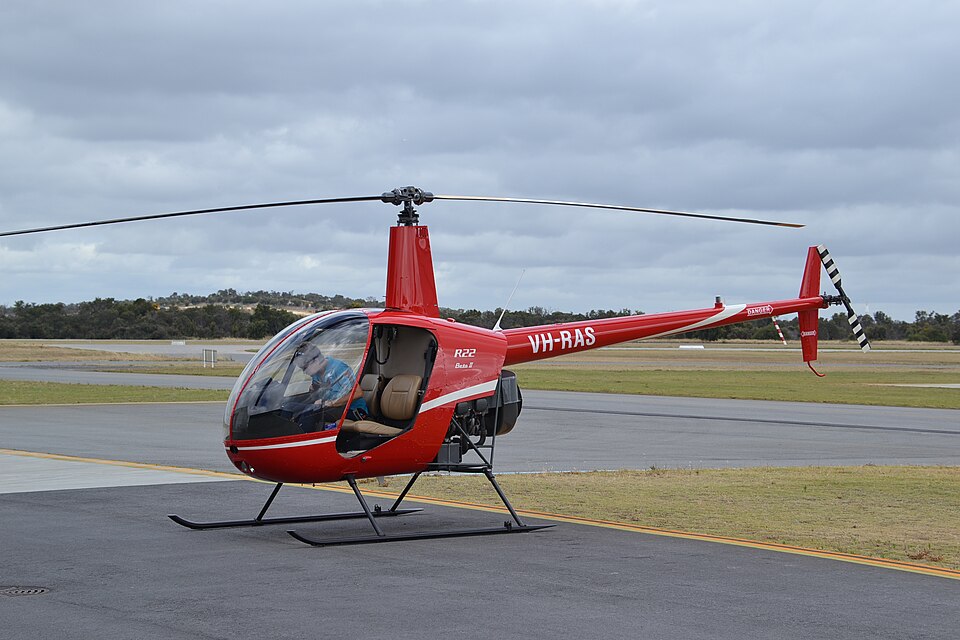
Accident Overview
On the morning of 2 October 2022, a Robinson Helicopter Company R22 Beta II, registered VH-RAS, departed Koorda, Western Australia, for a private flight with a pilot and one passenger on board. Approximately six minutes after departure, the helicopter impacted terrain in an inverted attitude about 13 km southwest of the departure point. The helicopter was destroyed, and both occupants were fatally injured.
ATSB Findings
The Australian Transport Safety Bureau (ATSB) analysed recorded flight data from an iPhone, which showed that during cruise the helicopter's altitude increased by about 100 ft, then rapidly descended almost vertically before colliding with the ground inverted. The data indicated the helicopter sustained an in-flight break-up at about the time of the rapid descent.
Examination of the wreckage revealed signatures consistent with extreme teetering and mast bumping, including fractured spindle tusks, teeter stops, pitch links, and main rotor blade strikes to the fuselage. The ATSB determined that these structural failures rendered continued flight impossible.
The ATSB found evidence consistent with a low-g and/or low rotor RPM/rotor stall condition. However, the exact circumstances preceding this condition could not be determined due to insufficient evidence. Potential scenarios considered included engine power loss, turbulence, low-g pushover, overpitching, a medical event, birdstrike, door opening, or large control inputs, but none could be confirmed.
Additional Observations
Dual flight controls were fitted in the position occupied by the passenger. The helicopter manufacturer recommends removing passenger-side controls when carrying passengers to prevent inadvertent interference. The ATSB noted this recommendation.
The ATSB also found that the pilot had not disclosed their use of a prescription medication or the associated medical condition to the Civil Aviation Safety Authority. This precluded a specialist assessment of the aeromedical significance.
Probable Cause
None stated. The ATSB was unable to determine the circumstances preceding the in-flight break-up.