Incident Overview
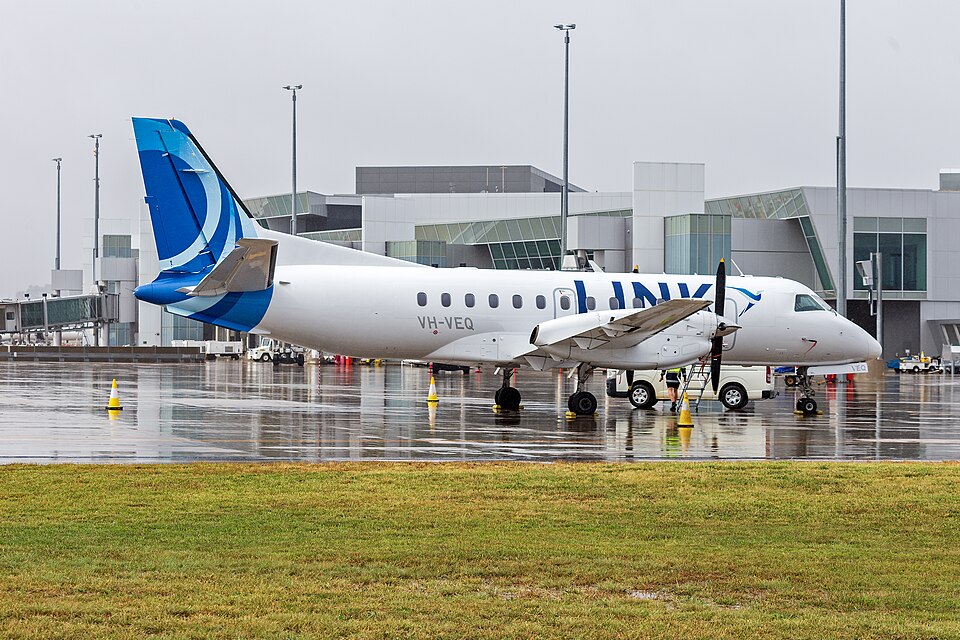
On the evening of 24 October 2022, a Link Airways Saab 340, registered VH-VEQ, operated an air transport flight from Canberra, Australian Capital Territory to Sydney, New South Wales. While approaching Sydney in cloud and at night, with the autopilot engaged, air traffic control cleared the aircraft for the instrument landing system (ILS) approach to runway 34 left. The aircraft intercepted the ILS localiser at an altitude and distance from the runway that positioned it close to being on the glideslope. However, as the approach continued, the crew observed that the aircraft did not commence descending as expected, while cockpit instruments indicated that it remained on the glideslope. The captain temporarily disengaged the autopilot and manually increased the descent rate. The approach continued until the ground proximity warning system generated a 'glideslope' alert. At about the same time, the crew assessed the approach as unstable and commenced a missed approach.
ATSB Investigation Findings
The Australian Transport Safety Bureau (ATSB) found that, unknown to the crew and prior to commencing the approach, an unidentified instrumentation fault resulted in erroneous on-slope indications being presented on the pilot's instruments without any failure indication. Consequently, the autopilot did not descend the aircraft as expected, prompting the crew to initiate a manual descent. The crew later re-engaged the autopilot as the aircraft descended at a rate exceeding that required for the approach. The autopilot maintained the excessive descent rate rather than recapturing the glideslope. As the aircraft descended below about 1,000 ft above ground level, the ground proximity warning system activated due to the significant deviation below the glideslope.
Technical Details
Following the incident, testing identified the left (captain's) display processor unit (DPU) as faulty, and it was replaced. Since replacement, no additional reports of erroneous glideslope indications occurred on this aircraft, suggesting the DPU as a potential source, though this could not be conclusively determined. The DPU was shipped to the manufacturer, where a teardown revealed several failed components. However, the manufacturer reported that the failure indications were more consistent with an issue originating from the navigation radio. Both the aircraft and instrumentation manufacturers stated this was the only known failure of its kind in the history of the aircraft type or on other aircraft equipped with the Pro Line 4 electronic flight instrument system.
Regardless of the precise source, the fault resulted in a constant on-glideslope indication on the captain's electronic attitude direction indicator (EADI) regardless of the aircraft's actual position relative to the glideslope. No glideslope or DPU failure indication was presented. The first officer also reported similar erroneous indications on their EADI during the approach, as recorded by the cockpit voice recorder. While the first officer's glideslope indications were not recorded by the flight data recorder, statements and recorded glideslope values indicated that erroneous indications were at least intermittently presented on the first officer's EADI. As the aircraft descended below 1,000 ft, this EADI began presenting a correct fly-up indication. The captain stated after the flight that the standby ILS indicator also showed erroneous indications, but this could not be determined from recorded data or crew comments during the flight.
Operator Response
Although maintenance action could not be linked to the incident, the operator developed and implemented several maintenance-related safety actions. These included a standardised component reinstallation (re-rack) procedure based on aircraft manufacturer guidance, aimed at reducing faults possibly created during defect troubleshooting. The operator also issued an internal notice to maintenance personnel providing guidance on required items to be included in maintenance explanatory text.