What happened
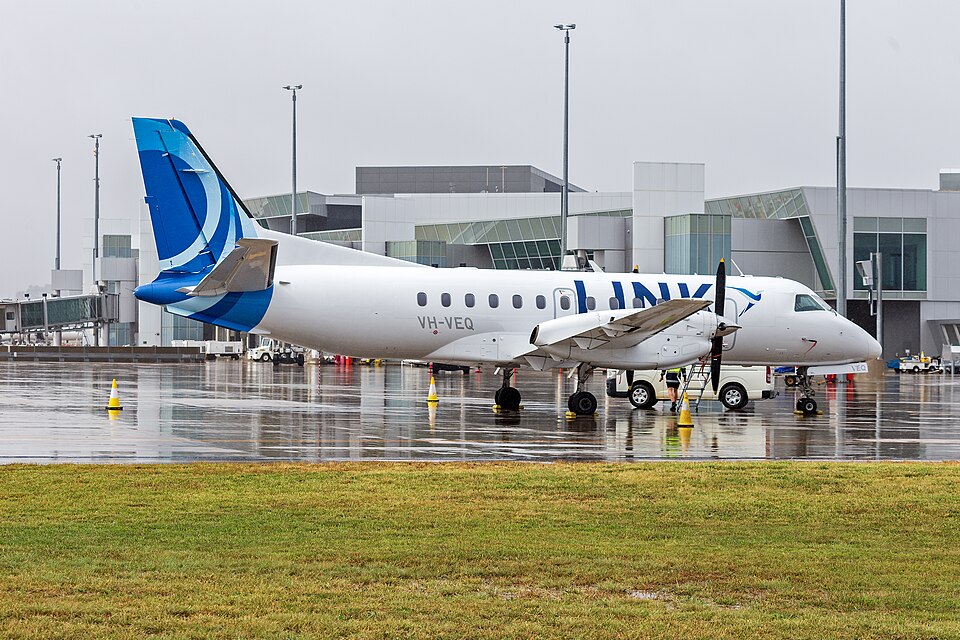
On 10 November 2022, a Link Airways (Link) Saab 340B, registered VH-VEQ, was being prepared for a commercial air transport flight from Canberra, Australian Capital Territory, to Sydney, New South Wales, operating as VA633. During aircraft preparation, the first officer (FO) did not attach the strap extension between the stairway and the left propeller. The strap extension was used by some operators to guide passengers onto the aircraft and prevented the cabin door from being closed without its removal. After boarding and during the final inspection, the FO did not remove the propeller strap—used to prevent propeller windmilling—from the left engine. The dispatch coordinator (dispatcher), employed and trained by ground handling company Swissport, did not conduct another walk-around or follow the FO. Prior to engine startup, the propeller strap was not noticed by the captain or the dispatcher. During the startup sequence, there was a delay between the commencement of engine start and the propeller spinning due to pins securing the strap to the engine cowling. Once these failed, the propeller began turning normally, and the aircraft was cleared to depart with the strap still attached but not visible due to rotation. At about the time the aircraft became airborne, the propeller strap was thrown free of the blade and into the fuselage. Passengers recalled hearing an extremely loud bang and saw that an object had penetrated the cabin. The strap itself became embedded in the fuselage, but the failed cowling pins broke free and entered the cabin. One fragment struck a passenger's leg, resulting in a minor injury (bruising). From the flight deck, the flight crew did not see or hear the penetration. The cabin manager (CM) realised what happened, waited until the aircraft was no longer in a critical phase of flight, then contacted the flight crew, stating there was an emergency in the cabin and that someone was hit, without elaborating beyond expressing a need to return to Canberra and that an ambulance would be required. The flight crew, believing the emergency to be only passenger-related, did not seek additional information. The aircraft landed safely in Canberra, and emergency services assessed the injured passenger.
What the ATSB found
The Australian Transport Safety Bureau (ATSB) found several factors that may have contributed to the propeller strap not being noticed or removed by the FO, captain, or dispatcher. Most importantly, the strap extension was not fitted. Because the cabin door could not be closed with the strap extension in place, its correct fitment would almost certainly have prevented the flight from proceeding with the propeller strap attached. A review of other departures out of Canberra found that some other flights were boarded without the strap extension being attached. Additionally, the propeller strap did not have a visibility aid (streamer) fitted in accordance with the manufacturer’s design. Link conducted an inspection of its Saab 340B fleet and found the condition of propeller straps to be significantly variable. Guidance provided by Link Airways for training of Swissport dispatchers did not explain the appearance, function, and importance of the propeller straps. While not found to have contributed to this occurrence, Swissport did not ensure that the implemented dispatcher training and audits for operations involving the Link Airways Saab 340B dispatches incorporated all of the elements required for pre-departure walk-arounds in its own ground handling manual, increasing overall risk. Similarly, risk was increased by the flight crew not being informed of the fuselage penetration, although this did not contribute to the outcome.
What has been done as a result
Link Airways advised that it had updated the flight crew and cabin crew operating manuals to include additional preflight checks for the presence of the propeller strap and strap extension. Additional clarity was provided to cabin crew regarding contacting the flight deck during emergencies. Propeller strap discrepancies were rectified within Link’s Saab 340B fleet, and regular inspections and maintenance were added to procedures. Link amended training guidance to Swissport, including more details on the use of propeller straps and strap extensions, as well as the dispatcher’s role in checking for the strap. Link has planned audits of Swissport dispatches to ensure the procedures are correctly implemented. Swissport informed all ramp staff (including dispatchers and trainers) that walk-arounds were required on Saab aircraft. It consulted with Link to better define dispatcher responsibilities and expectations, and planned refresher training on the walk-around described in Swissport’s procedures.