Incident Overview
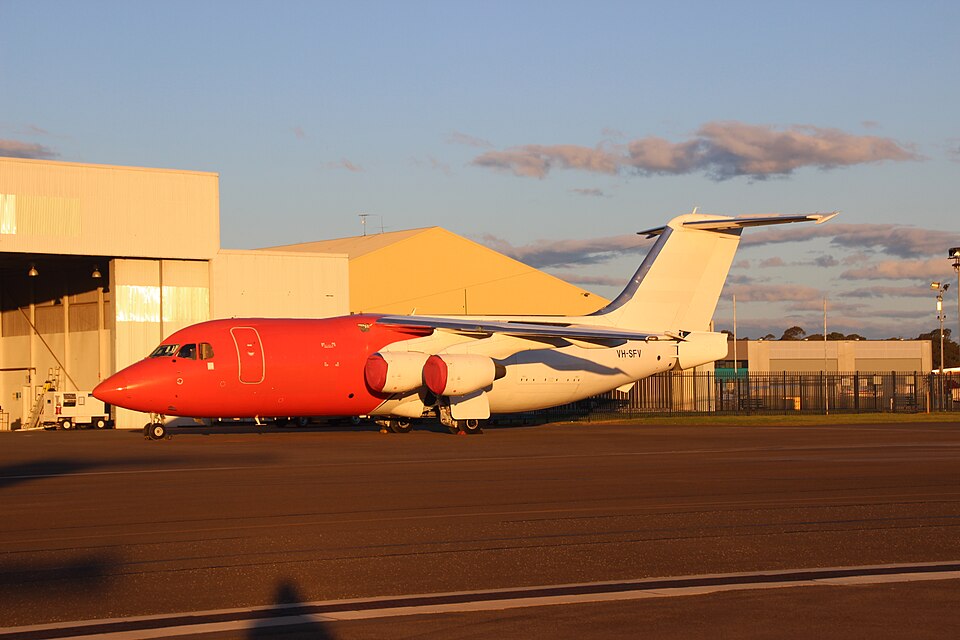
On the morning of 5 January 2023, a British Aerospace BAE 146-200, registered VH-SFV and operated by Pionair Australia, conducted a freight transport flight in darkness from Brisbane to Rockhampton, Queensland. The crew discontinued a required navigation performance approach to runway 33 due to low cloud, executed a missed approach, and commenced a second approach at 0358 local time. During the second approach, the captain began descending from 3,500 feet above mean sea level at the initial approach fix waypoint SARUS. Prior to crossing the intermediate fix at waypoint BRKSI, the aircraft descended below the 3,000 ft segment minimum safe altitude (SMSA). The aircraft continued on approximately a 3° descent profile, crossing BRKSI at 1,705 ft—1,295 ft below the SMSA—and then descended below the next SMSA of 1,500 ft. As the aircraft approached the minimum descent altitude, the crew recognized the deviation and initiated a missed approach; simultaneously, the ground proximity warning system activated.
Findings
The Australian Transport Safety Bureau (ATSB) determined that the captain commenced the second approach descent early based on incorrect application of their preferred regular descent technique from a lower altitude. The first officer did not identify the early descent due to an incorrect mental model of the aircraft's position relative to the required flightpath. This led to the aircraft descending below segment minimum safe altitudes on two occasions.
Contributing Factors
The ATSB found that due to the time of the approaches and inadequate sleep, both flight crew members were likely experiencing fatigue known to adversely affect performance. This fatigue, combined with high workload from the missed approach and second approach, contributed to the early descent and monitoring errors. Additionally, the operator's flight crew rosters, while compliant with regulations, were irregular and disruptive to sleep patterns, adversely affecting the crew's ability to obtain adequate sleep prior to the incident.
The captain's normal practice for the straight-in approach was to cross SARUS at about 5,000 ft and descend while remaining above the 3,000 ft SMSA. However, after the missed approach and holding pattern, the aircraft crossed SARUS at the minimum holding altitude of 3,500 ft, and the captain immediately commenced descending per usual technique, resulting in a descent profile consistent with being one approach segment further along. During the second approach, the first officer's focus on radio broadcasts led them to believe the aircraft had already passed their preferred descent commencement point. The next waypoint was not immediately visible on the horizontal situation indicator, and the Jeppesen approach chart did not depict SARUS or the SMSA for that segment on the vertical profile, which potentially limited its usefulness as an aid.
Operator Actions
Following the occurrence, Pionair Australia implemented several changes: establishment of a fatigue safety action group; temporary reduction in operational workload to reduce roster pressures and increase stability while training additional flight crew; revisions to standard operating procedures to clarify actions and reduce workload during approaches; and revision of training programs for flight management computer use during approaches.