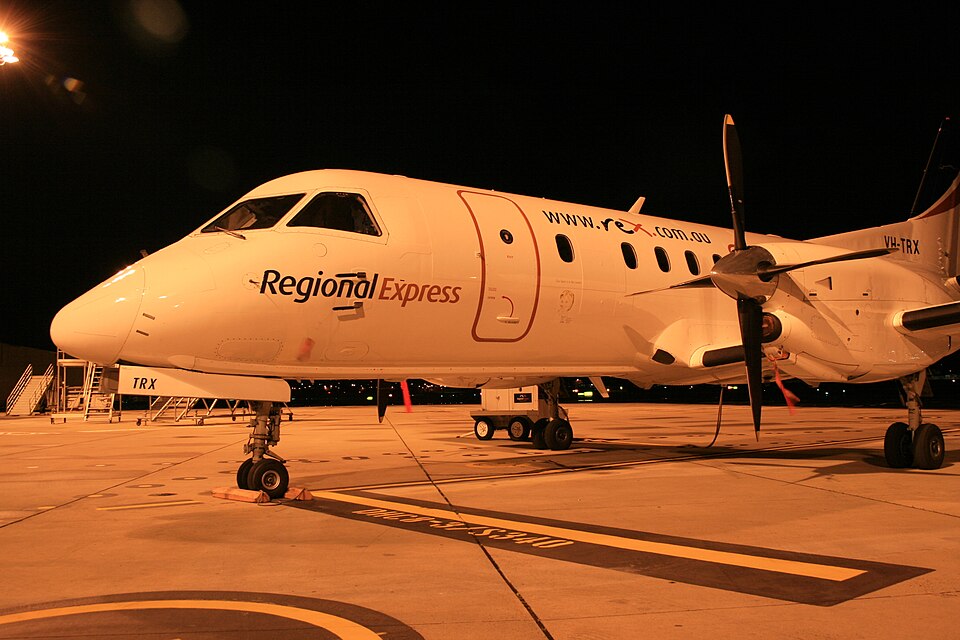
Incident Overview
On the afternoon of 8 June 2023, a Regional Express Saab 340, registered VH-TRX, departed Sydney, New South Wales for an air transport flight to Merimbula, New South Wales with 3 crewmembers and 22 passengers on board. At about 1507, the crew commenced descent into Merimbula. As icing conditions were expected during the descent, the first officer (pilot monitoring) selected the engine and wing anti-ice ON. This also activated the ice speed system, which reduced the stall warning angle of attack activation angle. At about 1514, the crew commenced a visual approach to runway 21 at Merimbula and selected flaps to 20 degrees for the landing. During the approach in turbulent conditions, the airspeed reduced and the stall warning activated. The captain then re‑established the required approach flight path and speed, continued the approach and the aircraft landed without further incident. The aircraft was not damaged and there were no injuries during the incident.
ATSB Findings
The ATSB found that during an approach, in turbulent conditions, the captain reduced engine power to flight idle to avoid an inadvertent flap overspeed. Due to the autopilot mode active at the time, the reduced thrust resulted in a continuous reduction in airspeed that required pilot intervention to prevent activation of the stall warning system. Due possibly to distraction associated with the windscreen wiper setting, the airspeed continued to reduce undetected by the crew until the stall warning activated at a higher than normal margin above the stall speed.
During the descent and prior to the approach, the aircraft descended through icing conditions and the crew activated the engine anti-ice system. This also activated the ice speed system, which reduced the stall warning angle of attack activation angle. The approach was then commenced within 5 minutes of leaving icing conditions. Therefore, the ice speed system was still active as the approach commenced (as per the operator’s procedure). However, by the time of the occurrence the aircraft was operating in clear conditions and an ambient temperature well above freezing and there was no ice on the aircraft. This meant that the stick shaker/aural warning associated with an approaching stall was set to activate at an AOA of only 6° rather than the normal trigger AOA of 12.5°. That is, at a greater airspeed margin than normal above an actual (ice free) stall.
As the approach continued in turbulent conditions with the autopilot engaged, the captain, concerned that the turbulence may lead to an inadvertent exceedance of the flap limit speed, reduced power to flight idle and the aircraft speed started reducing. Due to the selected autopilot mode, the reduced thrust led to the aircraft pitch angle and wing angle of attack being automatically increased to maintain the selected descent rate. Significantly, this resulted in a further ongoing speed reduction that required pilot intervention to prevent activation of the stall warning system. While the power was selected to flight idle, the aircraft entered a rain shower and turbulence, likely associated with a gust front that was recorded passing over Merimbula Airport at about that time. At about that time, the captain asked the first officer to turn on the windscreen wipers followed by a brief discussion about the desired wiper setting. The windscreen wiper setting discussion and subsequent minor delay in enacting the request possibly distracted the crew from effectively monitoring the airspeed and they did not identify that the speed had reduced significantly below the 136 kt minimum speed for that segment of the approach. This deceleration continued until the speed reduced to 109 kt and the stall warning system activated at the reduced ice speed system angle of attack. The crew responded by recovering the aircraft, continuing the approach and landed the aircraft without further incident.