Incident Overview
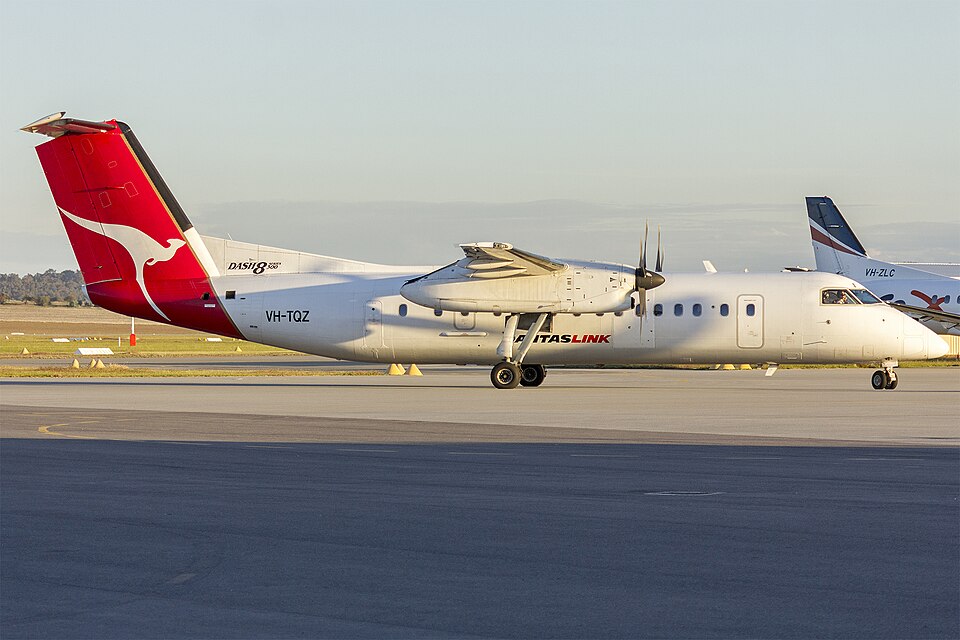
On 29 September 2023, a Lancair aircraft registered VH-VKP was preparing for take-off from runway 36 at Mildura Airport. Simultaneously, a QantasLink De Havilland Canada DHC-8-315 registered VH-TQZ (Dash 8) was becoming airborne from runway 09. The Lancair came to a stop on the runway after being alerted to the conflicting traffic by the Dash 8 and another aircraft. The Dash 8 crossed ahead of the Lancair at the runway intersection.
Communication and Situational Awareness
Succinct and timely radio communication is important for situational awareness and see-and-avoid safety. Both aircraft crews made radio calls in accordance with regulations, but they were not aware of each other, preventing anticipation of collision risk. The Dash 8 crew was managing coordination with multiple airborne aircraft near Mildura, adding complexity during a busy pre-departure phase. This likely focused their attention on airborne traffic.
Radio reception on the Common Traffic Advisory Frequency (CTAF) may have been reduced due to distance, geographical shielding, and station proximity. The Lancair's taxi call was likely received but with reduced clarity, requiring more attention to interpret. Significant CTAF usage prior to the occurrence may have made it difficult to identify relevant parties.
Cognitive Factors
The phenomenon of inattentional deafness may have occurred: being focused on auditory tasks reduces the chance of hearing unexpected but salient events. The Dash 8 crew's focus on airborne traffic may have led to missing the Lancair's taxi call. Cognitive tunnelling, where a person is too focused on a task, can further reduce awareness of other broadcasts. The combination likely resulted in the Dash 8 crew being unaware of the Lancair taxiing for a conflicting runway.
Contributing Factors
The Dash 8 crew, engaged in multiple communications with airborne traffic to ensure separation for departure, were not aware of the Lancair taxiing for runway 36. While the Dash 8 was organizing separation with another aircraft, the Lancair pilot broadcast an 'entering and backtracking' call that over-transmitted, resulting in only partial receipt on the CTAF. The over-transmission was not queried by other traffic, a missed opportunity that could have updated the Dash 8 crew's mental model.
Operational Considerations
The ATSB examined human factors influencing pilots' decisions. Without awareness of all traffic, effective situational awareness is degraded. The incident highlights challenges at non-controlled aerodromes during busy periods, where multiple runway operations and radio congestion can lead to miscommunication.