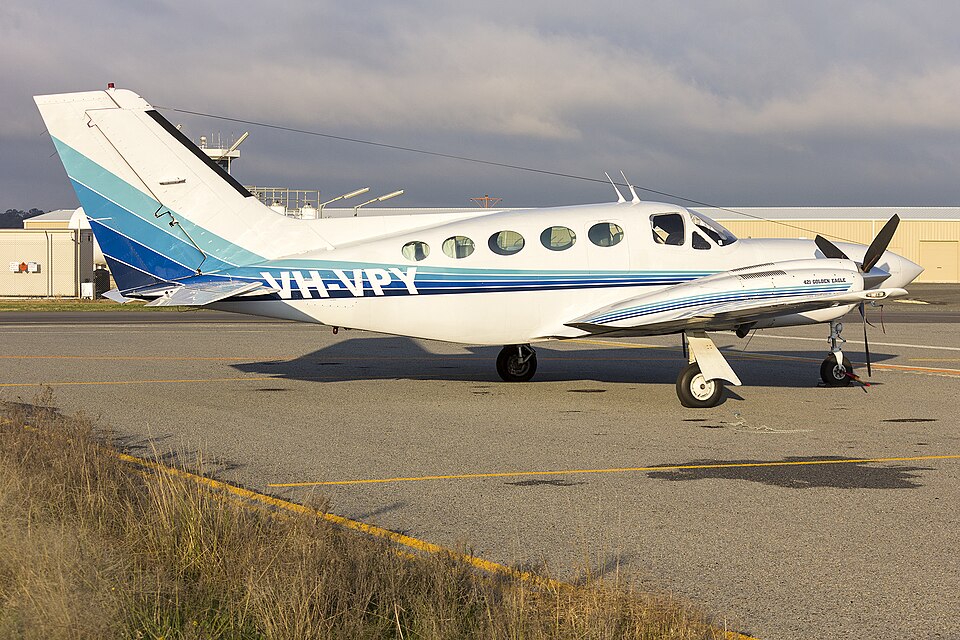
Sequence of Events
On the morning of 10 November 2023, a Cessna 421C, registered VH-VPY, departed Sunshine Coast Airport, Queensland, for a transpacific ferry flight to Oakland, California, with the first leg scheduled to land at Pago Pago, American Samoa. Two pilots were on board. The aircraft was equipped with additional ferry fuel tanks to ensure sufficient fuel for the extended ocean crossing.
Approximately 50 minutes after departure, the left engine failed. The pilots initiated a return to Sunshine Coast. During the return leg, they determined that the aircraft could not maintain altitude, and calculations based on the descent rate indicated they would be unable to reach the airport. They notified air traffic control of their intention to ditch.
Ditching and Rescue
After considering the aircraft's configuration, the pilots chose not to follow the manufacturer's ditching guidance. Instead, they configured the aircraft to avoid a nose-down attitude on touchdown and allowed airspeed to decrease before contacting the water. Both occupants were uninjured and exited through the rear door. They deployed the emergency life raft and were retrieved by a rescue helicopter 32 minutes after ditching. The aircraft sank and was not recovered.
Official Findings
The investigation identified contributing factors: the left engine failed and the propeller could not be feathered, creating excess drag from the windmilling propeller; additionally, the pilot was unable to quickly jettison sufficient ferry fuel, and the weight of that fuel further reduced aircraft performance, resulting in the ditching.
Other factors that increased risk included the aircraft being loaded beyond weight and balance limits imposed by the special ferry flight permit, and an unapproved modification to the ferry fuel system. These actions removed defenses incorporated into the ferry permit approval process. Furthermore, both pilots did not hold the appropriate approvals and ratings to conduct the ferry flight.
Other findings noted that the pilots were familiar with survival equipment and well prepared for ditching. While their ditching method was not consistent with the flight manual, it considered the aircraft's configuration and performance under the conditions; it could not be determined if this increased the likelihood of structural breakup compared to the manufacturer's procedure. Early communication between the pilots, air traffic control, and the Australian Maritime Safety Authority's Response Centre allowed rescue efforts to begin before ditching, increasing survival chances.