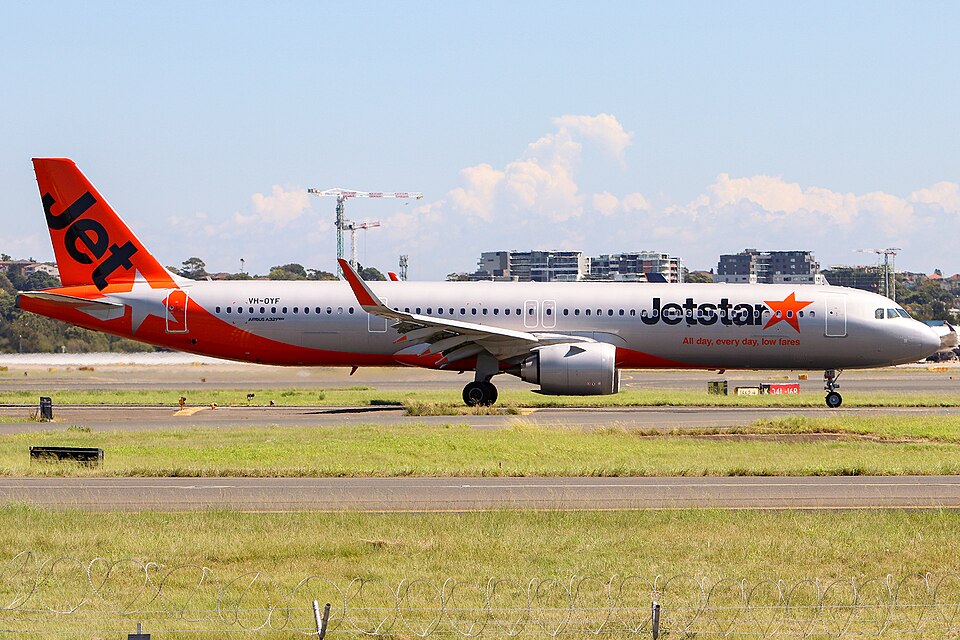
Event Overview
During the approach to Sydney airport, with the first officer acting as the pilot flying (PF), the flight crew reported experiencing a crosswind of up to 30 kt until descending through about 500 ft above mean sea level. Air traffic control advised the crew to expect a right crosswind component of 8 kt for landing, which was within the first officer’s operational crosswind limit of 20 kt. The captain confirmed the approach was 'stable' at 500 ft and the first officer continued as PF.
Approach and Go-Around Decision
At 50 ft, the first officer initiated the flare manoeuvre prior to landing. They recalled that they 'over flared,' and the aircraft subsequently floated for an extended period along the runway. During this time, the first officer’s control inputs did not counteract the effect of the crosswind, causing the aircraft to drift left of the centreline. After observing the lateral deviation, the captain commanded the first officer to conduct a go-around. This occurred just prior to touchdown when the flight crew would normally be focused on landing.
Crew Response and Dual Input
The flight crew did not expect a go-around at that time and had to rapidly shift their focus to conducting the missed approach procedure. The captain recalled being 'startled' by the unexpected need to discontinue the landing; however, the source notes they were more likely experiencing 'surprise.' The unexpected change from landing to a go-around close to the ground also resulted in the captain experiencing a sudden stress response. After the go-around was commanded, there was a rapid increase in pitch attitude, engine thrust, and airspeed. In response, the captain instinctively and inadvertently manipulated their sidestick while the first officer was flying, resulting in a dual-input alert. The captain reported they only realised they had manipulated their sidestick when they heard the alert. Their primary consideration during the go-around was to avoid an excessive rotation rate to prevent a tail strike, which did not occur.
Procedural Disruptions
Following the dual input alert, the captain took full control by engaging their sidestick push-button and announced 'I have control,' and the first officer assumed the role of pilot monitoring. A consequence of the control handover during the initial stages of the go-around was a momentary interruption of sequential crew actions during the go-around procedures. Additionally, there was a further disruption associated with the first officer and captain exchanging pilot flying and pilot monitoring roles. As a result, some procedural items were completed out of sequence—specifically, flap 3 retraction occurred after gear retraction. Although the flap retraction occurred out of sequence, there were no associated flight envelope exceedances or negative effects on aircraft performance.