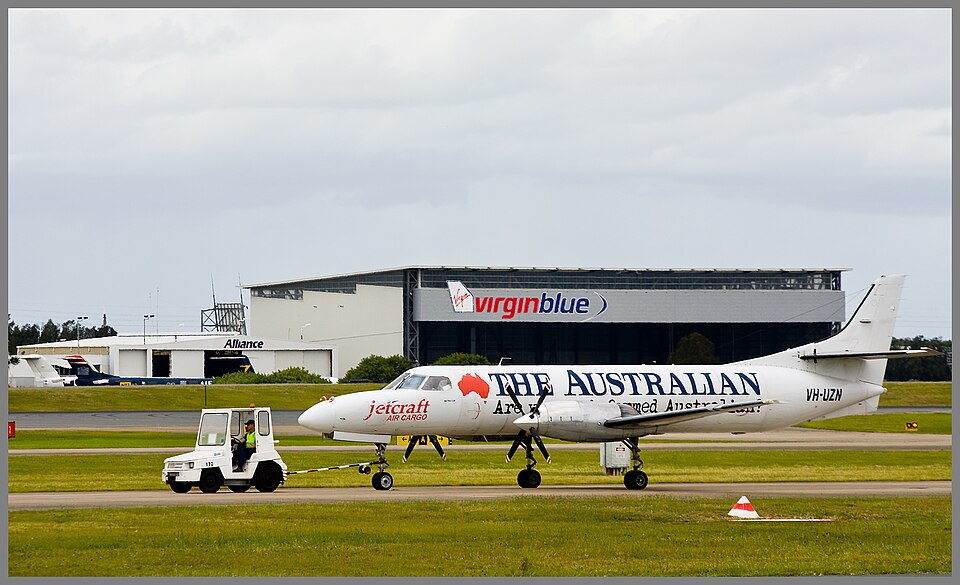
Pitot tube covers left on Sharp Airlines aircraft during takeoff

No fatalities • Townsville Airport, Queensland

A Sharp Airlines Fairchild SA227 departed Townsville Airport with pitot tube covers still installed, leading to unreliable airspeed indications during the takeoff roll.

What happened

A Fairchild SA227 operated by Sharp Airlines departed Townsville Airport with its pitot tube covers still attached. During the takeoff roll, the flight crew encountered unreliable airspeed indications. Because the airspeed indicators appeared to be increasing slowly, the crew did not recognize the malfunction early enough to reject the takeoff. The incident was further complicated by heavy rain and night-time conditions, which prevented the crew, ground staff, or air traffic control from visually identifying that the covers were still in place.

The investigation

The investigation focused on the pre-flight inspection procedures and the crew's decision-making. The captain had bypassed a full daily inspection, believing it had been completed earlier that morning, and performed only an abbreviated walk-around without using a checklist. While the first officer assisted by removing engine bungs and static port covers, the captain forgot to remove the pitot covers located on the nose of the aircraft. The first officer failed to verify their removal, mistakenly assuming that other 'remove before flight' tags seen in a bag were the ones attached to the pitot tubes.

Furthermore, the investigation scrutinized the operator's Flight Crew Operating Manual (FCOM). The manual contained conflicting guidance regarding when pitot covers should be installed. While the operator expected covers to be used if the aircraft was unattended for over 60 minutes, the procedure stated they should only be fitted after the final flight of the day. Additionally, the '4321' visual check performed by the first officer did not explicitly require a check for pitot cover removal.

Findings

  • A memory lapse by the captain and an incorrect assumption by the first officer resulted in the pitot covers remaining on the aircraft.
  • The operator's FCOM lacked clarity regarding the specific checks required after a terminating check and contained contradictory instructions regarding the installation of pitot covers.
  • The final visual inspection performed prior to closing the aircraft doors did not include a requirement to verify the removal of pitot covers.
  • Heavy rain and night-time visibility made it difficult for the flight crew or ground personnel to detect the covers during taxiing.
  • The crew failed to reject the takeoff because they did not realize the airspeed indicators were malfunctioning, as the readings were still increasing during the roll.

Probable cause

The primary cause was the failure to remove the pitot tube covers due to a combination of pilot memory lapse and incorrect assumptions, exacerbated by ambiguous operator procedures and poor visibility.

Frequently asked questions

What happened in the 2025-02-10 Fairchild Industries Inc SA227-DC accident near Townsville Airport, Queensland?

A Sharp Airlines Fairchild SA227 departed Townsville Airport with pitot tube covers still installed, leading to unreliable airspeed indications during the takeoff roll.

Were there any fatalities in the 2025-02-10 Fairchild Industries Inc SA227-DC accident?

No fatalities were recorded in this accident.

What aircraft was involved and where did it happen?

The accident on 2025-02-10 involved a Fairchild Industries Inc SA227-DC, registration VH-UZN, operated by Sharp Airlines, at Townsville Airport, Queensland.

What was the probable cause of the accident?

The primary cause was the failure to remove the pitot tube covers due to a combination of pilot memory lapse and incorrect assumptions, exacerbated by ambiguous operator procedures and poor visibility.

Loading the flight search…