Incident Overview
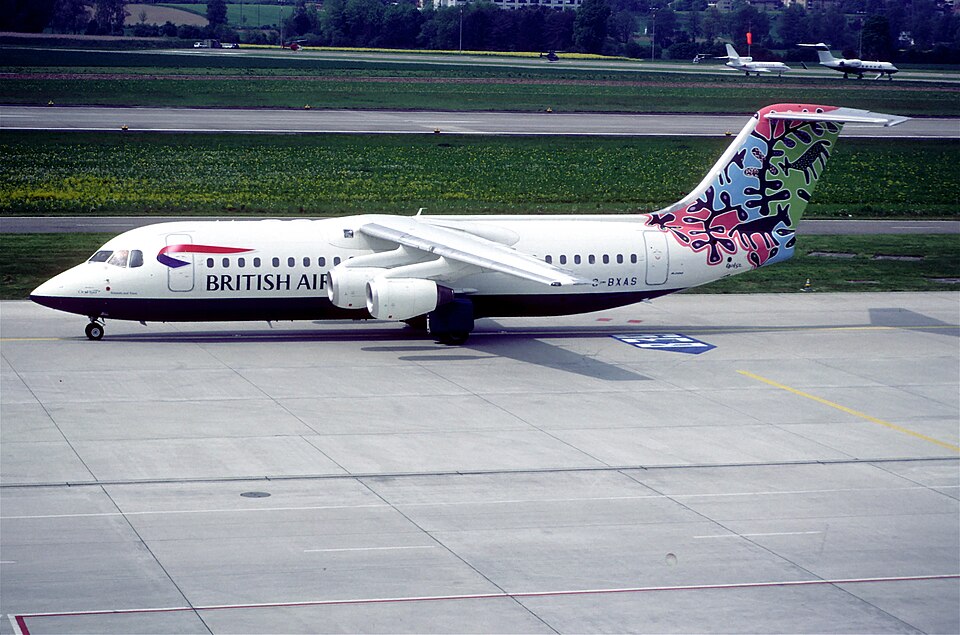
On 12 August 1998 at approximately 1100 UTC, an Avro 146-RJ100, registration G-BXAS, operating a public transport flight from Amsterdam, landed at London Gatwick Airport on Runway 26L at 1047 UTC. The aircraft taxied to Stand 10, which is served by a fixed jetty.
Flight Crew Actions
The commander, aged 42, held an Airline Transport Pilot's Licence and had 3,937 total flying hours, including 278 on type. The crew consisted of six members with 32 passengers on board. No injuries were reported.
Engine Shutdown Procedure
The operator's standard operating procedure for stands with fixed jetties required shutting down engines No. 1 and 2 prior to arrival. The procedure involved selecting the AC pump ON, the engine 2 hydraulic pump OFF, and setting generators 1 and 2 to OFF/RESET, with the APU generator available for electrical power. However, the APU was unserviceable. The commander nonetheless instructed the first officer to configure for shutdown. The first officer reported selecting the AC pump switch to ON, but later evidence suggested the switch may have been inadvertently placed in the centre OFF position.
Sequence of Events
Data from the flight data recorder (FDR) showed that as the aircraft turned onto Taxiway 2, the yellow hydraulic system low-pressure discrete signal went to zero, and engines No. 1 and 2 N1 reduced to zero. The aircraft stopped briefly abeam Stand 20, where the commander applied the park brake. After releasing the brake, the aircraft continued taxiing and stopped on Stand 10. During the preceding five minutes, there were about 15 minor brake applications, all below 250 psi. The yellow hydraulic system low pressure remained at zero throughout.
Shortly after applying the park brake on stand, the first officer noticed the aircraft moving forward. Both crew members applied toe brakes but found no pressure. The first officer suggested and selected emergency yellow brakes, which ultimately pressurised. However, the FDR recorded a longitudinal acceleration spike about five seconds before brake pressure increased, indicating the aircraft had already struck the jetty. The crew shut down engines No. 3 and 4 about two minutes later.
Damage
The No. 2 engine nacelle struck the airbridge, causing severe damage to the engine intake structure. The engine pylon and wing attachment passed non-destructive examination; the engine and mounting bolts were replaced as a precaution.
Examination and Testing
Post-incident testing of the yellow hydraulic system, AC pump, and switch revealed no faults. The pump operated satisfactorily in functional tests, and the switch passed vibration tests in all axes without loss of continuity. The aircraft subsequently returned to service without further hydraulic or brake issues.
Conclusion
The investigation concluded that the yellow hydraulic system was not pressurised. No permanent or intermittent fault was found. It is possible the AC pump switch had been inadvertently selected to the centre OFF position, and the crew did not notice the resulting indications of low yellow hydraulic system pressure.
Operator Response
The operator issued a Flying Staff Operational Instruction (FSOI) reminding crews that the APU generator must be available before shutting down engines per the procedure, and that with an unserviceable APU, all four engines should remain running until the parking brake is set and brake pressure checked.