Incident
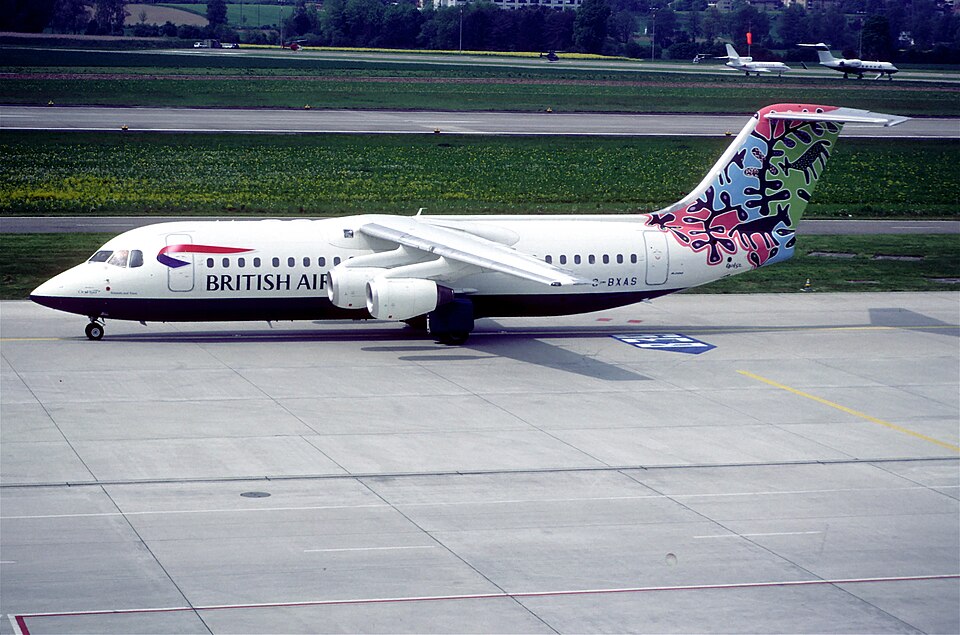
On 4 January 2002, at approximately 0920 UTC, an Avro 146-RJ100, registration G-BXAS, was operating a scheduled passenger flight from London Gatwick to Amsterdam. The aircraft had been de-iced before the crew arrived. During the take-off roll, the pilots noticed a strong smell similar to de-icing fluid. As the smell intensified, the commander switched the cabin air conditioning supply from the APU to the engines earlier than normal. At the same time, smoke was observed at the base of the left-hand 'A' windscreen panel. The crew declared a MAYDAY, donned their oxygen masks, and requested radar vectors for a return to Gatwick.
The smoke dissipated quickly, and the pilots did not complete the 'Smoke or Fire on Flight Deck' checklist. The cabin crew and passengers were briefed for the return. ATC was informed that an emergency evacuation would not be necessary unless fire or smoke reappeared. The landing was normal, and ATC confirmed no external fire or smoke. The crew taxied to the stand, where passengers disembarked normally.
Investigation
Examination of G-BXAS revealed that the APU intake and surrounding area were flooded with de-icing fluid, which had entered the air conditioning system. The APU was run on the ground for approximately 40 minutes, during which the smell dissipated completely and no further smoke was observed.
Later that same morning, the operator used a relief aircraft, G-BXAR, also an Avro 146-RJ100, for the same service. This aircraft was de-iced shortly before take-off and also experienced smoke and fumes on the flight deck after becoming airborne. Its pilots also donned oxygen masks and returned to Gatwick. Examination showed de-icing fluid around the APU intake and exhaust of this aircraft as well.
The elapsed time between de-icing and take-off in both cases suggests that de-icing fluid was carried toward the APU intake by airflow along the fuselage during the take-off run.
Operator Actions
Following these events, the operator reviewed its procedures and training. Changes included:
- A revised operating procedure: APU air is normally not selected for take-off after de-icing.
- Retraining of de-icing staff.
- Incorporation of the aircraft manufacturer's Service Bulletin SB 53-163-50299A into the fleet, which diverts fluid away from the APU intake.
The aircraft had no damage, and no injuries were reported among the 6 crew and 85 passengers on board G-BXAS.