Ultralight Crash in Chonburi Kills Pilot Due to Wing Fabric Failure
An X-AIR HAWK ultralight crashed in Chonburi, Thailand, killing the pilot and injuring a passenger. The accident was caused by deteriorated wing fabric and…
On October 11, 1983, an Avro 748 (registration N748LL) operated by Air Illinois was involved in an aviation accident near Pinckneyville, United States of America in flight. 10 people were killed. Investigators recorded the probable cause as: The captain's decision to continue the flight toward the more distant destination airport after the loss of d.c. electrical power from both aircraft generators instead of returning to the nearby departure airport. This summary draws on records from the Bureau of Aircraft Accidents Archives (B3A).
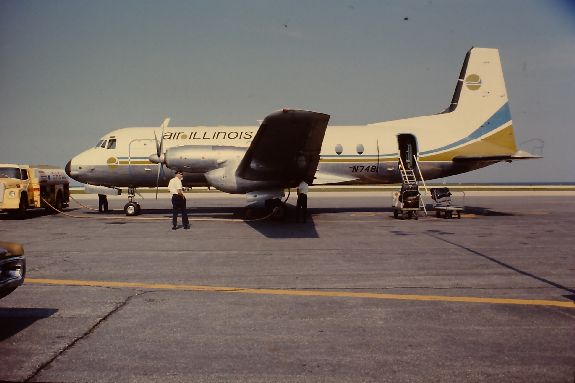
Flight 710 crashed into an open pasture after losing electrical power from both generators. The captain chose to continue toward the destination instead of returning to the nearby departure airport.
The captain's decision to continue the flight toward the more distant destination airport after the loss of d.c. electrical power from both aircraft generators instead of returning to the nearby departure airport. The captain's decision was adversely affected by self-imposed psychological factors which led him to assess inadequately the aircraft's battery endurance after the loss of generator power and the magnitude of the risks involved in continuing to the destination airport. Contributing to the accident was the airline management's failure to provide and the FAA's failure to assure an adequate company recurrent flight crew training programme which contributed to the captain's inability to assess properly the battery endurance of the aircraft before making the decision to continue, and led to the inability of the captain and the first officer to cope promptly and correctly with the aircraft's electrical malfunction.
An X-AIR HAWK ultralight crashed in Chonburi, Thailand, killing the pilot and injuring a passenger. The accident was caused by deteriorated wing fabric and…
A Challenger II Special ultralight aircraft (U-B23) landed off-runway at Pai Airport, Mae Hong Son, on September 17, 2024, due to a gust of wind. No injuries…
The Polish aviation safety authority is investigating a serious incident involving an AT-3R100 aircraft that occurred on September 2, 2024. The investigation…
A SZD-48-3 glider suffered damage when its left wing struck a ground obstacle during a low final approach at EPWK on June 20, 2025. The pilot was uninjured.
A 39-year-old skydiver died after a hard landing near Leszno on May 1, 2026. The PKBWL preliminary report indicates the fatal impact resulted from a late,…
A student pilot crashed an SZD-50-3 Puchacz glider into the airfield fence during a solo training flight on June 6, 2026. The pilot was uninjured, but the…