History of the Flight
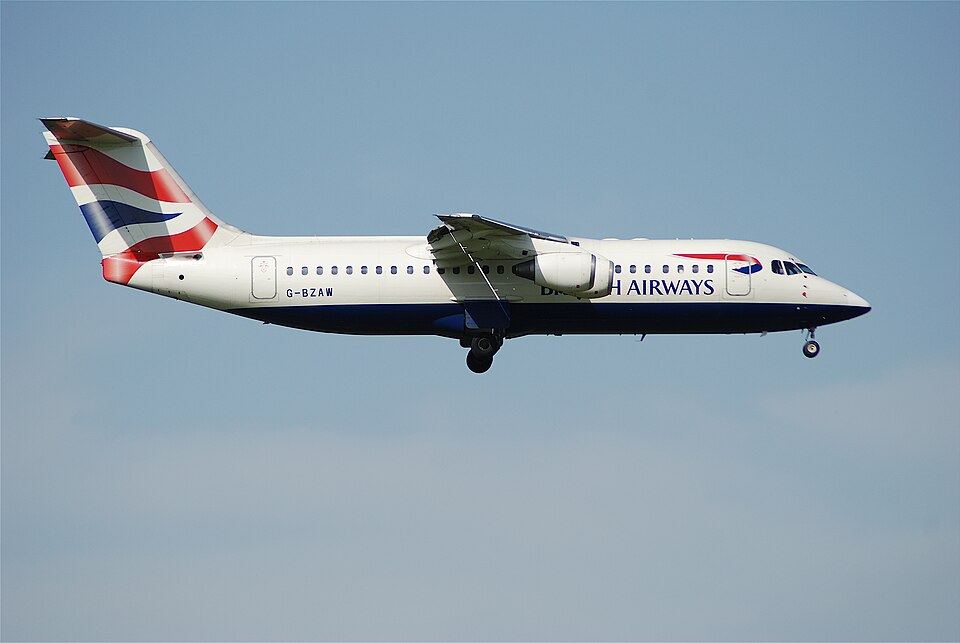
The aircraft, an Avro RJ100 registered G-BZAW, operated a scheduled passenger flight from Glasgow Airport to London City Airport. The flight was uneventful until after landing on Runway 10. To vacate the runway, the crew executed a 180° left turn in the turning circle. During the turn, they felt a judder, initially attributed to the nosewheel skidding on wet runway markings. As the aircraft backtracked along the runway, an intermittent judder returned, leading the crew to suspect a deflating tyre. After turning onto Taxiway C, the aircraft was stopped partly clear of the runway for inspection. The inspection revealed that the left nosewheel was no longer properly attached. The cabin crew and passengers were informed and disembarked normally. There were no injuries.
Recorded Flight Data
The aircraft was equipped with a flight data recorder (FDR) and cockpit voice recorder (CVR). The FDR recorded 16 flights since the left nosewheel was installed. Analysis of the incident landing showed a peak normal acceleration of 1.49g, with main landing gear contacting about one second before the nose gear. The rate of descent was less than 5 ft/sec, below the hard landing limit of 10 ft/sec. The de-rotation rate was about 3°/sec, higher by about 1.5°/sec than most preceding flights. The operator's Flight Data Monitoring system generated no reports for the incident or preceding flights.
Engineering Examination
Both nosewheels were removed. The left wheel and bearings were severely damaged; parts were recovered from the runway and Taxiway C. The nosewheel axle assembly was also damaged and replaced. Detailed examination at the wheel manufacturer's facility found that the outer bearing failed first, causing subsequent damage. The outer bearing's roller cage had become trapped, leading to rapid failure. The rollers had original surface finish and no signs of skewing or burning, indicating adequate lubrication. The bearing manufacturer identified two possible reasons for the cage trapping: wear in the cage pockets or, more probably, insufficient pre-load on the bearings.
Nosewheel Maintenance History
The wheel was manufactured in February 1998 and had 4,470 cycles since its last overhaul. It was returned to the manufacturer for tyre replacement in December 2008, during which the bearings were removed, cleaned, inspected, greased, and reinstalled. The person inspecting the bearings completed continuation training from the bearing manufacturer in April 2008. The wheel was released as 'fit for service' on 20 January 2009.
Aircraft Maintenance History
The wheel was fitted to the aircraft on 30 January 2009 in the left-hand position by two licenced aircraft maintenance engineers (LAMEs) during a routine overnight inspection. They followed the Aircraft Maintenance Manual (AMM) procedure, which requires torquing the axle nut to a high figure to seat bearings, then loosening and re-torquing to the in-service value while rotating the wheel. Both LAMEs were certain they followed this procedure. The torque wrench used was later calibrated and found satisfactory. The operator later issued a fleet-wide check of nosewheel axle nut torque, with no adverse findings.
In-Service History
The aircraft manufacturer recorded only two previous reports of nosewheel bearing failures since 2000. One in March 2008 was attributed to lack of grease caused by washing procedures. Another in November 2003 was similar to this incident and attributed to a trapped bearing cage, likely due to excessive bearing adjustment clearance from inadequate axle nut torque, inadequate lubrication, or a worn cage.
Conclusion
The failure mechanism was identified as a trapped roller cage, but it was not possible to determine which of the two potential causes (cage wear or insufficient pre-load) led to the failure. No safety recommendations were made.