Accident Overview
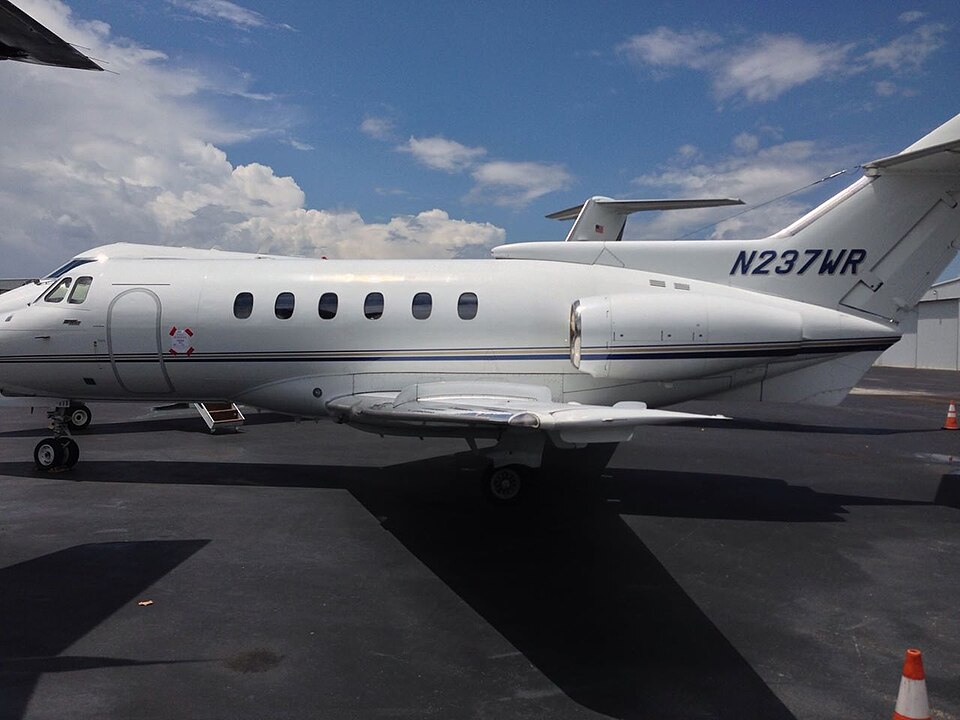
On an unspecified date, a Hawker 700A aircraft, registered to Rais Group International NC LLC and operated by Execuflight under 14 CFR Part 135 as an on-demand charter flight, departed controlled flight during a non-precision localizer approach to runway 25 at Akron Fulton International Airport (AKR). The airplane impacted a four-unit apartment building in Akron, Ohio. The captain, first officer, and seven passengers died; no one on the ground was injured. The airplane was destroyed by impact forces and post-crash fire.
Flight and Crew Actions
The flight departed from Dayton-Wright Brothers Airport, Dayton, Ohio, about 1413 and was destined for AKR. Instrument meteorological conditions prevailed, and an instrument flight rules flight plan was filed. Contrary to Execuflight’s informal practice of the captain acting as pilot flying on flights carrying revenue passengers, the first officer was the pilot flying, and the captain was the pilot monitoring.
While en route, the flight crew began preparing for the approach into AKR. Although company standard operating procedures (SOPs) specified that the pilot flying was to brief the approach, the captain agreed to the first officer’s request that the captain brief the approach. The ensuing approach briefing was unstructured, inconsistent, and incomplete, and the approach checklist was not completed. As a result, the captain and first officer did not have a shared understanding of how the approach was to be conducted.
As the airplane neared AKR, the approach controller instructed the flight to reduce speed because it was following a slower airplane on the approach. To reduce speed, the first officer began configuring the airplane for landing, lowering the landing gear and likely extending the flaps to 25° (the airplane was not equipped with a flight data recorder, nor was it required to be). When the flight was about 4 nautical miles from the final approach fix (FAF), the approach controller cleared the flight for the localizer 25 approach and instructed the flight to maintain 3,000 ft mean sea level (msl) until established on the localizer. The airplane was already established on the localizer when the approach clearance was issued and could have descended to the FAF minimum crossing altitude of 2,300 ft msl. However, the first officer did not initiate a descent, the captain failed to notice, and the airplane remained level at 3,000 ft msl.
As the first officer continued to slow the airplane from about 150 to 125 knots, the captain made several comments about the decaying speed, which was well below the proper approach speed with 25° flaps of 144 knots. The first officer’s speed reduction placed the airplane in danger of an aerodynamic stall if the speed continued to decay, but the first officer apparently did not realize it. The first officer’s lack of awareness and his difficulty flying the airplane to standards should have prompted the captain to take control of the airplane or call for a missed approach, but he did not do so.
Before the airplane reached the FAF, the first officer requested 45° flaps and reduced power, and the airplane began to descend. The first officer’s use of flaps 45° was contrary to Execuflight’s Hawker 700A non-precision approach profile, which required the airplane to be flown at flaps 25° until after descending to the minimum descent altitude (MDA) and landing was assured; however, the captain did not question the first officer’s decision. The airplane crossed the FAF at an altitude of about 2,700 ft msl, which was 400 ft higher than the published minimum crossing altitude of 2,300 ft msl. Because the airplane was high on the approach, it was out of position to use a normal descent rate of 1,000 fpm to the MDA. The airplane’s rate of descent quickly increased to 2,000 fpm, likely due to the first officer attempting to salvage the approach by increasing the descent rate, exacerbated by the increased drag from the improper flaps 45° configuration. The captain instructed the first officer not to descend so rapidly but did not attempt to take control even though he was responsible for safety of the flight.
As the airplane continued to descend, the captain did not make the required callouts regarding approaching and reaching the MDA, and the first officer did not arrest the descent at the MDA. When the airplane reached the MDA, about 500 ft above the touchdown zone elevation, the point at which Execuflight’s procedures dictated that the approach must be stabilized, the airspeed was 11 knots below the minimum required airspeed of 124 knots, and the airplane was improperly configured with 45° flaps. The captain should have determined that the approach was unstabilized and initiated a missed approach, but he did not do so. About 14 seconds after the airplane descended below the MDA, the captain instructed the first officer to level off. As a result of the increased drag due to the improper flaps 45° configuration and low airspeed, the airplane entered a stalled condition when the first officer attempted to arrest the descent. About 7 seconds after the captain’s instruction to level off, the cockpit voice recorder (CVR) recorded the first sounds of impact.