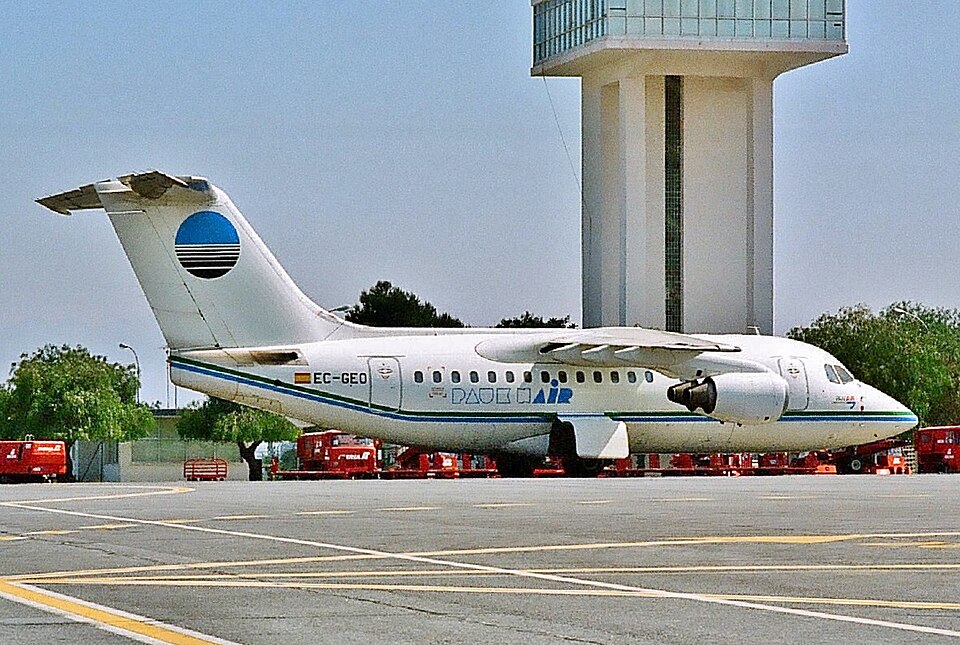
Flight History
The flight from Málaga-Pablo Ruiz Picasso Airport to Melilla Airport was uneventful until the crew initiated descent in marginal weather conditions. After receiving clearance to descend to 7,000 feet from Sevilla ATC, the crew contacted Melilla Tower and was cleared to 5,000 feet. Melilla Tower reported runway 33 in use with wind at 270° at 5 knots, visibility 8 km, and few clouds at 1,000 feet.
Descent and Collision
At 0645 local time, the copilot reported the aircraft at 22 nautical miles and an altitude of 3,000 feet. From this point, the crew descended below the minimum safe altitude of 4,000 feet and crossed the coastline in limited visibility due to low clouds. At 0749 and 52 seconds, the Ground Proximity Warning System (GPWS) sounded twice in the cockpit. Seconds later, the aircraft struck the slope of a mountain near Cap de Trois Fourche. The aircraft disintegrated on impact, and all 38 occupants were killed.
Probable Cause
The official investigation concluded that the accident was caused by a collision with terrain in Instrument Meteorological Conditions (IMC), classified as a Controlled Flight Into Terrain (CFIT) accident. This resulted from a combination of factors: non-application of the arrival procedure, including descending below the minimum safe altitude; inadequate crew coordination; and non-application of company procedures regarding the GPWS alarm.