History of the Flight
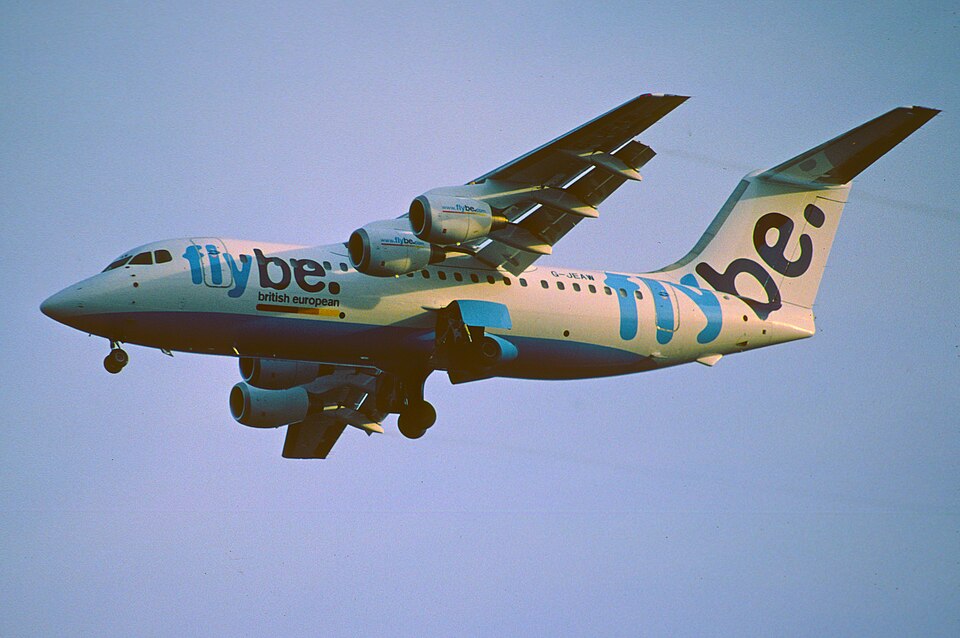
On 22 July 1998, a BAe 146-200 (registration G-JEAW) was operating a scheduled passenger flight from London Gatwick to Belfast City Airport. The first officer was the handling pilot. As the aircraft approached the top of descent, the crew received ATIS information indicating surface wind 060°/06 kt, visibility 5,000 metres in rain, scattered cloud at 600 feet, and overcast at 1,100 feet. Runway 22 was in use, with an available landing distance of 1,767 metres. The crew contacted Belfast Approach at 1800 hrs and were given radar vectors for an ILS approach. At 1805 hrs, they were handed over to the tower, which reported surface wind 040°/07 kt and the runway state as "WET WITH WATER PATCHES". The first officer questioned continuing the approach given the tailwind and water, but the commander decided to proceed. The aircraft was cleared to land at 1807 hrs. During the approach, wind updates indicated tailwind components of 8 to 10 kt. The crew saw runway lighting from glideslope intercept at 1,700 feet. At about 500 feet, indicated airspeed was 12 to 14 kt above the required 122 kt, corrected by speedbrake to the correct value by 300 feet. At the "10 feet" radio altimeter call, the aircraft was above the touchdown zone markers. The first officer initiated the flare, but the aircraft floated. The commander nudged the control column forward to ensure ground contact. Once on the ground, the commander selected spoilers while the first officer began braking. The commander also braked maximally, perceiving standing water and aquaplaning. As the aircraft neared the opposite threshold, the commander turned left using nosewheel steering to exit via a taxiway. The aircraft left the runway and came to a halt in mud approximately 7 metres from the runway surface, on a heading nearly 90° to the runway centreline. No damage or injuries were reported. The commander decided against an emergency evacuation and performed a normal shutdown. The tower controller sounded the crash alarm; fire and rescue services responded, and passengers disembarked via steps. The airfield closed until 2019 hrs.
FDR Information
The FDR showed that landing flap (33°) was selected at 750 feet at 136 KIAS. At 500 feet, airspeed was stabilised at 130 KIAS, and at 35 feet it was 128 KIAS. Engine power reduced from 60% N1 to 40% N1 at 15 feet, and touchdown occurred 9 seconds later at 111 KIAS. No windshear was evident. The total ground roll was 975 metres. Spoilers deployed between one and three seconds after touchdown. Deceleration was about 0.2g until the aircraft turned left. Braking parameters were not recorded.
Technical Examination
Tyre marks indicated an attempted left turn at the threshold. Tyres showed abrasions from sideslip but no scald marks or rubber reversion typical of aquaplaning. Hydraulic pressures and tyre pressures were satisfactory. ASI checks showed no discrepancies up to 130 kt, with a maximum 4 kt discrepancy between 130 and 180 kt. Brake pressure and anti-skid tests found no faults. The aircraft had no relevant deferred defects and no brake, anti-skid, ASI, or spoiler defects in the previous three months.
Runway Details
Runway 22 is 1,767 metres long, with 1,509 metres available from glideslope origin. The runway is 61 metres wide, wider than runways at other destinations. It is surfaced with concrete blocks with rubberised sealant; water pooling can occur if blocks are misaligned. Two short grooved asphalt sections exist, but the aircraft touched down beyond them. A friction classification on 29 January 1998 showed average readings above maintenance planning levels (0.75 vs 0.63). However, painted touchdown zone markers showed marked friction deterioration; action to improve these was recommended.
Wind Information
Two anemometers are located near each runway threshold. The mean wind velocity over 10-minute periods is used for ATIS, and instantaneous wind for landings is derived from the relevant site.
Reporting of Wet Runways
ATC reported the runway state as "WET WITH WATER PATCHES", which is issued when the surface is soaked and significant patches of standing water are visible. The source notes that such a report indicates pilots should make operational adjustments as wheel braking and control may be affected by aquaplaning.
Operator's Procedures
The company operations manual required a constant approach speed. No further details are provided.