History of the Flight
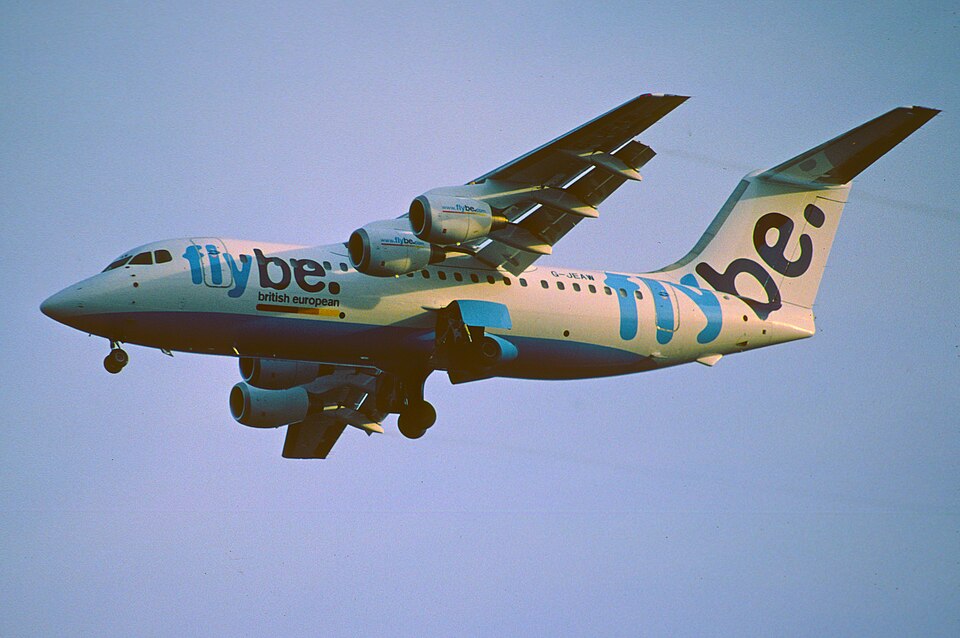
On 7 December 2005, at 1805 UTC, a BAe 146-200 aircraft, registration G-JEAW, was preparing for departure from Southampton Airport, Hampshire. This was the fifth sector of the day for the aircraft, which had been de-iced prior to its first departure. During pushback and taxi from Stand 6 to holding point B1, the auxiliary power unit (APU) was running with its bleed air selected to supply the environmental control system. Shortly after pushback, the three cabin crew members and several passengers reported acrid fumes in the cabin.
One cabin crew member became nauseous and began vomiting; another felt light-headed and experienced a racing heartbeat. The third crew member only noticed the smell with momentary light-headedness. The commander was informed when the aircraft had been at the holding point for about five minutes and decided to abandon the flight. After obtaining ATC clearance, the aircraft taxied back to the stand. During the taxi, the APU bleed air was switched off and engine bleed air selected on to purge the fumes, but this was ineffective. The flight deck crew did not detect any fumes. Once on stand, engines were shut down and passengers disembarked.
Five passengers provided details of their experiences, one reporting a burning sensation in the eyes. Fifteen other passengers smelled fumes but suffered no ill effects. The most affected cabin crew member had difficulty concentrating, was unable to perform duties, and continued vomiting sporadically for up to an hour after the event. The commander accompanied the three cabin crew members to a local hospital for medical tests.
Investigation
Following the incident, the APU and engines were thoroughly examined for oil leaks that could have entered the bleed air system, but none were found. The hydraulic system was inspected and tested satisfactorily. Engine ground runs with bleed air selected failed to reproduce the fumes.
Further examination revealed a large quantity of de-icing fluid within the environmental control system bay adjacent to the APU. The area was cleaned, and the aircraft returned to service with no further reports of fumes. The APU inlet on Avro 146/RJ aircraft is located on the upper left side of the rear fuselage, permanently exposed and susceptible to contamination from de-icing fluid running down the fuselage into the inlet.
Operator Actions
Following the incident, the operator issued a Notice to Aircrew (NOTAC) stating that the APU air supply should not be used on the sector immediately following de/anti-icing, and that the APU compressor air inlet drain must be kept free of de/anti-icing fluids, consistent with aircraft manufacturer guidance. A previous NOTAC, issued on 17 November 2005, provided medical advice following a cabin fumes event, based on manufacturer recommendations. The medical checks on the cabin crew, conducted according to that NOTAC, produced no abnormal findings.
Probable Cause
The probable cause of the incident was contamination of the cabin air supply from the ingestion of de-icing fluid into the APU compressor.