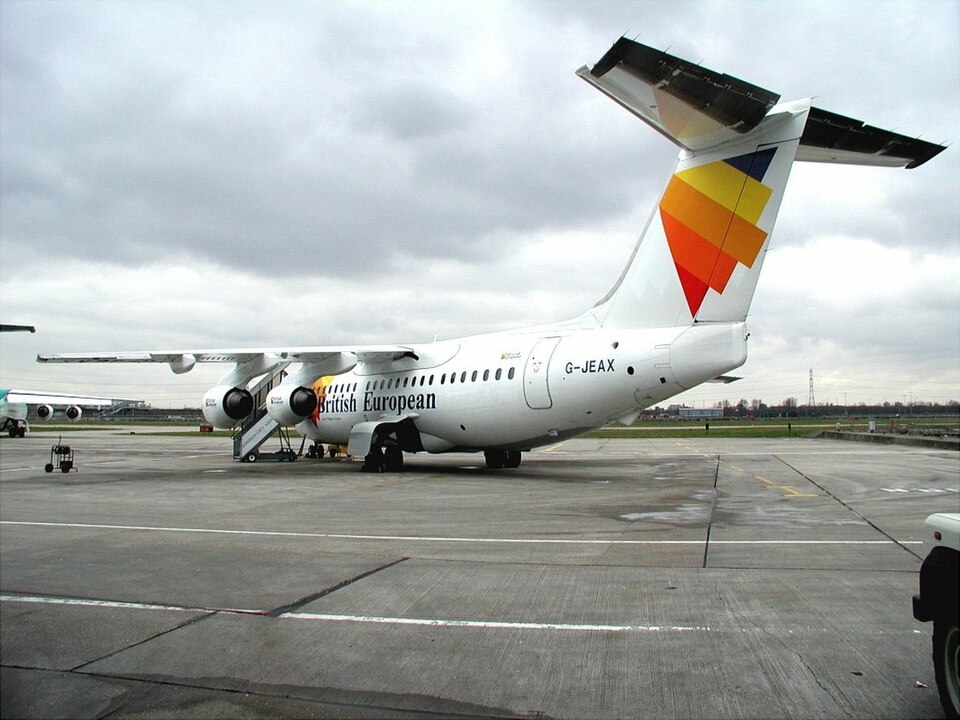
Incident Overview
On 9 July 2002 at 0900 UTC, a BAe.146-200, registration G-JEAX, was parked at Stand F11 of London Heathrow Airport's Terminal 2. The aircraft was being prepared for a public transport flight to Toulouse on behalf of another operator. There were five crew members on board and no passengers.
Baggage Truck Strike
A Charlett 810 electric baggage truck was transporting transfer bags to the aircraft. As the truck approached from the front right, the driver intended to position it under the wing near the forward hold to protect the bags from rain. When the driver attempted to slow down by braking, the vehicle began to slide. The top right corner of the truck struck the aircraft's right side, just forward of the top corner of the forward cargo door aperture. The impact caused a gash in the fuselage skin approximately 4 inches wide and 14 inches long, along with internal structural distortion.
Vehicle Condition
Police and airport authorities inspected the baggage truck at the scene. Both front tires were excessively worn, with little tread remaining and additional damage to the outer edges. The servicing company that owned the vehicle removed it from service for further investigation. Although the vehicle operated airside at Heathrow and was not required to comply with landside Road Traffic Act regulations, local by-laws required it to be in a roadworthy condition similar to that mandated by the Act. The driver was responsible for ensuring roadworthiness.
Ramp Conditions
The ramp area around Stand F11 was contaminated with oil from normal aircraft servicing. Prior to the incident, heavy rainfall had left standing water on the ramp. The combination of oil and water created slippery conditions that likely reduced traction and braking capability of servicing vehicles.
Driver Factors
The driver was on his first day back at work after a single roster day off. Prior to this break, he had worked for 14 consecutive days without days off, completing numerous double shifts. The source notes that as a result, the driver may not have been adequately rested.
Company Protocol
The servicing company had regulations requiring vehicles to maintain a distance of at least six feet from any aircraft. In this incident, the baggage truck was operated closer than that distance.
Conclusions
The source concludes that the baggage vehicle was not in a roadworthy condition due to insufficient tread on the front tires, which significantly reduced traction in the wet and slippery conditions of the contaminated ramp. The vehicle was operated close to the fuselage in contravention of the company's six-foot rule, and the driver may not have been adequately rested due to a lengthy work period with only one day off. The combination of these factors led to a reduced ability of the vehicle to stop, resulting in its collision with the aircraft fuselage.
Aftermath
The aircraft was removed from revenue service for a temporary repair to allow a ferry flight to the operator's maintenance base. The servicing company initiated a communication and training campaign to reinforce the six-foot rule, proper vehicle operation airside, and procedures for working time, inclement weather, and baggage delivery approach.