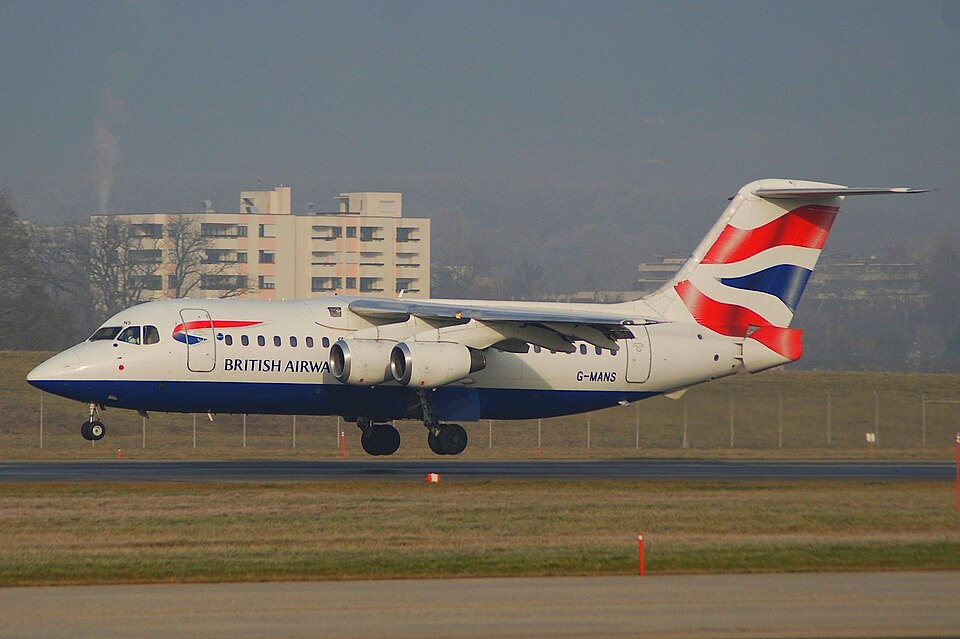
History of Flight
The aircraft was on an ILS approach to Runway 25L at Brussels Airport, Belgium. The flight crew reported that the aircraft was stabilised at the correct speed and fully configured for landing with 33° of flap and landing gear down. The commander recalled the N1 engine parameter set to 53%, while the first officer remembered about 50%. Weather was good with visibility greater than 10 km, no cloud below 5,000 feet, and a steady surface wind from 330° at 13 kt.
The first officer, the handling pilot, disengaged the autopilot at 215 feet agl and later deployed the airbrakes. Just prior to touchdown, the first officer considered the rate of descent higher than normal and selected a higher pitch attitude. The commander suspected the rear fuselage struck the runway, followed by main and nose wheel touchdown. Touchdown speed was reported as 108 kt in the touchdown zone. Both pilots heard the stall warning sound just before touchdown, continuing for two to three seconds. Cabin crew sensed a roll to the left before a heavy landing. The landing roll completed without further incident. After parking, the commander discovered damage to the tail bumper, indicating ground contact.
The aircraft landing weight was calculated at 31,000 kg (max 36,740 kg), with VREF 108 kt. The centre of gravity was near the middle of the permitted range.
Flight Recorder Data
The aircraft had a 25-hour flight data recorder (FDR) and a 30-minute cockpit voice recorder (CVR). The CVR recording was overwritten and not useful. The FDR suffered an undetected failure of a five-volt reference supply, resulting in 15 parameters not recorded, including altitude, airspeed, and all engine and control surface data. Recorded data showed glideslope capture at 2,000 feet agl, landing gear lowered upon descent, and flap selection at 1,170 feet agl. Airbrakes were partially deployed for 16 seconds then restowed. Autopilot disengagement at 215 feet agl, 22 seconds before touchdown. At 125 feet agl, airbrake deployed to 55° and remained. After airbrake deployment, pitch attitude and rate of descent increased; by 70 feet agl, rate of descent was about 900 fpm. In the final second, pitch attitude increased rapidly and rate of descent reduced to about 300 fpm. At touchdown, pitch attitude was 10.6° nose up, then reduced to 7° as the aircraft rolled left to a maximum of 4.5° left wing down over four seconds.
Aircraft Information
The manufacturer advised that a tailstrike occurs during landing if, with landing gear extended, pitch attitude is 12.6° or greater with a tail bumper fitted (14.1° without). With compressed landing gear, a pitch attitude of 8.4° or greater causes a tailstrike in the region of Frame 38, with the tail bumper remaining clear by several inches.
Discussion and Aftermath
The rate of descent increased after airbrake deployment at 125 feet, reaching about 900 fpm by 70 feet agl. Without the missing parameters, the cause of the increase could not be determined. The crew recalled low engine thrust. The surface wind was 80° to the right of runway heading at 13 kt. The first officer initiated flare after crossing the threshold and made a more positive control input when he realised the high sink rate. Recorded pitch attitude at touchdown was 10.6°, and the tail bumper struck the runway. Damage was limited to the tail bumper. Manufacturer data suggests main gear contacted fractionally before the tail bumper, and contact with the aircraft skin near Frame 38 was narrowly avoided. The increased rate of descent and pitch attitude with low thrust and maintained glideslope indicated airspeed lower than the crew realised, confirmed by the stall warning. Following the incident, the operator issued extra guidance to crews, emphasising careful monitoring of airspeed and power setting during final approach and consideration of a go-around if a high sink rate is detected during flare instead of increasing flare. The operator also considered reviewing serviceability testing of the FDR type used in G-MANS to improve parameter recovery.