Synopsis
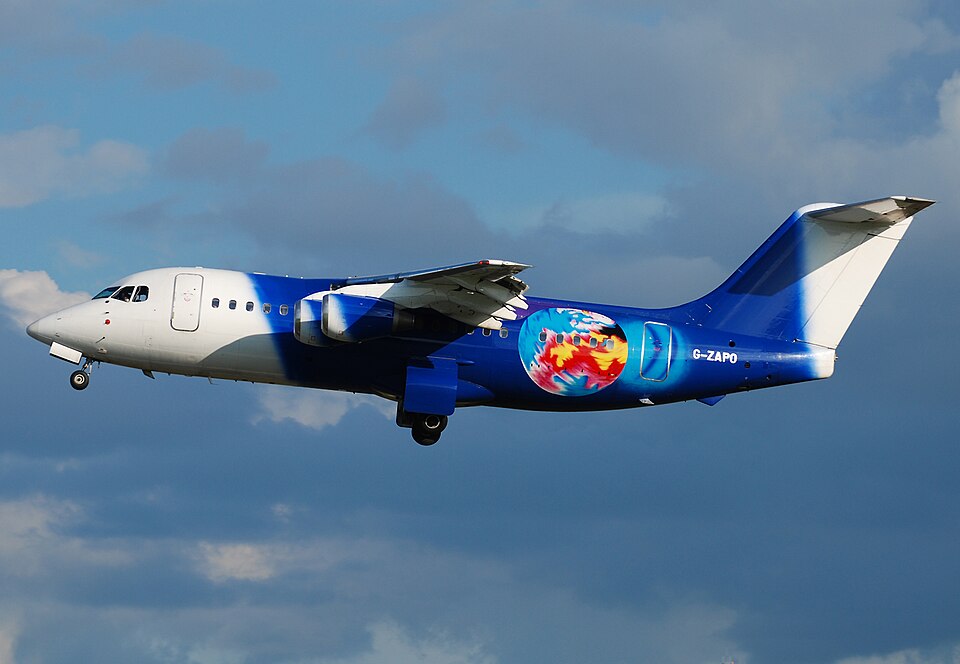
On 25 February 2009, a BAe 146-200 cargo aircraft, registration G-ZAPO, was being pushed back from Stand A1 at London Stansted Airport when a loud bang was heard on the flightdeck. The pushback had commenced with the intention of following a standard procedure. The towbar became disconnected from the tug due to a failed shear pin. The tug stopped, but the aircraft could not be halted in time to prevent it colliding with the stationary tug. The nose of the aircraft penetrated the windscreen of the tug. No injuries occurred.
History of the Flight
The aircraft was attached to the tug using a conventional towbar arrangement and was ready for pushback from Stand 1L on the Alpha Apron. The aircraft was due to depart on a routine cargo flight with two crew members and no passengers. The pushback began with the tug pushing the aircraft backwards and to the left, then pulling it forwards and to the right until the aircraft was lined up on the taxiway centreline. Just after the aircraft stopped moving backwards and the tug started pulling it forward, a loud bang was heard on the flightdeck. The commander asked the headset operator if he identified the source of the noise, but the operator replied that he had not. The commander then requested the headset operator ask the tug driver what had happened. The headset operator conversed with the tug driver, but no response was provided to the commander. Meanwhile, the tug continued to pull the aircraft forward, and the crew diverted their attention to completing the ‘after start’ checklist. As the crew focused on this task, they heard an urgent call for “brakes on” by the headset operator. The commander applied the aircraft brakes, but the aircraft could not be stopped in time to prevent a collision with the now stationary tug, resulting in the nose of the aircraft penetrating the tug’s windscreen. No injuries occurred as a result of the collision. The headset operator reported that he requested brakes be applied as soon as he observed the failure of the towbar.
Post-Accident Findings
The towbar connecting the tug to the aircraft had detached at the tug end. Failure of a shear pin resulted in the main body of the towbar (attached to the aircraft) separating from the ‘eye’ fitting, which remained attached to the tug. The aircraft commander reported that he inspected the failed shear pin immediately after the accident and that it was heavily corroded and had partially sheared prior to the final failure. However, a subsequent investigation by the ground handling company did not determine the cause of failure of the pin. The aircraft operator reported that the ground handling company could not provide the pin when requested, preventing any further failure analysis. An internal report by the operator suggested evidence that the pushback had been ‘erratic’, but the ground handling company reported that they considered the pushback fully compliant with their procedures. The ground handling company advised that, due to the relative sizes of the aircraft and towbar, there is only a small clearance between the aircraft nose and the tug windscreen during pushback, giving little reaction time before contact occurs. The company also suggested that the limited nature of the damage to both the aircraft and the tug indicated a very low speed impact.
Conclusion
Both the aircraft operator and the ground handling company carried out separate internal investigations. The operator’s investigation concluded that the ground handling company’s pushback procedures were adequate for the task. It did, however, raise concerns about the condition and standard of maintenance of the ground equipment and recommended an audit. The ground handling company confirmed that the equipment is subject to scheduled six-monthly maintenance and routine operational checks. It has also put in place a three-monthly check of the towbar shear pins as a result of the accident. With regard to the operator’s own procedures, a change has been made to delay the ‘after start’ checks until all pushback movements have been completed and ground equipment removed, allowing the crew’s attention to be focused on the safe completion of the pushback phase.