Incident Summary
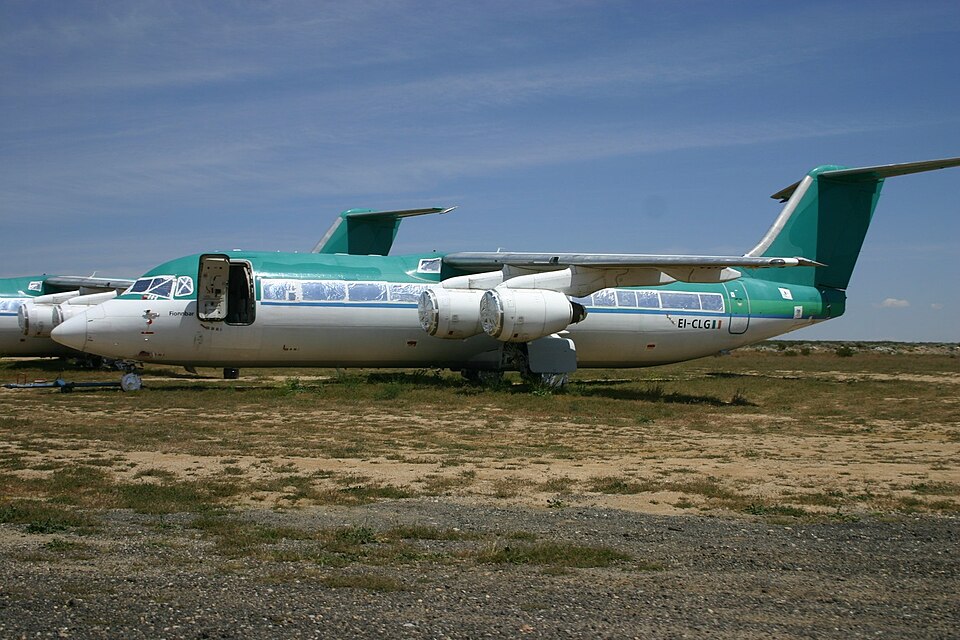
On 31 August 1999, at 0838 UTC, a BAe 146-300 (registration EI-CLG) was on a scheduled public transport flight from London Stansted Airport to Dublin. While climbing to Flight Level 220 (FL220), passing FL190, the autopilot disengaged and warning flags appeared on the commander's Attitude Direction Indicator (ADI). Simultaneously, the 'GEN OFF LINE' caption illuminated for the No 1 electrical generator, and the 'ELECT' caption appeared on the Master Warning panel. The commander took manual control. Both pilots felt a change in ear pressure and observed the cabin pressure indicator showing a rate of descent of approximately 1,800 to 2,000 feet per minute. The crew switched the Pressurisation controller to MANUAL mode and fully shut the cabin air discharge valves. As a precaution, they donned oxygen masks and requested a descent to FL100, later cleared to FL80. They declared an emergency to ATC, citing electrical and pressurisation problems. After evaluating the situation at FL80, they downgraded the emergency and requested a diversion to Manchester to examine the No 1 electrical generator. During the descent, the first officer started the Auxiliary Power Unit (APU). The landing at Manchester was normal, with no injuries to the three crew or 72 passengers.
Aircraft and Crew
The aircraft was a BAe 146-300, manufactured in 1989, powered by four Lycoming ALF 502R turbofan engines. The commander, aged 37, held an Airline Transport Pilot's Licence and had 5,875 total flying hours, including 2,100 hours on type. His recent experience included 160 hours in the last 90 days and 55 hours in the last 28 days.
Findings
Post-incident examination revealed that the No 1 generator had tripped off-line due to a high temperature in the oil supply to the Constant-Speed Drive (CSD). The Pressurisation controller was found serviceable and showed no defects after full examination. The aircraft manufacturer noted that the transient electrical interruption from the generator failure likely caused a momentary power surge before the No 2 generator assumed the load via the Bus-Tie Contactor (BTC). This interruption affected the autopilot, the commander's ADI, and the Pressurisation controller, leading to a temporary pressure fluctuation. The crew's reaction to the unexpected pressurisation change was premature, but understandable given the circumstances.
System Description
In the BAe 146 electrical system, AC power is normally supplied through two separate busbars (AC BUS 1 and AC BUS 2), powered by the No 1 and No 2 generators, respectively. AC BUS 1 supplies essential services on the ESS AC BUS, including the commander's ADI and the Pressurisation controller. If either busbar fails, the BTC automatically closes, allowing the remaining generator to power both busbars. The Pressurisation controller also has a backup DC supply from the Emergency/Battery busbar. In automatic mode, the controller continuously adjusts two cabin air discharge valves to maintain the selected cabin altitude. In manual mode, the valves remain at the position selected by a rotary knob on the control panel.