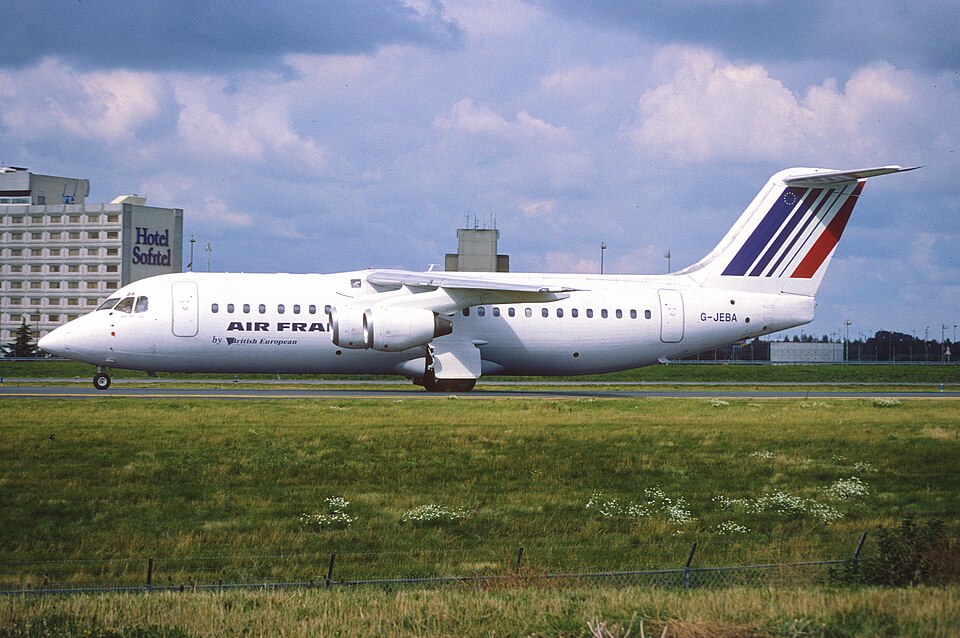
History of the Flight
On 2 February 2006 at 1810 UTC, a BAe 146-300 (registration G-JEBA) was climbing from Belfast City Airport on a scheduled passenger flight to Gatwick. The co-pilot, who was the handling pilot, detected an odour described as similar to that of a central heating boiler. The commander, when asked, did not discern this odour. Shortly afterward, the co-pilot complained of a dry throat and burning eyes. Control was handed to the commander, after which the co-pilot experienced a tingling sensation in his fingers and reported feeling hot and sweating. He donned his oxygen mask, slid his seat back, and took no further part in the flight. The commander elected to return to Belfast. The oxygen did not appear to relieve the co-pilot's symptoms, though he remained conscious. After an uneventful descent, approach and landing, the co-pilot received first aid and began to recover. He was taken to a local hospital for further checks, including blood sampling. No other crew, passengers, or the commander reported any ill effects, smoke, fumes, or odour.
Aircraft Examination
An examination of the engines, APU, air conditioning, and ducting was carried out. The only anomalies found were an oil leak in the APU bay and light deposits in the air conditioning ducts running from the packs to the cabin and flight deck. The oil leak was traced to the APU air-cooled oil cooler for the APU generator oil, located on the left fire wall away from the APU. The air used to cool the APU generator oil is separate from the main air supply to the APU and the aircraft bleed air system, with its own intake, fan, ducting, and exhaust. Therefore, it was considered unlikely that the leaking oil, though pooled in the APU bay, would have entered the APU engine air supply.
Blood Tests
Tests on blood taken from the co-pilot immediately after arriving at hospital proved inconclusive.
Subsequent Occurrence
After returning to flying duty, the same co-pilot was conducting a flight from Belfast on 16 February 2006 on another BAe 146 (G-JEBG). During taxi from the stand, he again complained of stinging eyes and sweating. Again, no other persons were affected, though some cabin crew and passengers detected fumes and an odour in the cabin air. The subsequent aircraft examination did not reveal a definitive cause, though there was evidence of possible contamination of the APU bay with exhaust air from the APU.
Discussion
It is possible, though not confirmed, that fumes generated by the APU or engine could have been the initiating factor, considering the deposits in the air conditioning ducting and the co-pilot's detection of an odour. However, the oil leak in the APU bay was unlikely to have entered the air supply system. Following an investigation into a similar incapacitation on a BAe 146 in November 2000 (Aircraft Accident Report 1/2004 G-JEAK), it was concluded that subsequent research and tests suggested the crew of G-JEAK, and crews of other aircraft with similar incidents, may have been exposed to turbine engine oil-derived fumes in the cabin/cockpit air supply, originating from either an engine or APU, which had an irritant rather than a toxic effect. Several recommendations were made, and the CAA issued guidance that if contaminated air is suspected, flight crew should don oxygen masks and use 100% oxygen.