History of the Flight
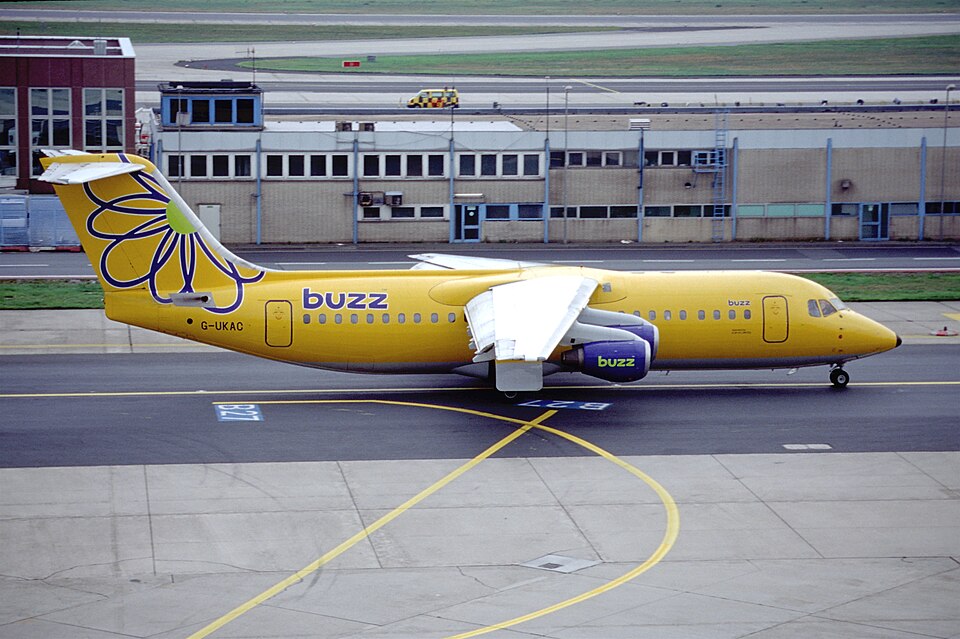
On 3 June 2000, a BAe 146-300, registration G-UKAC, was operating a public transport passenger flight from Marseille to Stansted. After leveling at FL280 in a light thin cloud layer, the crew requested a climb to FL310 to address engine icing considerations. At FL310, weather radar displayed a line of cumulonimbus (CB) formations running east-west approximately 50 nm ahead. Approaching 20 nm from the CBs, the crew requested a descent to FL260 to transit between two storm cells about 10 nm apart. Engine anti-ice was selected on at the top of the descent. Lightning was visible near the left storm cell, and a heading change was requested. While passing between the cells at FL260, visible moisture was encountered, but no airframe icing was observed on the wings, windshield, wipers, or ice detector. As the aircraft cleared the weather, the commander noticed a slow decrease in fan speed (N1) on engine No 4, accompanied by increasing Turbine Gas Temperature (TGT). The commander instructed the first officer to retrieve the Rollback Emergency Check List. After approximately one minute, the commander retarded the No 4 thrust lever; TGT had reached 890°C and was rising. Engine No 4 was shut down and the rollback drill completed. The crew transmitted a PAN call and diverted to Paris Charles de Gaulle without further incident.
Flight Recorder Data Analysis
The aircraft manufacturer analyzed Flight Data Recorder (FDR) data and concluded that the uncommanded thrust reduction was due to an ice-induced engine rollback on the No 4 engine. Ambient conditions at onset were 31,000 feet, ISA +6°C. The aircraft was in the vicinity of a thunderstorm. The Total Air Temperature (TAT) probe iced up approximately 4 minutes 30 seconds after the initial N1 decay, while in previous ice-induced rollbacks the TAT probe typically iced up 3 to 6 minutes before N1 decay. The fan speed decay plot showed a convex profile characteristic of classic ice-induced rollback. The engine did not respond to thrust lever increases and was shut down as temperature limits were exceeded. The reason other engines remained unaffected was probably due to minor, unquantifiable variations in engine condition.
Operational Restrictions
The term "rollback" describes an uncommanded thrust reduction on the Lycoming ALF 502R engine, caused by ice buildup on the engine core supercharger exit guide vanes under specific meteorological conditions. A modification (30437A) was developed to improve anti-icing efficiency. For unmodified engines, AFM Temporary Revision 34, Issue 3 (May 1999) prohibited flight in known or forecast icing conditions above 26,000 feet. The European Significant Weather Chart for the flight included "Occasional CB FL100 to FL360." The aircraft manufacturer interpreted the restriction to require the entire flight at or below 26,000 feet. The operator interpreted it differently, believing the portion of the flight not affected by known or forecast icing could be conducted above 26,000 feet, and considered the outbound sector experience a basis for reassessment.
Post-Incident Activity
AFM Temporary Revision 34, Issue 4 (February 2001) modified the text to prohibit flight in known or forecast icing conditions above 26,000 feet when ANY cloud, including CB activity, is forecast. An NTA Op 42 re-emphasized the limitation and announced forthcoming training program revitalization, including additional customer briefing visits and simulator module supplementation. The CAA tasked the manufacturer with reviewing rollback risks until all engines are modified.
Summary
The uncommanded thrust reduction resulted from an ice-induced engine rollback on the No 4 engine, leading to engine shutdown. Operation of aircraft with unmodified engines is subject to Flight Manual restrictions, which were subject to differing interpretations by the operator, allowing flight in conditions conducive to rollback. The manufacturer has since amended the restriction and is revitalizing training.