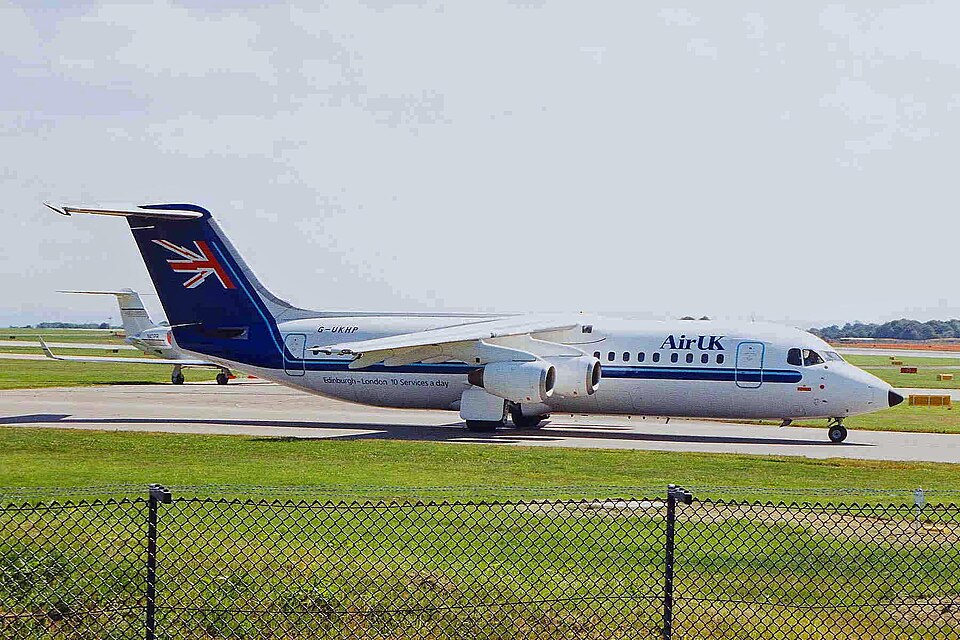
Incident Overview
A BAe 146-300, registered G-UKHP, was operating a scheduled passenger flight from London Stansted Airport to Paris Charles de Gaulle Airport on 30 October 2001 at 2005 UTC. The aircraft, manufactured in 1989, was powered by four Lycoming ALF 502R-5 turbofan engines. On board were 6 crew and 67 passengers; no injuries were reported, though some passengers experienced choking and vomiting after evacuation. Damage was limited to yellow hydraulic system components.
Sequence of Events
During the approach, approximately 3 nautical miles from touchdown on Runway 27L, with landing gear down and locked, the first officer (handling pilot) selected flaps to 33°. Shortly thereafter, the crew heard a loud mechanical bang followed by a very loud, low-pitched graunching noise emanating from the centre left floor area. Engine parameters remained normal. A Yellow hydraulic system caution illuminated on the Central Warning Panel (CWP), with fluctuating pressure and quantity indications. Subsequent alerts included Flap Fault, AC Pump Failure, and AC Pump High Temperature. The commander instructed the first officer to continue the approach; flaps indicated near 33°, the approach was stable, and clearance to land had been obtained.
During the landing roll, Green hydraulic system lift spoilers deployed, but those powered by the Yellow system did not. Wheel braking using the pre-selected Green system was normal, and the AC Pump High Temperature and Fail captions extinguished. The commander attributed this to automatic shutdown of the Yellow system AC pump on the ground, though the low quantity alert persisted. As the aircraft decelerated, the In-Flight Supervisor (IFS) reported dense smoke in the mid cabin. The commander switched off the air conditioning packs and APU, applied vigorous braking, and brought the aircraft to a halt on high-speed exit taxiway Y7. An evacuation was ordered; three emergency slides were deployed (both forward doors and rear left slide). Visibility in the mid cabin was limited to three seat rows. The evacuation was completed swiftly with no injuries directly attributed to it, though some passengers choked and vomited afterwards.
Engineering Examination
After the aircraft was towed off the taxiway, engineers found that a flexible pipe (part number SA7670006-116) connected to the Power Transfer Unit (PTU) had ruptured due to chafing against an adjacent rigid pipe (HC321B0029-000). The Yellow hydraulic system reservoir was effectively empty, and the AC hydraulic pump was excessively hot. The flexible pipe and AC pump were replaced, the bay cleaned, and the system replenished. Subsequent serviceability checks allowed the aircraft to return to service with no further smoke recurrence. No evidence of hydraulic fluid burning was found. The AC pump was strip-examined, revealing worn, rough, and scored internal bearings, which could account for the noises heard, and a failed thermostat that did not open at its designed temperature (approximately 204°C). The pump's normal operating temperature is about 62°C; the failed thermostat prevented thermal protection, allowing the pump to overheat after fluid loss.
Smoke Origin and Analysis
The airframe manufacturer determined that dense black smoke resulted from hydraulic fluid spray impinging on the overheated AC pump. The pump automatically activates when system pressure drops, even with total fluid loss, explaining the abnormal heat. Phosphate-ester hydraulic fluid mist does not normally produce black smoke at ambient temperatures; the flash point without a flame is between 471°C and 507°C, but with a flame it is 182°C and can burn at 210°C. However, no signs of scorching or fire were found in the bay or on the pump. The manufacturer also indicated that hydraulic fluid was unlikely to enter the air conditioning system; cabin air flows from the cabin through the hydraulic bay to outflow valves when positive pressure differential exists. The aircraft had not been modified with Service Bulletin SB.53-158-30497A, which improves sealing of the hydraulics bay to prevent hydraulic mist ingress into the cabin.